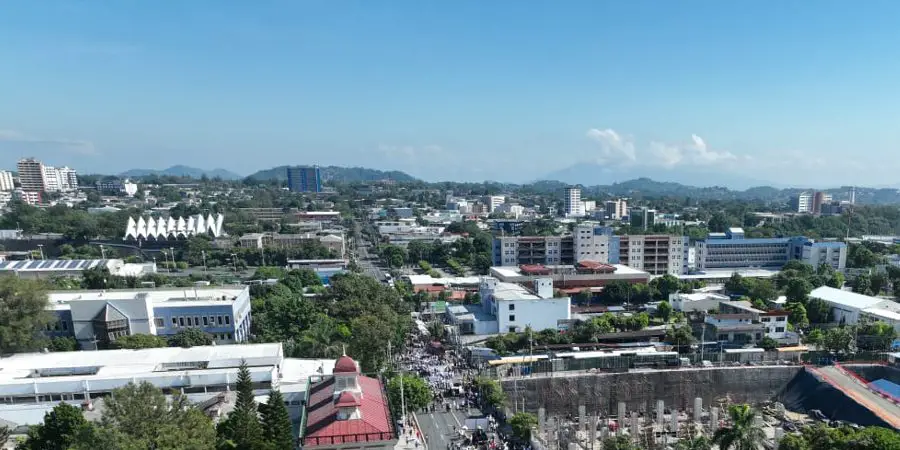
 San Salvador El Salvador.
For decades, extortion in El Salvador shaped daily life for many residents. Shopkeepers paid gangs to remain open, bus drivers surrendered part of their earnings, and families lived under constant threats of violence.
Today, things are very different. The government’s tough actions against gangs have weakened the groups that used to control neighborhoods and make millions of dollars from extortion.
Since 2022, public security in El Salvador has changed dramatically. Homicides have dropped, major gang networks have been broken up, and many Salvadorans say that extortion has almost disappeared from their communities.
- Extortion in El Salvador
- How Extortion Affected Families and Businesses
- Why Previous Governments Struggled
- Bukele’s Security Strategy Against Gangs
- Extortion in El Salvador Declines
- Economic Benefits of Reduced Extortion
- State of Exception in 2026
- Human Rights Concerns and Crackdown
- Is Extortion Still a Problem?
- El Salvador’s Future Security Challenges

Extortion in El Salvador: A Decades-Long Problem
Extortion became one of El Salvador’s most damaging criminal activities during the decades following the country’s civil war, which ended in 1992. Criminal gangs gradually established control over vulnerable communities.
Two organizations dominated this criminal activity: MS-13 and Barrio 18. Both developed roots in Los Angeles before expanding their presence in El Salvador.
As these gangs grew stronger, they divided neighborhoods into territories and demanded regular payments from residents and businesses. Salvadorans commonly referred to these extortion payments as la renta.
For many families, paying extortion was not really a choice. If they refused, they could face threats, violence, being forced to leave their homes, or even be killed. Reporting the crime was also very dangerous.
The financial impact of extortion was huge. A 2022 Global Financial Integrity report found that extortion brought in over $1.1 billion each year in El Salvador, Guatemala, and Honduras.
The same study estimated that people in El Salvador paid between $190 million and $245 million a year in extortion, showing just how large the criminal economy is.
How Extortion Affected Salvadoran Families and Businesses
Small businesses were some of the most vulnerable targets. Neighborhood stores, market vendors, food stalls, and transportation operators often had to pay money to gangs that controlled their communities.
Some business owners paid weekly or monthly fees simply to continue operating. Others closed their businesses when gang demands became impossible to meet, or threats grew increasingly dangerous.
Public transportation operators faced particularly difficult conditions. Gangs demanded payments from bus owners, drivers, and transportation companies, sometimes threatening workers who refused to cooperate.
Extortion also hurt regular families. In some neighborhoods, people were threatened for entering areas controlled by rival gangs, visiting relatives, parking their cars, or saying no to local gang members.
Extortion did more than drain families financially. It forced people to leave their homes, pushed children to change schools, and kept young people out of neighborhoods where crossing gang boundaries could cost them their lives.
These problems hurt the economy and made community life weaker. Entrepreneurs were less willing to invest, businesses faced extra costs, and residents lost chances to improve their finances.
Why Previous Governments Struggled to Stop Extortion
Over the years, Salvadoran governments tried different security measures to fight gangs. These included special police operations, stricter criminal penalties, and programs to keep young people from joining gangs.
Still, both the ARENA and FMLN governments were unable to break up the gangs behind widespread extortion. Even after many security campaigns, these criminal groups kept operating in many communities.
At the same time, El Salvador faced very high homicide rates. Gang fights, territorial battles, revenge, and violence linked to extortion all made the country’s security crisis worse.
The problem went beyond policing. Poverty, limited employment opportunities, weak institutions, and the ability of gangs to intimidate witnesses made organized crime especially difficult to confront.
By the time President Nayib Bukele entered office in June 2019, extortion remained a serious concern for thousands of Salvadoran families and business owners.
Bukele’s Security Strategy and the Decline of Gang Control
Soon after taking office, President Nayib Bukele introduced the Territorial Control Plan to fight criminality. He promised to lower crime and bring government control back to areas that gangs had dominated for years.
The government sent more security forces, stepped up police work, and became more active in vulnerable communities. Official homicide numbers went down, but gangs still operated in some areas.
A decisive change came in March 2022, following a surge of killings that left dozens of Salvadorans dead over a single weekend.
On March 27, 2022, the Legislative Assembly approved a state of exception. This gave authorities more power to arrest suspected gang members and investigate criminal networks.
The government began large operations across the country, arresting tens of thousands of suspected gang members and collaborators. Security patrols also increased in areas that used to be dangerous.
These operations significantly weakened the territorial control that MS-13 and Barrio 18 had exercised for years, disrupting the networks responsible for collecting extortion payments.
Many residents began reporting improvements in everyday security. Neighborhoods that once experienced frequent threats became more accessible, and businesses gained greater freedom to operate without gang interference.
Extortion in El Salvador Has Fallen Sharply
Official statistics show that reported extortion has dropped sharply since the government stepped up its campaign against gangs. This drop is one of the biggest changes in El Salvador’s security situation.
The Attorney General’s Office recorded 359 extortion complaints in 2025, compared to 2,241 in 2015. That is about an 84% drop over ten years.
The government also reported that extortion dropped by 48.5% in 2024 compared to 2023. This supports the ongoing downward trend seen since emergency security measures began.
A December 2025 report from the United Kingdom’s Home Office confirmed that gang extortion had dropped significantly. However, some crime still happens in some rural areas.
These numbers show real progress, but not every case gets reported. Some victims may still be afraid to go to the authorities, so it is hard to know the true scale of extortion.
Nevertheless, the decline has changed daily life for many Salvadorans. Businesses that once operated under gang threats now face fewer restrictions, while residents enjoy greater freedom of movement.
The Economic Benefits of Reduced Extortion
Lower extortion levels can provide meaningful financial relief to Salvadoran businesses, particularly small enterprises that previously surrendered part of their income to criminal organizations.
When business owners no longer face regular gang payments, they can direct more money toward inventory, employee salaries, improvements, and other expenses that support their operations.
Better security also opens up opportunities in neighborhoods that used to have trouble attracting investment. Entrepreneurs can now think about starting businesses in places that were once known for gang violence and territorial limits.
The transportation sector has also seen benefits from better security. Taxis, delivery services, and other businesses can now work in communities that used to be hard or unsafe to reach.
Still, less extortion does not fix all of El Salvador’s economic problems. Businesses continue to deal with costs, low consumer spending, trouble getting loans, and other issues not linked to organized crime.
The long-term economic benefits will depend on whether improved security translates into sustainable investment, employment opportunities, and stronger local businesses across the country.
The State of Exception Remains in Effect in 2026
More than four years after its introduction, El Salvador’s state of exception remains central to the government’s security strategy, despite growing debate over its continued necessity.
On October 21, 2026, the Legislative Assembly approved the measure’s 56th extension, keeping the extraordinary security provisions in effect from October 28 through November 26, 2026.
Authorities argue that maintaining these measures prevents criminal organizations from rebuilding their networks and protects the improvements achieved since the crackdown began in March 2022.
According to Human Rights Watch, security forces have imprisoned more than 93,000 people under the emergency measures, including thousands of minors. The arrests have dramatically expanded El Salvador’s prison population.
The government maintains that these operations have dismantled major gang structures and helped restore public security. However, the continued suspension of certain legal protections remains controversial.
Human Rights Concerns and the Cost of the Crackdown
El Salvador’s security transformation has attracted international attention, but it has also generated serious concerns about arbitrary detention, prison conditions, and the treatment of people accused of gang involvement.
Human rights groups have reported claims of wrongful arrests, mistreatment, deaths in custody, and limits that stop detainees from properly defending themselves against criminal charges.
In July 2026, Amnesty International warned that ongoing arbitrary detentions and other abuses during the state of exception could be considered crimes against humanity.
Human Rights Watch also raised concerns in October 2026 about mass trials involving hundreds of defendants, arguing that inadequate legal protections undermine the right to a fair trial.
Meanwhile, the Inter-American Commission on Human Rights has urged Salvadoran authorities to end their prolonged reliance on extraordinary security powers and restore fundamental legal safeguards.
The debate highlights a difficult challenge for El Salvador: maintaining the substantial improvements in public security while protecting individual rights and strengthening confidence in the justice system.
Is Extortion Still a Problem in El Salvador?
Extortion has declined considerably, but it hasn’t disappeared. Official figures continue to record complaints, and some criminal networks remain capable of threatening individuals or demanding payments.
In 2025, there were 359 complaints, showing that authorities still deal with this crime. However, the number of cases is much lower than before the crackdown.
A report from the United Kingdom in December 2025 found that extortion is still a problem in some rural areas, like parts of Usulután and La Unión, even though things have improved in most of the country.
Communities that used to face gang restrictions have changed significantly. People can now use the streets, public transport, and neighborhoods that gangs once controlled.
Even so, authorities need to keep investigating extortion, protect victims, and watch for new criminal activity to stop organized groups from rebuilding their financial networks.
What Comes Next for El Salvador?
El Salvador has made real progress against gang-related extortion under the Bukele administrations. The next challenge is to keep these gains without depending on special security measures forever.
To keep fighting organized crime, it will be important to make police investigations stronger, improve the courts, and make sure victims can safely report threats.
Economic growth is important too. Creating more jobs, improving education, and helping vulnerable communities can address the problems that criminal groups have taken advantage of in the past.
For Salvadorans who spent years paying la renta, less extortion is more than just a number. It brings more freedom, less financial stress, and fewer threats.
But for the country to succeed in the long run, it needs to keep these improvements, protect civil rights, and stop criminal groups from taking back control of communities.
The changes so far are already big. To make sure Salvadorans never face widespread gang extortion again, the country will need lasting security, strong institutions, and economic opportunities for all communities.