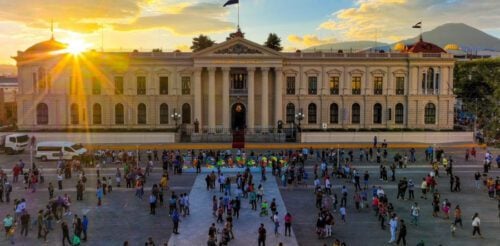
FMLN 2018 at Cuscatlan Stadium.
The FMLN El Salvador left-wing political party, officially known as the Farabundo Martí National Liberation Front, is a party that emerged from the country’s civil war and later governed for ten years.
Once one of the country’s two dominant political forces, the FMLN played a major role in shaping modern Salvadoran democracy. Its history includes armed conflict, peace negotiations, presidential victories, and electoral setbacks.
Today, the FMLN faces a very different political landscape. Understanding its rise and decline also helps explain how political parties in El Salvador have changed over the past several decades.
History of the FMLN: From Guerrilla Movement to Political
Party
The FMLN was formed in October 1980 when five leftist guerrilla groups joined together to oppose El Salvador’s military-backed government. This alliance played a key role in the country’s civil war.
The conflict lasted from 1980 until 1992 and devastated communities across the country. The FMLN fought government forces while international actors supported opposing sides during the Cold War.
Things changed in 1992 when El Salvador signed the Chapultepec Peace Accords. The agreements ended the civil war and gave former guerrilla fighters a chance to enter politics and compete in democratic elections.
As part of the peace agreement, the FMLN gave up its weapons and became a legal political party. The United Nations’ historical record of the peace process describes this change and the role of international actors.

FMLN Political Ideology and Main Principles
The FMLN identifies with the political left and draws much of its historical identity from socialist ideas, social justice movements, and opposition to economic inequality.
The party’s platform has focused on workers’ rights, public education, healthcare, reducing poverty, and more government involvement in social programs.
These priorities helped the FMLN attract support from working-class communities. However, the party has also faced criticism for its economic policies, internal disagreements, and leadership choices.
Once in power, it struggled to deliver on some of its campaign promises and deal with the realities of running the country.
FMLN Presidential Victories and Years in Government
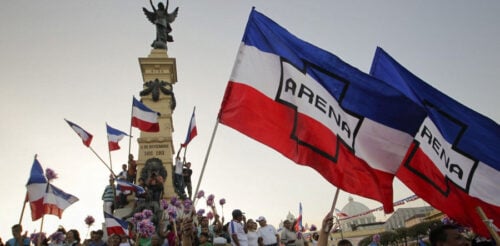
The FMLN reached a historic milestone in 2009 when Mauricio Funes won the presidential election, ending two decades of government led by the right-wing ARENA party.
Former President Mauricio Funes governed from 2009 to 2014. His administration expanded several social programs but later became associated with major corruption investigations and criminal convictions.
In 2014, Salvador Sánchez Cerén narrowly defeated ARENA candidate Norman Quijano. His victory gave the FMLN another five years in power and strengthened its position within Salvadoran politics.
Former President Salvador Sánchez Cerén governed from 2014 to 2019. His administration faced persistent concerns about gang violence, economic growth, public security, and government accountability.
| Name | Period | Positive Achievements | Major Controversies |
|---|---|---|---|
| Mauricio Funes | 2009–2014 | Expanded social programs, introduced free school uniforms and supplies, and strengthened healthcare access through public health reforms. | Convicted of corruption and illicit negotiations with gangs. His administration faced allegations of embezzling millions in public funds. Funes fled to Nicaragua in 2016. |
| Salvador Sánchez Cerén | 2014–2019 | Continued social welfare programs, expanded education initiatives, and introduced measures to support public security and renewable energy. | Faced criticism over high homicide rates, economic stagnation, and allegations of corruption involving public funds. Later sought refuge in Nicaragua. |
These two administrations represent the FMLN’s most important period of national political power. Both leaders also hold a significant place in the history of El Salvador’s presidents.

Why Did the FMLN Lose Political Support?
The FMLN started to lose support after its time in government. Corruption scandals, problems with public services, security issues, and internal conflicts hurt the party’s image with voters.
The rise of Nayib Bukele further changed Salvadoran politics. His popularity and the emergence of Nuevas Ideas weakened the traditional rivalry between the FMLN and ARENA.
The collapse of El Salvador’s traditional political parties raises an important question: Can the FMLN recover political ground, or has the country’s electoral landscape changed too much?
FMLN Performance in the 2024 Elections
The 2024 Salvadoran elections delivered another major setback for the FMLN. Its presidential candidate, Manuel Flores, received just 6.25% of the vote, far behind President Nayib Bukele.
According to the Supreme Electoral Tribunal’s official presidential results, the FMLN received 204,167 votes, compared with more than 2.7 million for Bukele’s Nuevas Ideas party.
The party also failed to win a seat in the 60-member Legislative Assembly. This outcome left the FMLN without national legislative representation for the 2024–2027 term.
Can the FMLN Make a Political Comeback?
Although the FMLN has lost recent elections, it is still a legally registered political party. To regain support, it needs to do more than depend on its past identity and earlier wins.
The party faces several challenges, including attracting younger voters, developing new leadership, addressing its controversial governing record, and presenting proposals that connect with everyday Salvadorans.
The 2027 elections in El Salvador offer another opportunity to measure its political strength. Voters will elect a president, legislators, and municipal officials on February 28, 2027, according to the official electoral announcement.
It is still unclear if the FMLN can win back significant representation. Its future will partly depend on whether it can regain public trust and compete in a political scene now led by Nuevas Ideas.
FMLN El Salvador: Legacy in Salvadoran Politics
The FMLN El Salvador left-Wing Political Party is still a key part of the country’s political history. Its shift from a guerrilla group to a ruling party shows how the 1992 peace agreements changed the country’s democratic institutions.
Although its electoral influence has declined, its history continues to shape discussions about democracy, political representation, and opposition movements. Understanding the party also provides valuable context for how El Salvador’s government and political system have evolved.
The FMLN’s future is still uncertain. Whether it can connect with voters again will decide if it becomes a strong political force or stays in a smaller role in national politics.