 ARENA El Salvador Right Wing Political Party.
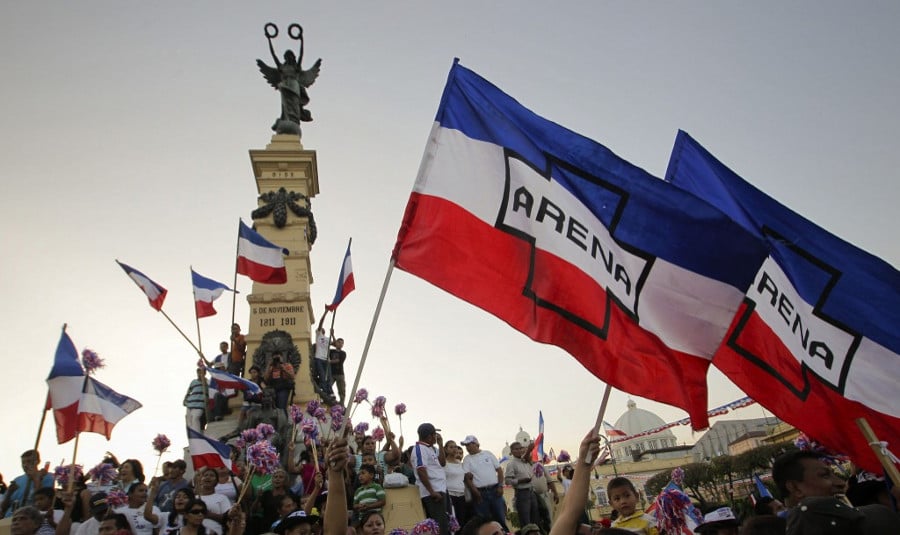
ARENA El Salvador, officially known as the Nationalist Republican Alliance (Alianza Republicana Nacionalista), is one of the country’s most influential traditional political parties. Founded in 1981, it represents the Salvadoran political right.
For decades, ARENA shaped national policies, won presidential elections, and competed with left-wing movements. Its history remains an important part of understanding El Salvador’s political parties and their changing influence.
Although ARENA once dominated Salvadoran politics, its electoral support has declined considerably. The party now faces a difficult challenge: rebuilding public trust while competing in a political landscape transformed by Nayib Bukele.
The Origins and Founding of ARENA
ARENA emerged in September 1981, during a period of growing political violence and social unrest. El Salvador was entering a civil war that would reshape its institutions and political system.
Roberto d’Aubuisson, who had served as a Salvadoran military officer, started the party with other conservative political leaders. ARENA described itself as a nationalist and anti-communist group focused on protecting private property and traditional values.
The party gained support from business leaders, conservative voters, and Salvadorans who were against left-wing revolutionary groups.
D’Aubuisson remains one of ARENA’s most controversial historical figures. Investigations, including the United Nations Truth Commission’s findings, linked him to the assassination of Archbishop Óscar Romero in 1980.
ARENA’s Political Ideology and Core Beliefs
ARENA has traditionally backed conservative values, free markets, and private investment. The party believes businesses should lead economic growth, while the government plays a smaller role and strong national institutions help the country move forward.
The party has also defended traditional social values and maintained close relationships with business organizations. These positions helped distinguish ARENA from the left-wing Farabundo Martí National Liberation Front (FMLN).
During its time in power, ARENA pushed for privatization, free trade, and changes to the economy. Supporters believed these policies brought more investment into the country, while critics argued they made inequality worse and hurt public services.
ARENA’s political identity has changed over time, but its conservative roots remain central to its history. Understanding those principles helps explain the party’s longstanding influence on Salvadoran economic policy.
ARENA’s Four Presidential Administrations
ARENA governed El Salvador for 20 consecutive years, from 1989 until 2009. During that period, four presidents represented the party and introduced policies that shaped the country’s economic and political direction.
Alfredo Cristiani (1989–1994)
Alfredo Cristiani was elected as ARENA’s first president in 1989. During his time in office, his administration helped negotiate the 1992 Peace Accords, which officially ended El Salvador’s 12-year civil war.
Alfredo Cristiani’s presidency also started major economic reforms, such as privatization and policies to increase private-sector involvement.
Armando Calderón Sol (1994–1999)
Armando Calderón Sol continued ARENA’s economic agenda while overseeing important postwar reforms. His administration promoted infrastructure development, privatization, and efforts to modernize government institutions following the peace agreements.
Francisco Flores (1999–2004)
Francisco Flores was president of El Salvador when the country adopted the US dollar as its official currency in 2001. That same year, his government also dealt with rebuilding after two major earthquakes.
Antonio Saca (2004–2009)
Antonio Saca became ARENA’s fourth consecutive president. His administration focused on economic development and public security, but the party eventually lost the presidency to the FMLN in 2009.
| Name | Period | Positive Achievements | Major Controversies |
|---|---|---|---|
| Alfredo Cristiani | 1989–1994 | Signed the 1992 Peace Accords, ending El Salvador’s 12-year civil war. | Accused of involvement in the 1989 Jesuit murders. Also faced criticism over bank privatization and conflicts of interest. |
| Armando Calderón Sol | 1994–1999 | Expanded infrastructure, privatized telecommunications, and continued postwar economic reforms. | Faced criticism over privatization and allegations of irregular management of public funds during his administration. |
| Francisco Flores | 1999–2004 | Introduced the US dollar as legal tender in 2001 and oversaw earthquake reconstruction efforts. | Accused of diverting Taiwanese donations intended for earthquake victims. Died before his criminal trial concluded. |
| Antonio Saca | 2004–2009 | Launched the Red Solidaria poverty-reduction program to support low-income families. | Convicted in 2018 of embezzlement and money laundering involving more than $300 million in public funds. |
Together, these four administrations represent a significant chapter in the country’s political history. You can explore the broader timeline through the presidents who have governed El Salvador.

ARENA’s Electoral Decline and Loss of Political Influence
ARENA started to lose political strength after it lost the presidential election in 2009. Problems inside the party, corruption scandals involving former officials, and more voter dissatisfaction slowly made it harder for ARENA to compete across the country.
When Nayib Bukele and his Nuevas Ideas party appeared, Salvadoran politics changed even more. Many voters left the traditional parties, so ARENA and the FMLN found it hard to keep the influence they once had.
The 2024 Salvadoran elections showed just how much ARENA’s political position had changed. Its presidential candidate got only 5.44% of the vote, while Bukele won by a large margin.
ARENA also won only two seats in the 60-member Legislative Assembly. According to the Supreme Electoral Tribunal (TSE), Nuevas Ideas captured 54 seats, leaving traditional opposition parties with limited legislative representation.

Can ARENA Recover Its Political Influence?
ARENA’s future depends on whether it can win back the trust of Salvadoran voters. But the party has a tough road ahead.
It needs to rebuild its organization, find leaders people can trust, and address the controversies surrounding its past.
The party must also decide how to distinguish itself from Nuevas Ideas. Simply criticizing the government may not convince voters who want practical alternatives on economic development and public services.
Whether ARENA can win back its lost political ground raises bigger questions about the future of traditional opposition parties and political competition in El Salvador.
The 2027 elections in El Salvador will offer another opportunity to measure ARENA’s electoral strength. The vote, scheduled for February 28, includes presidential, legislative, and municipal contests.
ARENA’s Place in El Salvador’s Political History
Although ARENA has lost electoral support, it still plays a significant role in Salvadoran political history. Its governments shaped economic policy, democratic institutions, and helped guide the country from civil war to peace.
Understanding ARENA’s history also helps explain the evolution of El Salvador’s government and political system, including the rivalry between traditional parties and the emergence of new political movements.
It’s still unclear whether ARENA can regain its political influence. But the party’s legacy continues to shape conversations about democracy, economic growth, and the future of political opposition in El Salvador.