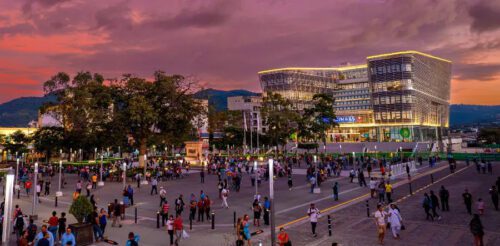
El Salvador.
The San Salvador Metropolitan Area includes 28 districts in two departments. Within its boundaries, it has busy commercial centers, historic communities, residential neighborhoods, mountain views, and well-known Pacific Coast spots.
This diverse region surrounds El Salvador’s capital and links many of the country’s key economic and cultural spots. Each district offers its own character, attractions, and local traditions.
From modern neighborhoods to traditional towns, there’s plenty to explore. The metropolitan area also highlights the diversity of cities and urban communities across El Salvador.
What Is the San Salvador Metropolitan Area?
The San Salvador Metropolitan Area, or AMSS, is a planned region that includes districts from both the San Salvador and La Libertad departments.
Unlike a single city, the metropolitan area includes several municipalities with different economic activities, population densities, and geographic characteristics. Some districts feature dense urban neighborhoods, while others remain largely rural.
This region has the country’s capital, big shopping areas, neighborhoods, old towns, and coastal communities. All of these places are important to El Salvador’s economy and society.
Although the districts share a metropolitan planning framework, each retains its local identity. Visitors can experience everything from busy shopping districts to quiet mountain communities and fishing towns.
The 28 Districts of the San Salvador Metropolitan Area
The metropolitan area has 28 districts, which are grouped into seven municipalities. These municipalities are part of the San Salvador and La Libertad departments, and each one brings its own unique communities and landscapes.
The administrative structure reflects El Salvador’s municipal reorganization, which grouped former municipalities into larger administrative units. The districts retain their traditional names while operating within the new municipal system.
San Salvador Department
San Salvador Department has 16 metropolitan districts spread across four municipalities. These areas include the historic center of the capital, busy neighborhoods, traditional towns, and new residential developments.
| Municipality | Districts |
|---|---|
| San Salvador Center | San Salvador, Mejicanos, Ciudad Delgado, Cuscatancingo, Ayutuxtepeque |
| San Salvador East | Soyapango, Ilopango, San Martín, Tonacatepeque |
| San Salvador West | Apopa, Nejapa |
| San Salvador South | San Marcos, Panchimalco, Santo Tomás, Santiago Texacuangos, Rosario de Mora |
La Libertad Department
La Libertad Department includes 12 districts in three municipalities. The metropolitan area covers everything from established cities and new neighborhoods to mountains, farmland, and Pacific Coast spots.
| Municipality | Districts |
|---|---|
| La Libertad South | Santa Tecla, Comasagua |
| La Libertad East | Antiguo Cuscatlán, Huizúcar, Nuevo Cuscatlán, San José Villanueva, Zaragoza |
| La Libertad Coast | La Libertad, Tamanique, Teotepeque, Chiltiupán, Jicalapa |
These seven municipalities show how diverse the metropolitan area is. The region goes far beyond the capital’s city limits, bringing together communities with different ways of life and types of work.
Urban Centers and Residential Communities
San Salvador is the main urban center of the metropolitan area. Its historic downtown, government offices, shopping districts, and cultural sites make it a popular place for both locals and visitors.
Santa Tecla, which is close by, has well-known neighborhoods, restaurants, shops, and cultural spots. Its location also makes it easy to reach western El Salvador and nearby towns.
Antiguo Cuscatlán is known for its business areas, universities, shopping centers, and high-end neighborhoods. Places like Santa Elena help make it a key spot for both business and living.
Soyapango, Mejicanos, Apopa, and Ciudad Delgado have crowded neighborhoods where local businesses, transport, and daily life play a big role in the economy.
Other areas, like Nuevo Cuscatlán and Zaragoza, have new housing developments next to older communities. These places show how the city is slowly growing beyond its original neighborhoods.
Traditional Towns, Mountains, and Coastal Destinations
Not all metropolitan districts feel like big cities. Some communities keep their traditional architecture, farmlands, local festivals, and natural attractions, giving visitors a different experience than the capital.
Panchimalco stands out for its cultural heritage, traditional celebrations, and historic church. The hills and rural areas around it offer a clear contrast to the busy streets of San Salvador.
Nejapa keeps its strong local traditions, like the famous Balls of Fire Festival. Comasagua draws visitors with its mountain views, cooler weather, and outdoor recreation spots.
On the Pacific Coast, La Libertad and Tamanique link the metropolitan area to some of El Salvador’s most famous surfing spots, like El Tunco and El Sunzal.
Other coastal districts, such as Chiltiupán, Jicalapa, and Teotepeque, feature smaller communities, agricultural areas, and scenic landscapes. These locations highlight the region’s strong connection to the Pacific coastline.
How the Metropolitan Area Expanded
The San Salvador Metropolitan Area has grown as officials updated municipal boundaries and regional planning roles. As a result, more urban, rural, mountainous, and coastal communities are now part of the metropolitan area.
In October 2024, lawmakers agreed to add La Libertad Este and La Libertad Costa, which expanded the metropolitan area to 23 districts in seven municipalities.
The area grew again in February 2025, when the Council of Mayors (COAMSS) added five more districts: Panchimalco, Santo Tomás, Santiago Texacuangos, Rosario de Mora, and Comasagua.
The agreement became official once it was published in the Official Gazette on February 20, 2025; It expanded the metropolitan area to 28 districts.
However, the official OPAMSS website continues to identify 23 districts within COAMSS. This creates a difference between its published institutional information and the expanded metropolitan territory.
The February 2025 agreement also asked lawmakers to officially add the five new districts to the metropolitan area’s governing law. This legal change has not yet been confirmed.
Because of this, the 28-district number shows the expansion approved by COAMSS, while the 23-district number is still on the official website. Each number refers to a different stage in the area’s administration.
Who Manages the San Salvador Metropolitan Area?
The Council of Mayors of the San Salvador Metropolitan Area, known as COAMSS, coordinates metropolitan interests among participating municipalities. Its responsibilities focus on regional cooperation and territorial development.
The Metropolitan Planning Office, known as OPAMSS, provides technical support for urban planning, land-use regulation, construction procedures, and development projects within its legally established jurisdiction.
These organizations help make decisions that go beyond just one municipality. They work on issues like housing, infrastructure, protecting the environment, and using land responsibly.
Municipal governments still handle local services and community matters. Metropolitan coordination adds support by dealing with planning issues that impact more than one district or municipality at the same time.
Why the Metropolitan Area Matters to El Salvador
The San Salvador Metropolitan Area plays a central role in the country’s economy. Businesses, universities, government institutions, commercial centers, and transportation networks connect communities throughout the region.
The districts in the area also deal with common challenges like traffic jams, housing shortages, infrastructure needs, and environmental concerns. Working together through planning can help communities handle these issues better.
Visitors will find a unique mix of experiences in the region. You can walk through the capital’s historic center, see traditional towns, take in mountain views, or travel to the Pacific Coast.
For people who live here, life in the metropolitan area can be very different depending on the district. Noticing these differences helps show what daily life is like in El Salvador, from busy city areas to quieter neighborhoods.
What makes the metropolitan area stand out most is its diversity. Modern business centers, old neighborhoods, mountain towns, and coastal communities all play a part in shaping El Salvador’s growth.