 New Ideas Political Party.
Few political parties have transformed El Salvador’s political landscape as quickly as Nuevas Ideas did. In just a few years, the movement went from challenging the political establishment to becoming the country’s dominant political force.
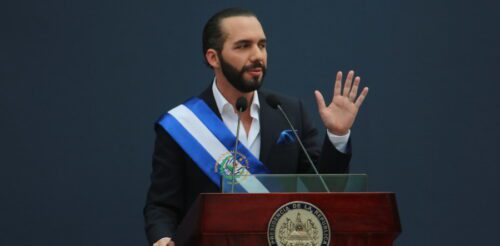
Known as New Ideas in English, the party is closely associated with Salvadoran President Nayib Bukele. Its rise also helped dismantle a two-party political system that had dominated El Salvador for decades.
What Is the Nuevas Ideas Political Party?
Nuevas Ideas is a Salvadoran political party that emerged from the political movement created by Nayib Bukele after his relationship with the left-wing Farabundo Martí National Liberation Front, or FMLN, ended.
The party presents itself as an alternative to traditional Salvadoran politics. Its official statutes describe Nuevas Ideas as democratic, plural, inclusive, and committed to modernization, citizen participation, entrepreneurship, and a social and free-market economy.
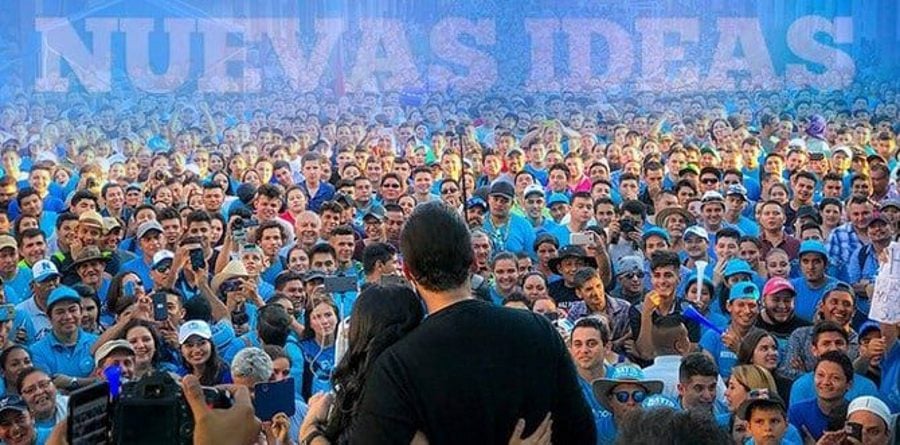
The party is easily recognized by its cyan color and capital letter “N” symbol. The Tribunal Supremo Electoral, El Salvador’s electoral authority, lists Nuevas Ideas among the country’s legally registered political parties.
The Origins of Nuevas Ideas
To understand New Ideas, you first need to understand Bukele’s political break with the FMLN. He had built his early career within that party before being expelled in October 2017.
Bukele had previously served as mayor of Nuevo Cuscatlán and later became mayor of San Salvador. Shortly after leaving the FMLN, he announced the creation of the Nuevas Ideas movement.
The movement tapped into growing frustration with the political establishment. For years, Salvadoran national politics had revolved primarily around two major parties: the right-wing ARENA and the left-wing FMLN.
Nuevas Ideas offered voters something different. Instead of emphasizing the ideological divisions rooted in El Salvador’s civil war and postwar period, it presented itself as a break from the country’s traditional political class.
Nayib Bukele and the 2019 Presidential Election
One important detail sometimes gets lost when discussing the party’s history: Bukele didn’t win his first presidential election as the candidate of Nuevas Ideas.
His political movement wasn’t able to participate under its own banner in time for the 2019 presidential election. After other political arrangements fell through, Bukele became the presidential candidate of GANA.
That strategy worked. Bukele won the February 2019 election with about 53 percent of the vote, defeating candidates associated with the traditional ARENA and FMLN blocs without requiring a runoff.
His victory represented more than a change of president. For the first time in decades, neither ARENA nor the FMLN would control the presidency, signaling a major realignment in Salvadoran politics.
What Does Nuevas Ideas Stand For?
Placing Nuevas Ideas neatly on a traditional left-to-right political spectrum isn’t easy. The party itself rejects what it calls outdated ideologies and emphasizes pragmatism, modernization, individual rights, economic development, and political participation.
Its statutes support a social and free-market economy while promoting entrepreneurship, productive work, efficient government resources, technological innovation, sustainable development, and modernization of the Salvadoran state.
In practice, however, the party’s political identity is strongly connected to Bukele. His leadership, communication style, government policies, and popularity have become central components of the Nuevas Ideas political brand.
The Rise of Nuevas Ideas in Salvadoran Politics
Bukele controlled the presidency after 2019, but his political project initially lacked its own legislative majority. That situation changed dramatically when Nuevas Ideas competed in the 2021 legislative and municipal elections.
The elections established the party as the leading force in the Legislative Assembly. They also weakened the influence that ARENA and the FMLN had exercised throughout much of El Salvador’s postwar democratic period.
The party strengthened that position during the 2024 elections. Bukele, running under the Nuevas Ideas banner, received more than 2.7 million votes according to the final presidential results reported by the TSE.
Nuevas Ideas also secured 54 of the Legislative Assembly’s 60 seats for the 2024–2027 legislative period, giving the party an overwhelming majority in El Salvador’s national legislature.
Why Did Nuevas Ideas Become So Popular?
Several factors drove the rapid rise of Nuevas Ideas. Many Salvadorans had grown tired of ARENA and the FMLN, the two parties that controlled the presidency for three decades before Bukele won in 2019.
Bukele also changed how Salvadoran politicians communicated with voters. Social media allowed him to communicate directly with millions of people while often bypassing traditional news organizations.
Public security also became a major part of the Nuevas Ideas political identity. The Bukele administration launched an aggressive crackdown on gangs that changed how many Salvadorans experience and view security in their communities.
Many supporters believe the government achieved results that previous administrations couldn’t deliver, especially in reducing gang violence. Critics, however, argue that the security strategy has weakened institutional safeguards and led to serious human rights violations.
New Ideas political party and Power
The party’s legislative dominance has allowed the Bukele government to advance policies without facing the divided legislature that characterized the president’s first years in office.
That level of power has sparked a major debate around New Ideas: Does its political dominance help the government get things done, or does it weaken the checks and balances that keep democracy working?
International organizations, for example, have documented declines in several measures of Salvadoran democracy, including judicial independence, civil liberties, credible elections, and effective parliament.
Supporters say the government can make decisions and move projects forward without the political gridlock that slowed previous administrations.
Critics argue that Nuevas Ideas has concentrated too much power around the presidency while controlling most of the Legislative Assembly.
New Ideas Political Party
Perhaps the party’s biggest legacy is something broader than any individual election victory. Nuevas Ideas fundamentally changed how political competition works in El Salvador.
For decades, ARENA and the FMLN dominated elections in El Salvador. Their rivalry divided much of the country along political lines shaped by the civil war and the years following the 1992 Peace Accords.
New Ideas changed that political landscape. The party attracted Salvadorans who had grown tired of ARENA and the FMLN and built a movement that moved away from the traditional left-versus-right political divide.
That transformation makes Nuevas Ideas important even beyond Bukele himself. Its rise marks a clear dividing line between the postwar political order and a newer era of Salvadoran politics.
Whether that era eventually produces another competitive party system or continues to revolve around Nuevas Ideas remains an open question. Either way, the party has already reshaped El Salvador’s political history.