In Cabañas, Salvadoran artisans have shaped ordinary clay into art for generations, creating a tradition that has become part of the region’s cultural identity. That rich heritage makes Ilobasco El Salvador one of the most distinctive artisan cities.
Located in the country’s paracentral region, Ilobasco combines small-city life, historic churches, local commerce, and a pottery tradition stretching back generations.
Travelers interested in Salvadoran culture beyond the usual destinations should stop by this colorful city.
About Ilobasco
Ilobasco is in the department of Cabañas, northeast of San Salvador. The city sits on elevated terrain, roughly 750 meters above sea level, surrounded by the rolling landscape characteristic of this part of El Salvador.
Although Ilobasco has developed into an important commercial center for the surrounding communities, its identity remains closely tied to craftsmanship. Walk through town, and you’ll find shops displaying colorful ceramics and handmade clay figures.
The city also has deep historical roots. Municipal historical accounts trace the area’s early population to Lenca communities, with Pipil influence arriving later.
The city received its official city title in 1871. Two years later, the creation of the department of Cabañas placed Ilobasco within the newly established department alongside its other major regional center, Sensuntepeque.
What Is Ilobasco Known For?
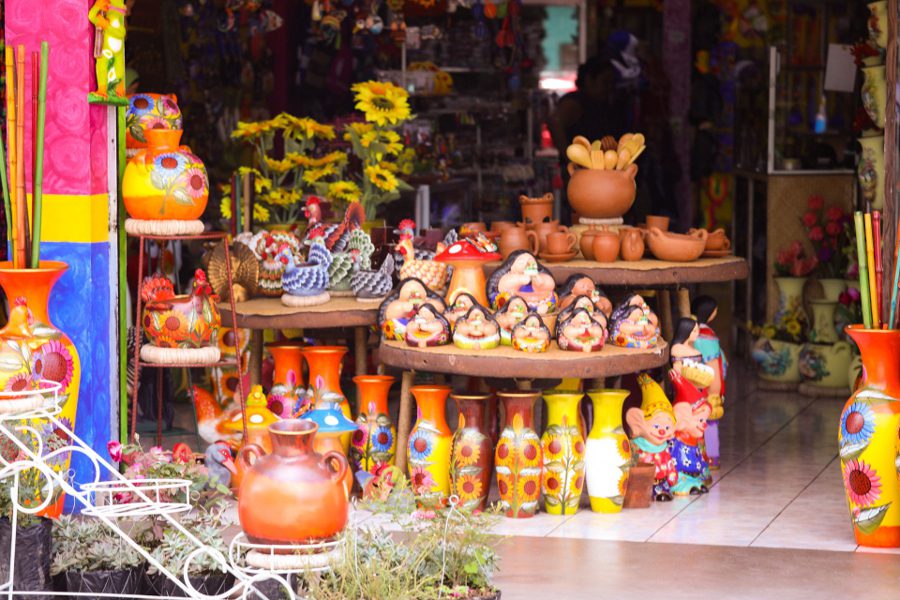
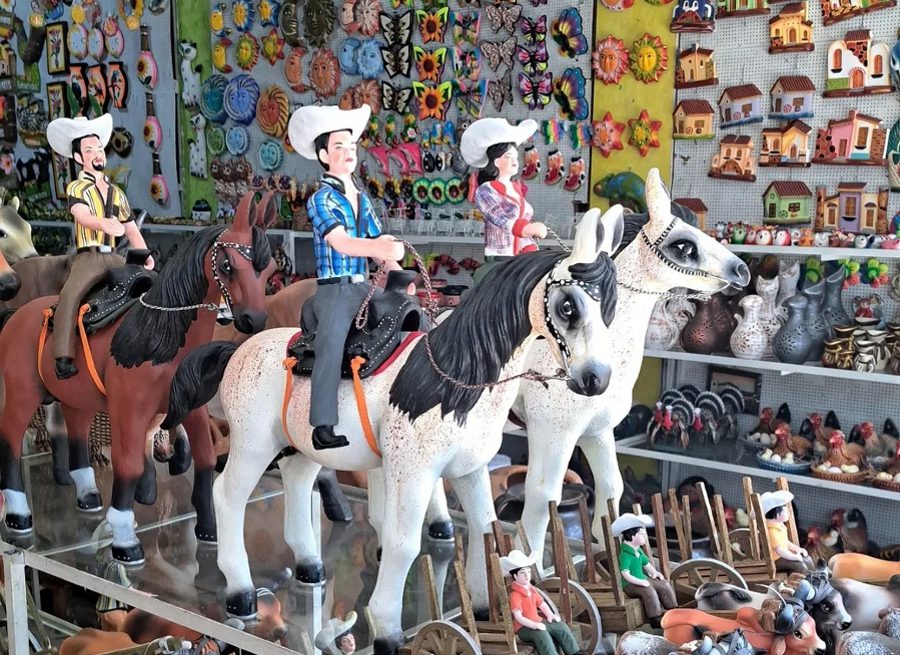
Ask what is Ilobasco known for, and pottery is the easy answer. The city is one of El Salvador’s best-known centers for ceramics, particularly handmade figures depicting religion, rural life, animals, occupations, and everyday Salvadoran scenes.
Ilobasco’s pottery tradition goes back generations. Clay gave artisans the raw material they needed. Over time, they turned practical pottery into colorful, creative works of art.
Local artisans eventually developed several styles. They still make traditional items such as pots, pans, comales, pitchers, and planters, but they also create decorative ceramics with imaginative designs made mainly for display.
Religious figures also became important. Nativity scenes made from clay developed into a recognized local tradition, with artisans eventually expanding beyond biblical figures to portray musicians, farmers, vendors, animals, and other characters.
Ilobasco Pottery and the Famous Miniatures
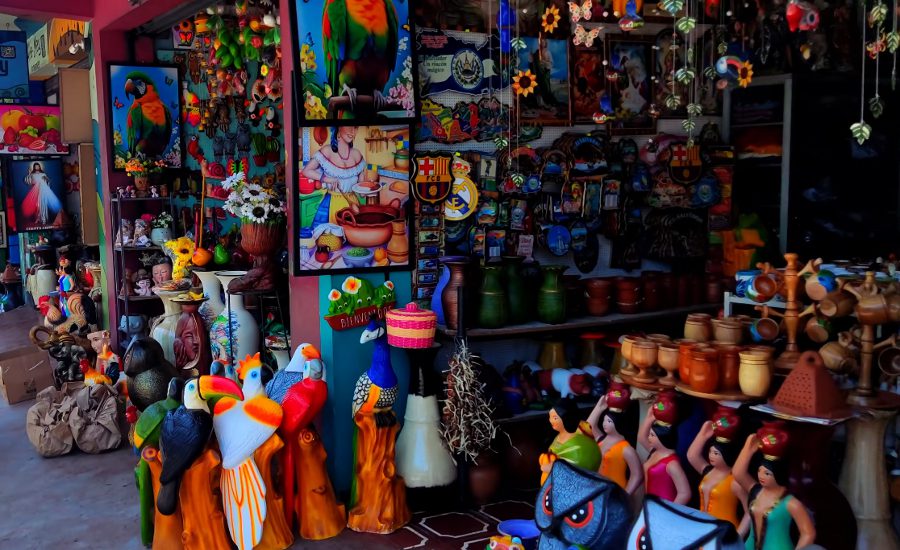
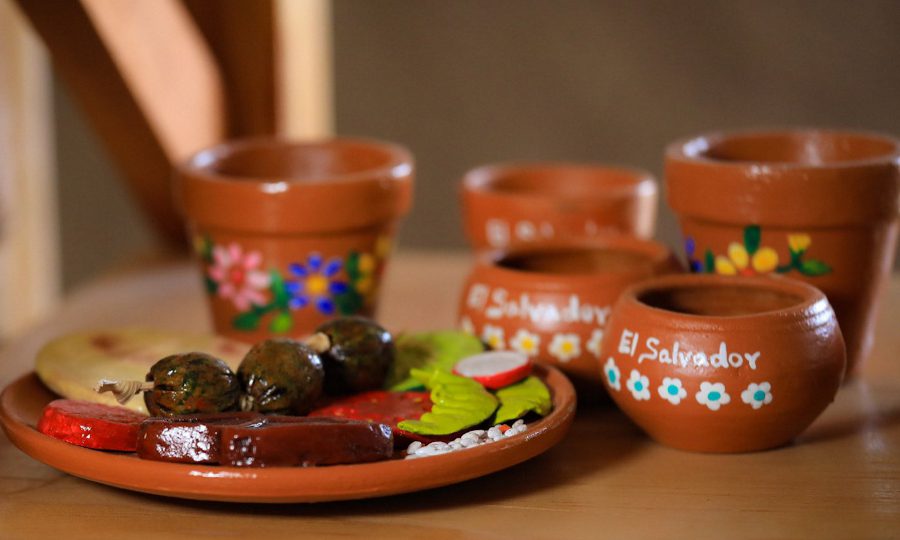
Among all forms of Ilobasco pottery, the tiny clay figures known as miniatures have become especially associated with the city. These pieces can capture remarkably detailed scenes despite their small size.
The subjects often reflect ordinary Salvadoran life. Depending on the artisan, a miniature might portray a market scene, a traditional occupation, musicians, rural families, religious imagery, animals, or humorous moments from daily life.
That storytelling helps explain why the ceramics matter to locals. They’re more than souvenirs. Pieces preserve visual image of traditions, occupations, clothing, and celebrations.
Ilobasco is a key stop along El Salvador’s Ruta Artesanal, where you can explore pottery workshops, meet local artisans, and discover handmade crafts that reflect generations of creativity and tradition.
The other cities in this route are San Ignacio, La Palma, Suchitoto, Citala, and San Sebastian.
Things to Do in Ilobasco
Exploring pottery workshops should rank high among the things to do in Ilobasco. Some workshops welcome visitors, providing an opportunity to see how artisans transform clay into finished decorative pieces.
You can also browse local craft stores throughout town. Instead of finding only one type of pottery, visitors encounter everything from practical kitchenware and flowerpots to religious figures, ornaments, colorful sculptures, and detailed miniatures.
Shopping locally also gives travelers a direct connection to Ilobasco’s artisan culture. A handmade ceramic piece carries a story tied to the city, making it a particularly meaningful souvenir from El Salvador.
Explore the Historic Center
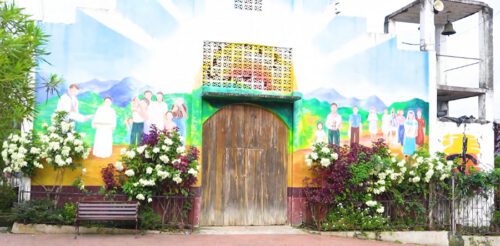
Pottery isn’t the only reason to walk around town. Ilobasco’s central area offers a glimpse of everyday life in Cabañas, where stores, restaurants, churches, public spaces, and traditional buildings share busy streets.
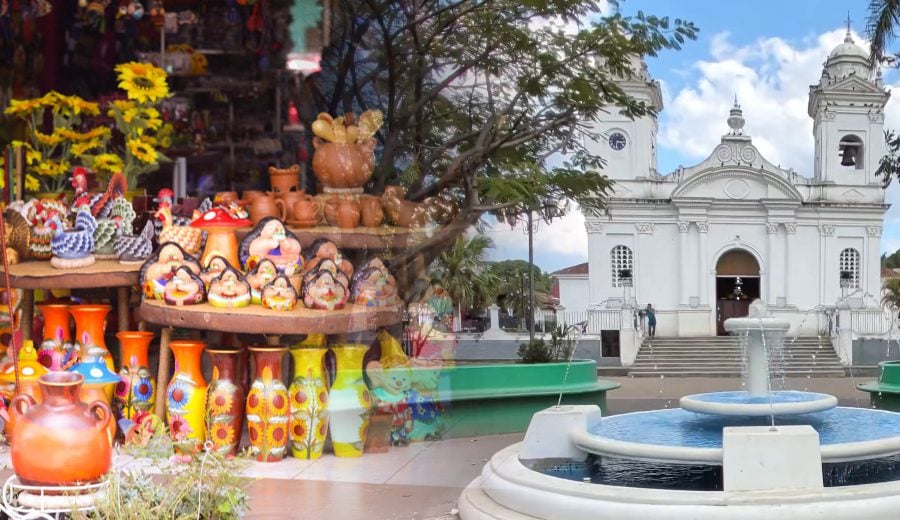
One of the city’s recognizable landmarks is the San Miguel Arcángel church. El Salvador’s official tourism site dates the church to 1880 and highlights its ribbed vault, bell tower, high ceiling, and old clock.
Take some time to explore on foot rather than treating Ilobasco as a quick shopping stop. Walking through the center provides more context for understanding the community behind the pottery displayed in its shops.
Visiting Ilobasco
Ilobasco is close enough to San Salvador to visit without building an entire trip around the city.
You can spend several hours exploring the center, visiting pottery shops, seeing a workshop, eating locally, and visiting the church. Travelers interested in craftsmanship may want extra time to talk with artisans and compare different styles.
There’s no single season required to appreciate the city’s main attractions. Pottery, architecture, food, and everyday local culture aren’t limited to a particular month, which makes Ilobasco an easy destination to include throughout the year.
Getting to Ilobasco El Salvador
From San Salvador, take the Pan-American Highway towards Cojutepeque in the department of Cuscatlán. After Cojutepeque, you will get to the small town of San Rafael Cedros; from here, you must take a detour towards Ilobasco.
Click here to see the city on Google Maps. If you prefer to take the public bus, take route 111 that goes from San Salvador to Ilobasco.
If this is your first time in El Salvador, I recommend using the services of a tour company; let them worry about driving and traffic.
Why Ilobasco El Salvador Is Worth Visiting
Ilobasco offers something different from El Salvador’s beaches, volcanoes, and archaeological parks. Its biggest attraction isn’t a dramatic landscape or famous monument. Instead, the city’s identity lives largely in the hands of its artisans.
Clay has connected generations of local families while producing artwork that depicts Salvadoran life in miniature.
Visit Ilobasco El Salvador for the pottery, but don’t overlook the community surrounding it. The workshops, streets, churches, food, and conversations with local artisans reveal a destination shaped by creativity and deeply rooted Salvadoran traditions.