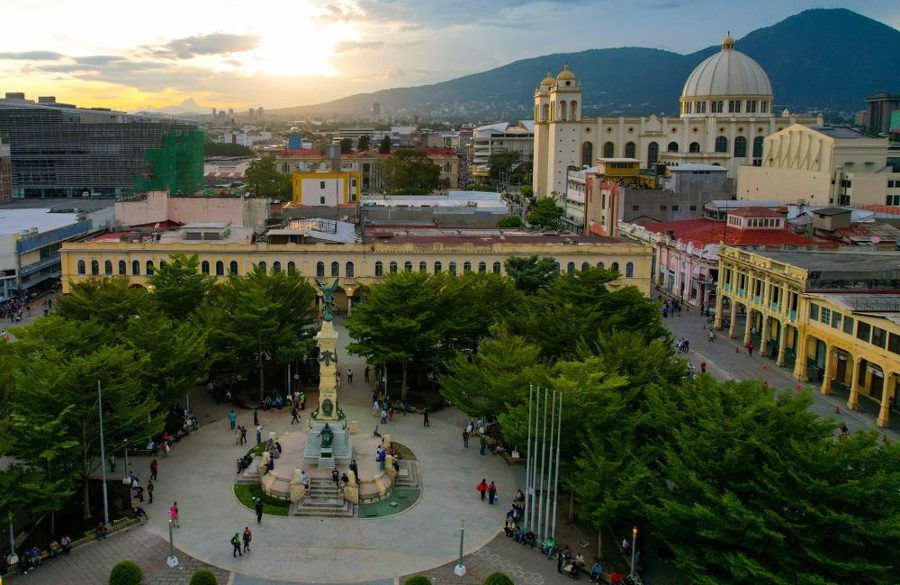
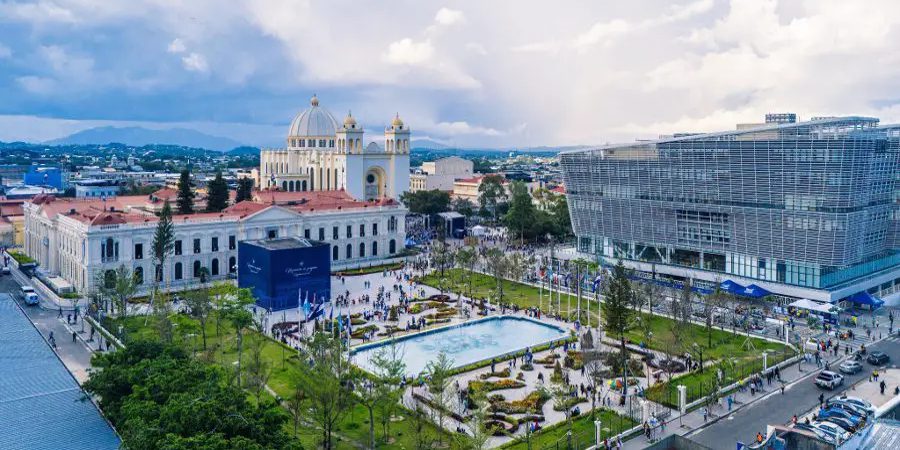
San Salvador historic center.
The San Salvador Historic District is where centuries of history meet the energy of modern El Salvador. Grand churches, lively plazas, and historic buildings tell stories of a capital that has continually reinvented itself.
Known locally as the Centro Histórico de San Salvador, this fascinating part of the capital offers much more than beautiful architecture. It’s a place where Salvadoran history, religious traditions, local culture, and everyday life come together.
Visitors can explore some of the country’s most recognizable landmarks, walk through historic public squares, admire impressive architecture, and experience a side of San Salvador that reflects its past and present.
What Is the San Salvador Historic District?
The San Salvador Historic District is the historical and cultural heart of El Salvador’s capital. It encompasses the city’s traditional downtown, including important government buildings, churches, public plazas, and commercial streets.
While newer neighborhoods feature modern shopping centers and office buildings, the historic center of San Salvador keeps the city’s architectural heritage alive and brings together some of its most important cultural landmarks.
The district continues to bring Salvadorans together. Families spend time in its plazas, worshippers gather in historic churches, and tourists explore the landmarks and attractions.
Where Is the Historic District Located?
The San Salvador Historic District sits right in the heart of the capital’s traditional downtown area. Some of its most popular attractions surround Plaza Libertad, Plaza Gerardo Barrios, and Plaza Morazán.
These three public squares make great starting points for exploring the district. You can easily walk from one landmark to another, making the area perfect for visitors who enjoy discovering a city’s history and culture on foot.
Why Is the Historic District Important?
The district holds an important place in El Salvador’s political, religious, and cultural history. For generations, its streets and plazas have hosted public celebrations, religious ceremonies, commercial activities, and significant national events.
Today, the historic center brings Salvadorans closer to their country’s heritage while giving visitors a chance to explore the architecture, traditions, and history that shaped San Salvador.
The History of San Salvador’s Historic District
To understand San Salvador’s history, we need to go back to its colonial beginnings. Spanish settlers founded the city in the 16th century, and over time, San Salvador grew into an important center for trade and government.
The city’s present location dates to 1545, when the colonial settlement moved to the valley where modern San Salvador stands. Its central plaza became a focal point for civic and religious life.
Over the centuries, San Salvador expanded beyond its original center. Nevertheless, the traditional downtown remained closely connected to the country’s political institutions, commercial activities, and cultural development.
How Earthquakes and Fires Shaped the Historic Center
Earthquakes have repeatedly changed San Salvador’s appearance. Located in a seismically active region, the capital has experienced destructive events that damaged churches, public buildings, homes, and commercial establishments.
Fires destroyed many historic buildings. As residents rebuilt the area, they used new construction methods and architectural styles, creating the mix of buildings you see throughout downtown today.
That’s why the district doesn’t look like a traditional Spanish colonial town. Instead, its buildings tell the story of centuries of destruction, rebuilding, and change as Salvadorans adapted the city to their evolving needs.

The Transformation of the Historic District
For much of its history, downtown San Salvador served as the city’s principal commercial and administrative center. Markets, shops, transportation routes, and public institutions attracted people from across the capital.
As the metropolitan area grew, businesses and residents began moving to other neighborhoods. Over time, downtown San Salvador had to deal with deteriorating buildings, heavy traffic, informal street commerce, and declining investment in historic properties.
In recent years, restoration projects and enhancements to public spaces have revitalized the area. Historic buildings have been renovated, streets have become more pedestrian-friendly, and with top cultural attractions, downtown San Salvador has attracted more visitors’ attention.
Famous Landmarks in the San Salvador Historic District
The district contains some of the most recognizable San Salvador landmarks. Each attraction offers a different perspective on the capital’s history, religious traditions, architectural development, and national identity.
Metropolitan Cathedral of San Salvador
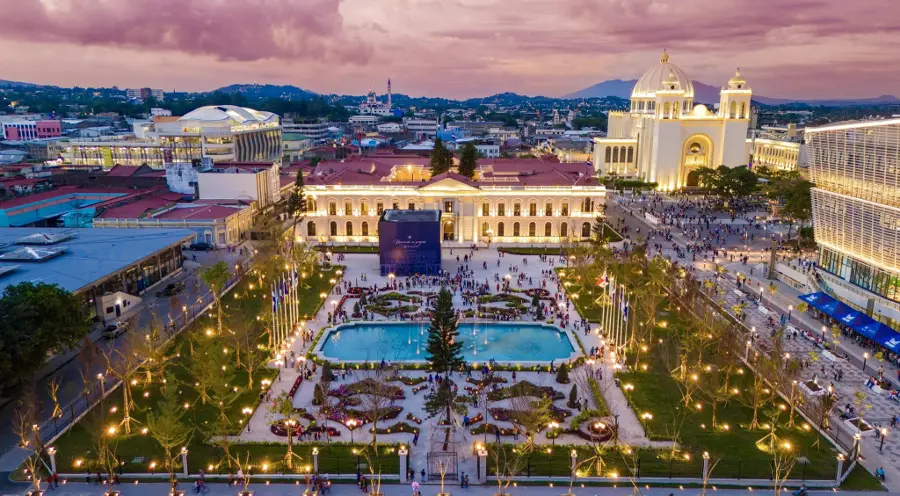
The Metropolitan Cathedral stands beside Plaza Gerardo Barrios and serves as one of the country’s most important Catholic churches. Its modern structure replaced earlier cathedral buildings damaged by disasters.
The cathedral also holds the tomb of Saint Óscar Arnulfo Romero, the Salvadoran archbishop assassinated in 1980. His legacy makes the church an important destination for religious visitors and pilgrims.
National Palace of El Salvador
The National Palace is among the historic center’s most impressive architectural landmarks. Completed in the early twentieth century, the building once housed important branches of the Salvadoran government.
Its impressive exterior, beautiful courtyards, and ceremonial rooms tell the story of the country’s political past.

National Theater of San Salvador
The National Theater is one of El Salvador’s most treasured cultural landmarks. Since opening its doors in 1917, it has impressed visitors with its elegant architecture and European-inspired design.
Over the years, the theater has welcomed audiences for plays, concerts, dance performances, and other cultural events. Today, the theater continues celebrating El Salvador’s artistic traditions.
El Rosario Church
El Rosario Church stands near Plaza Libertad and looks nothing like a traditional Catholic church. Its curved concrete design and colorful stained-glass windows make it one of the most unique landmarks in San Salvador.
Salvadoran architect and sculptor Rubén Martínez designed the church with a bold, modern style. Inside, sunlight streams through the stained-glass windows, filling the space with beautiful colors.
Plaza Libertad
Plaza Libertad is one of San Salvador’s most important historic landmarks. Its history goes back to colonial times, when residents gathered in central squares to socialize, trade, and take part in community life.
Today, you can explore the plaza and see the Monument to the Heroes, which honors Central America’s independence. The surrounding streets and historic buildings also offer a glimpse into how San Salvador has grown and changed over the years.
Plaza Gerardo Barrios
Located in front of the Metropolitan Cathedral and National Palace, Plaza Gerardo Barrios is another important gathering place. The square honors Salvadoran military leader and former president Gerardo Barrios.
Its central monument and surrounding architecture make it a popular location for photographs, sightseeing, and public activities.
Plaza Morazán
Plaza Morazán honors Francisco Morazán, a prominent nineteenth-century Central American political and military leader. The square reflects the region’s shared history and the movement for Central American unity.
Situated near the National Theater, the plaza forms part of the historic district’s network of public spaces. Visitors can explore nearby streets and admire surrounding buildings.
National Library of El Salvador (BINAES)
The National Library of El Salvador, better known as BINAES, brings a modern touch to San Salvador’s historic center. Its eye-catching design stands out among the older buildings and traditional plazas that surround it.
But BINAES offers much more than impressive architecture. Visitors can explore spaces for reading, learning, and cultural activities. The library shows how modern attractions can blend into a historic district while adding something new to the area.
Architecture and Cultural Heritage
Architecture is one of the district’s most interesting features. Visitors encounter neoclassical influences, historic religious buildings, decorative facades, modern structures, and architectural details from different periods.
San Salvador’s architecture tells the story of a city that has changed many times over the years. Earthquakes, fires, economic shifts, and rebuilding projects have all shaped the capital, creating its unique mix of architectural styles.
Religious buildings play a big part in this history. Churches like the Metropolitan Cathedral and El Rosario show how religious architecture in El Salvador has changed over the generations.
Preserving these buildings helps keep San Salvador’s history alive. They’re more than just beautiful structures. They tell stories about the people, traditions, and political events that have shaped the city and its communities.
Things to Do in the San Salvador Historic District
Exploring the historic district is one of the most rewarding things to do in San Salvador, particularly for travelers interested in history, architecture, photography, and local culture.
Walk Through the Historic Plazas
Walking around the district is a great way to explore the area. Start at Plaza Libertad, head toward Plaza Gerardo Barrios, and wander through the streets around Plaza Morazán.
Along the way, they’ll encounter churches, historic buildings, public monuments, and everyday scenes that reveal how Salvadorans use and experience the capital’s traditional downtown.
Explore Churches and Historic Buildings
The district’s churches and historic buildings offer much more than great photo opportunities. Take some time to explore their architecture, religious artwork, and history.
You can easily visit the Metropolitan Cathedral, El Rosario Church, and National Palace on the same outing. Just keep in mind that opening hours and entry rules may change depending on religious services and scheduled events.
Experience Local Food and Salvadoran Culture
Food offers another way to experience downtown San Salvador. Restaurants, cafes, and traditional eateries introduce visitors to Salvadoran flavors while providing opportunities to observe daily life.
Pupusas, traditional beverages, coffee, and other local specialties can become part of a walking visit. Exploring the surrounding commercial streets also reveals the area’s longstanding trading traditions.
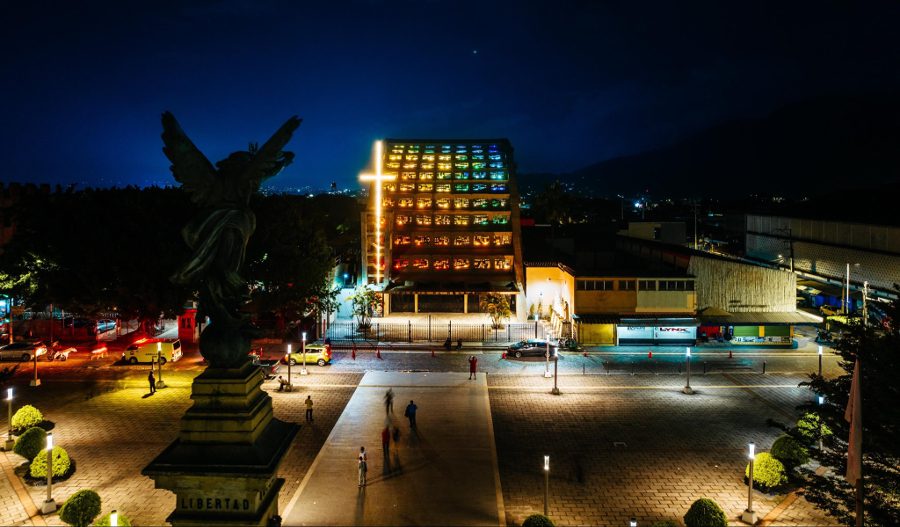
Discover the Historic District at Night
The historic district offers a different atmosphere after sunset. Illuminated buildings, public plazas, and evening visitors create a setting that contrasts with the district’s daytime activity.
Many people enjoy photographing the illuminated landmarks or spending time around the central squares.
The Cultural Importance of the Historic District
The historic district isn’t simply a collection of old buildings. It represents generations of Salvadoran experiences, from religious ceremonies and national celebrations to commerce, political events, and family gatherings.
The district’s churches continue to play an important role in religious traditions, especially during Holy Week. Processions and other celebrations show how deeply Catholic traditions remain.
The historic center also tells the story of everyday commerce. Traditional shops, markets, and busy streets remind visitors of a time when downtown San Salvador brought people together to buy, sell, and socialize.
For Salvadorans living abroad, a visit to the historic center can feel like a trip down memory lane. Familiar landmarks, streets, and public spaces bring back memories of home and create a personal connection that goes far beyond the buildings themselves.
Visiting the San Salvador Historic District
Planning a visit is relatively straightforward because many of the main attractions stand close together. Travelers can explore the central plazas and surrounding landmarks without needing transportation between every stop.
How to Get to the Historic District
The district is accessible from different parts of the San Salvador metropolitan area. Visitors commonly arrive by private vehicle, taxi, ride-hailing service, or public transportation.
Those unfamiliar with downtown may find it easier to choose a central landmark, such as the Metropolitan Cathedral or Plaza Libertad, as their arrival point.
The Best Time to Visit
Morning visits generally offer comfortable conditions for sightseeing and photography, particularly before the strongest midday heat. Afternoon and evening visits provide different lighting and a livelier atmosphere.
Weekdays and weekends can feel different depending on commercial activity, religious observances, and public events. If you are interested in specific attractions, verify their schedules before you go.
How Much Time Should You Spend Exploring?
You can explore the main plazas, take photos of major landmarks, and walk through downtown San Salvador in just a few hours. But if you enjoy architecture and history, you may want to stay longer.
Spending half a day gives you more time to explore without rushing. You can visit historic churches, check out cultural attractions, and enjoy a meal at a local restaurant. If you have extra time, you can also explore other attractions around San Salvador.
Frequently Asked Questions About the San Salvador Historic District
Is the San Salvador Historic District Worth Visiting?
Yes. The district offers an accessible introduction to Salvadoran history, architecture, religion, and culture. Its concentration of landmarks makes it especially appealing to first-time visitors.
Is There an Entrance Fee?
Visitors can generally explore public streets and plazas without paying admission. However, certain historic buildings, exhibitions, guided tours, or cultural activities may charge fees.
Can You Explore the Historic District on Foot?
Yes. Walking is one of the most convenient ways to discover the central attractions. Major landmarks, including the Cathedral, National Palace, and several plazas, stand relatively close together.
Is the San Salvador Historic District Suitable for Families?
Families can enjoy the public plazas, cultural attractions, and sightseeing opportunities. Parents should consider weather conditions, walking distances, and the interests of younger children when planning their visit.
What Are the Most Important Landmarks to See?
The Metropolitan Cathedral, National Palace, National Theater, El Rosario Church, Plaza Libertad, and Plaza Gerardo Barrios provide an excellent introduction to the district’s architectural and historical significance.
Why the San Salvador Historic District Is Worth Exploring
The San Salvador Historic District offers something that newer neighborhoods cannot replicate: a direct connection to the capital’s past through its buildings, public squares, religious traditions, and cultural landmarks.
Every plaza and historic structure reveals another chapter of the city’s development. Together, they tell a story shaped by colonial settlement, natural disasters, reconstruction, national identity, and changing urban life.
Whether you’re discovering San Salvador for the first time or returning to explore familiar streets, the Centro Histórico de San Salvador offers a memorable look at the history and character of El Salvador’s capital.