 Traditional Pupusas from El Salvador.
Salvadoran Pupusas are one of the first foods you should try when exploring El Salvador’s cuisine. These thick, handmade tortillas are stuffed with cheese, beans, chicharrón, loroco, and other fillings, then cooked on a hot comal.
More than a meal, the pupusa is an edible emblem of Salvadoran culture. It connects modern city life with ancestral roots, linking families across generations and continents.
Whether you’re planning a trip to El Salvador or simply curious about its cuisine, the following covers everything you need to know about pupusas—from traditional fillings and preparation to curtido, salsa, rice pupusas, and the best places to try them..
SEE ALSO: El Salvador Tourism: A Journey Through Pristine Beaches, Colorful Towns, and Enchanting Parks
What Is a Salvadoran Pupusa?
A Salvadoran pupusa is a thick, handmade corn or rice tortilla filled with different ingredients before cooking. The filling is enclosed inside the soft corn masa.
Some of the most popular fillings are cheese, chicharrón, refried beans, and loroco, either on their own or mixed.
Traditionally, pupusas are prepared with masa made from corn flour. The stuffed masa is shaped by hand into a thick, round disc.
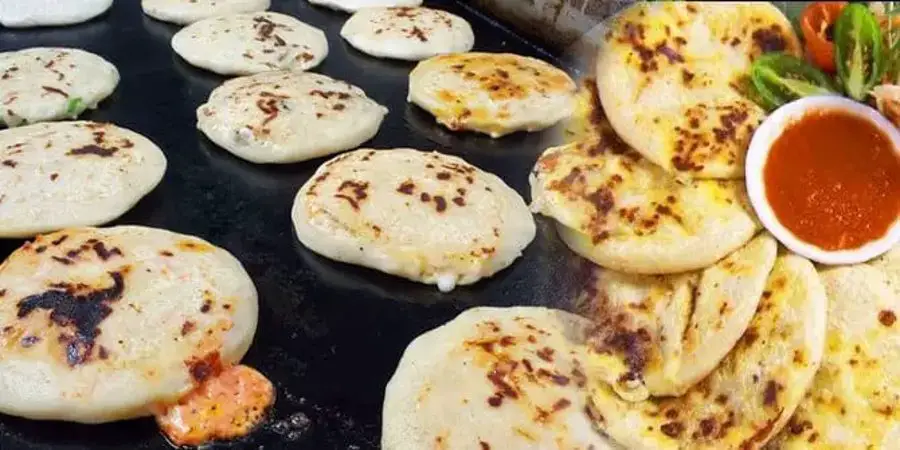
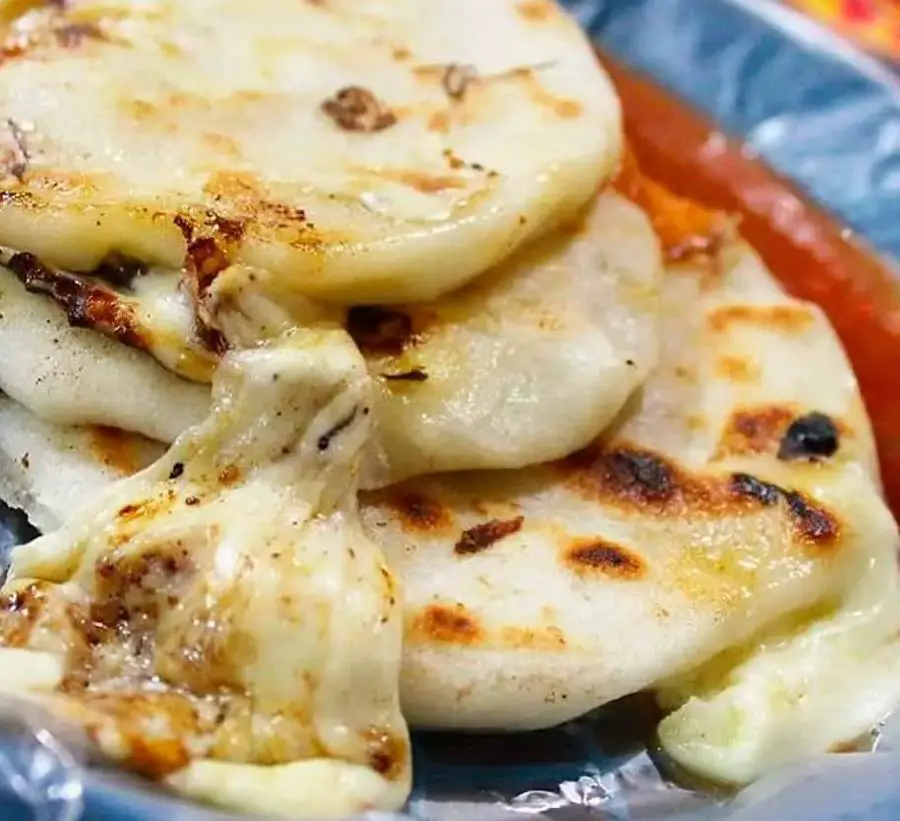
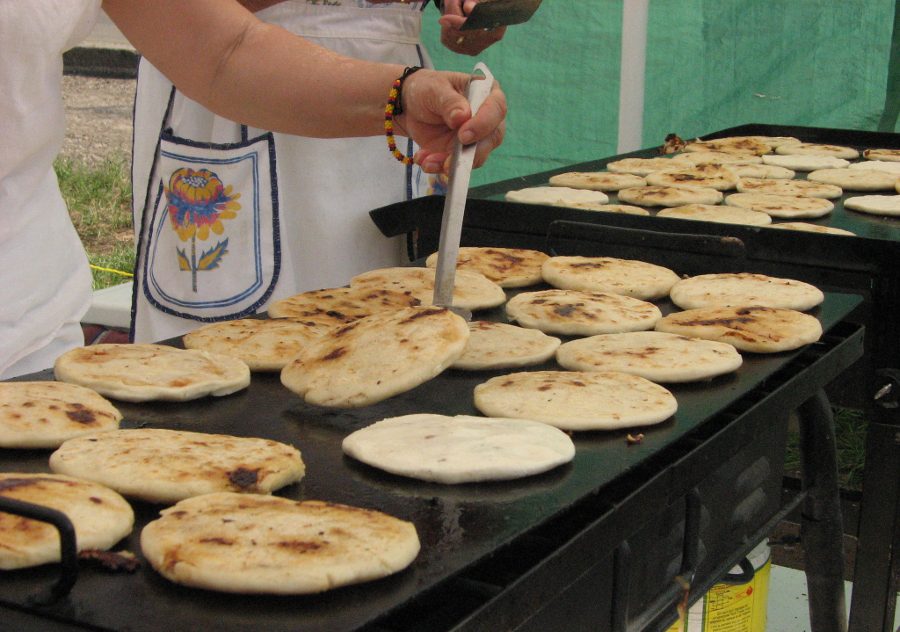
Pupusas are cooked on a hot comal, or flat griddle, until they are lightly browned on the outside and warm and soft inside.
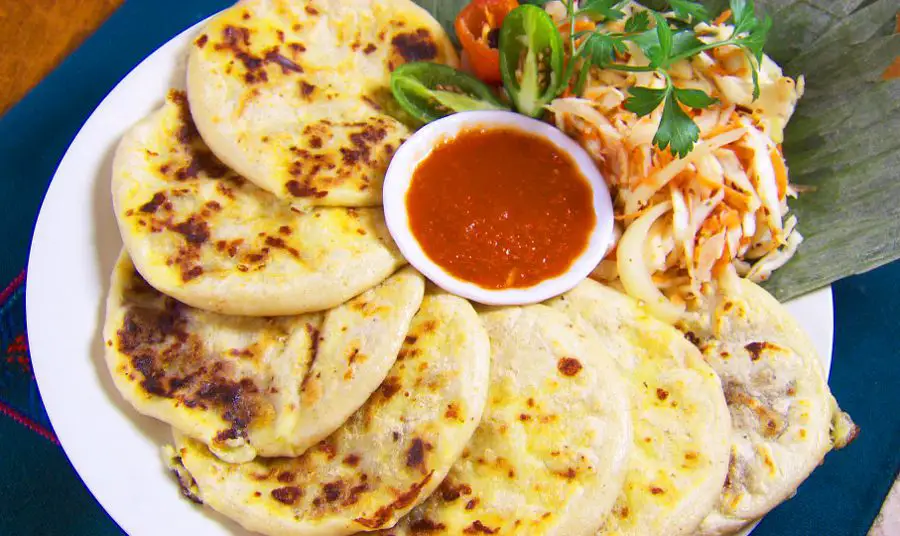
They are typically served with curtido, a tangy cabbage and vegetable slaw, and salsa roja, a mild tomato-based sauce. Together, these accompaniments balance the pupusa’s rich, savory filling.
Here are some of the most popular pupusa fillings:
- Queso — usually a soft, melty Salvadoran cheese.
- Chicharrón — seasoned ground or finely chopped pork, not the crispy pork rind common elsewhere.
- Frijoles — refried beans, typically red or black beans.
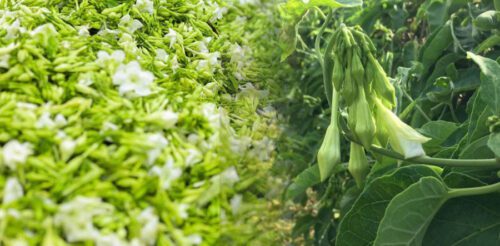
- Loroco — an aromatic Central American flower bud, often mixed with cheese.
- Revueltas — a classic combination of chicharrón, beans, and cheese.
- Queso con loroco — cheese mixed with loroco.
- Frijol con queso — refried beans and cheese.
- Ayote — squash, sometimes combined with cheese.
You may also see less traditional fillings such as shrimp, mushrooms, garlic, spinach, or other vegetables, but queso, chicharrón, beans, loroco, and revueltas remain the classics.
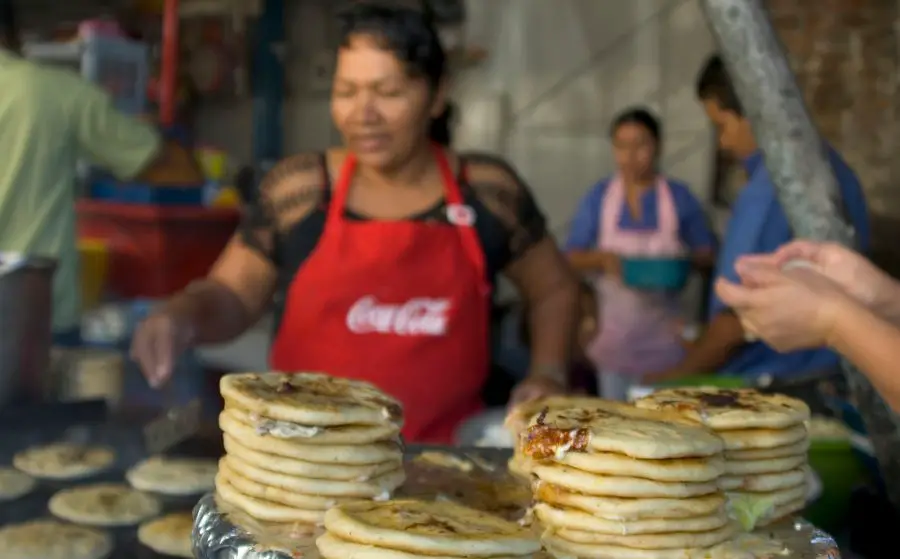
The Art of Making Pupusas
Pupusas aren’t complicated in terms of ingredients, but making a good one takes practice. At their simplest, they are hand-shaped tortillas made from corn or rice flour dough, stuffed with flavorful fillings, and cooked on a hot griddle.
The basic ingredients are simple: masa and a filling. Cheese is one of the most common choices, along with refried beans, seasoned chicharrón, and the aromatic loroco flower. These ingredients can also be combined to make popular varieties such as revueltas.
Traditional pupusas usually begin with nixtamalized corn that is ground into a soft masa. Today, many home cooks and pupuserías also use prepared corn flour mixed with water to create a smooth, workable dough.
Once the masa and filling are ready, roll a portion of dough into a ball. Press an opening in the center, add the filling, and carefully seal the masa around it.
The filled ball is then gently patted and rotated between the hands until it becomes a thick, round disc. This is where experience matters: the filling should remain evenly distributed without breaking through the masa.
Finally, the pupusa is placed on a hot comal and cooked on both sides until lightly browned and heated through. Serve it straight from the griddle with curtido and salsa roja.
Although the process sounds straightforward, experienced pupuseras make it look much easier than it is. Many learn the technique from mothers, grandmothers, or other relatives, passing the skill from one generation to the next.
I won’t pretend to be an expert at making pupusas—I’m much better at eating them! Fortunately, plenty of recipes and videos can help beginners learn the technique and try making authentic Salvadoran pupusas at home.
There’s also plenty of room to get creative with pupusas. Beyond the traditional fillings, people try all kinds of ingredients and combinations, especially during holidays and celebrations. But no matter what goes inside, making them by hand is still an important part of the tradition.
That tradition is part of what makes pupusas special. The familiar sound of masa being patted between the hands and pupusas sizzling on a comal is deeply connected to Salvadoran homes, markets, pupuserías, and family gatherings.
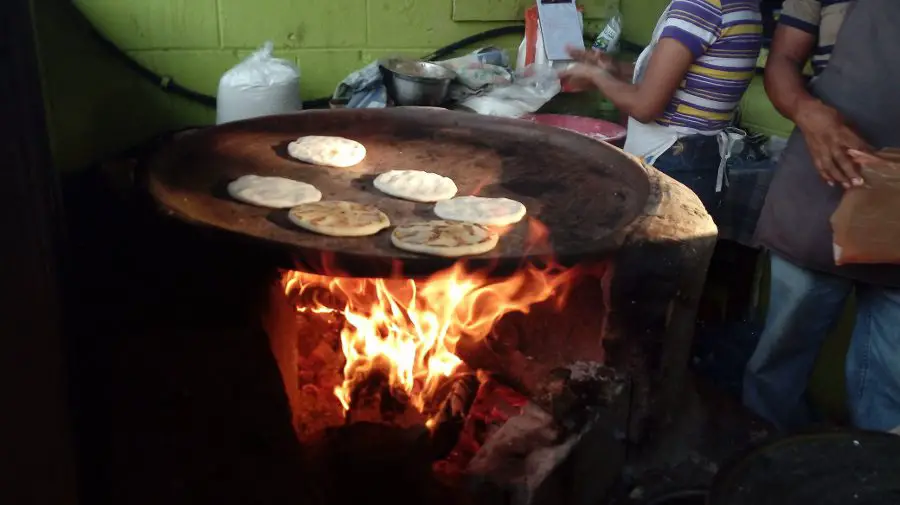
The Most Popular Types of Pupusas
Pupusa de queso is one of the simplest and most popular varieties. It is filled with cheese that melts as the pupusa cooks, creating a warm, creamy center surrounded by soft corn masa.
Pupusa de chicharrón is filled with seasoned pork, cooked and finely ground into a flavorful mixture. Salvadoran chicharrón filling is soft and savory, rather than the crispy pork rind the name might suggest.
Pupusa de frijol con queso combines refried beans with cheese for a creamy, tasty filling. It’s a classic combination found at pupuserías throughout El Salvador and is especially good when served straight from the comal.
Pupusa de loroco con queso combines melted cheese with loroco, an edible flower bud widely used in Salvadoran cooking. Loroco has a distinctive aroma and slightly earthy flavor that makes this pupusa easy to recognize.
Pupusa revuelta brings several traditional favorites together, typically combining chicharrón, refried beans, and cheese. The result is a rich, savory pupusa and one of the varieties you’ll see on almost every pupusería menu.
Pupusa de ayote is made with squash, often mixed with cheese for extra flavor and creaminess. It’s a traditional meat-free option that shows pupusas have never been limited to pork, beans, and cheese.
Other Types of Pupusas: Modern pupuserías have taken things even further, experimenting with fillings such as chicken, jalapeño, shrimp, garlic, spinach, mushrooms, and other ingredients. They aren’t necessarily traditional, but they show how the pupusa continues to evolve.
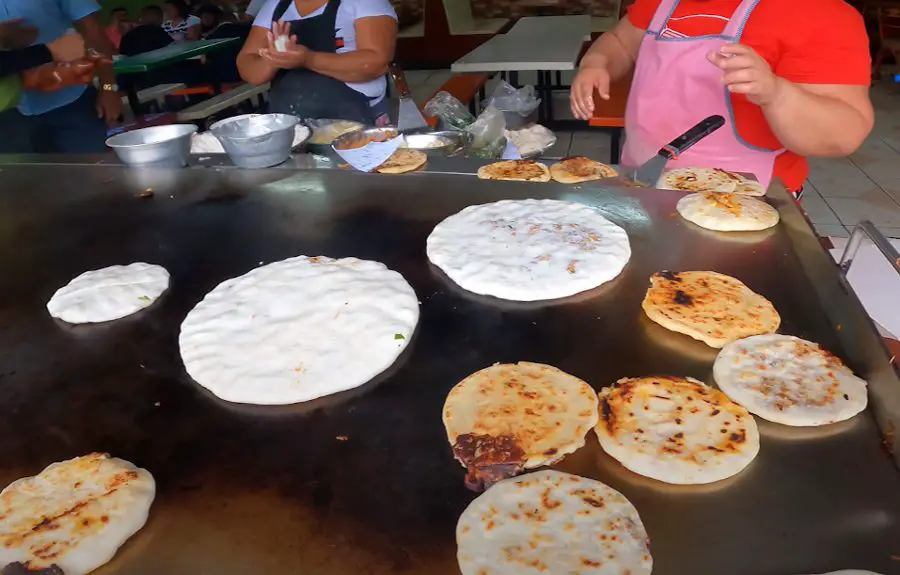
Corn or Rice Pupusas
Most Salvadoran pupusas are made with corn masa, giving them the familiar soft, slightly chewy texture and corn flavor.
Pupusas de arroz use rice flour instead of corn. They are especially associated with Olocuilta, a town famous for this variety. They tend to have a smoother texture, lighter appearance, and slightly different flavor.
The preparation is similar: rice dough is shaped by hand, stuffed with cheese, chicharrón, beans, loroco, or other fillings, flattened, and cooked on a hot comal until lightly browned on both sides.
Although Olocuilta remains the place most closely connected with rice pupusas, you don’t have to travel there to try them. Today, pupusas de arroz are made and sold at pupuserías throughout El Salvador.
Curtido and Salsa: The Essential Accompaniments to Pupusas
A plate of pupusas is not complete without curtido and salsa. Curtido is a tangy Salvadoran slaw usually made with shredded cabbage, carrots, onion, oregano, and vinegar. Some variations also include chile for a little extra kick.
Then comes salsa roja, a simple, smooth tomato sauce that is generally mild rather than spicy. Poured over a hot pupusa, it adds moisture and freshness while balancing rich fillings like cheese, chicharrón, and refried beans.
There’s really no single way to eat them. Some people pile curtido on top and pour salsa over everything. In contrast, others tear or open the pupusa and add a little curtido and salsa with each bite.
While pupusas themselves tend to be fairly consistent from one pupusería to another, curtido and salsa can vary quite a bit. Many pupuserías and families have their own recipes, adjusting the vinegar, oregano, vegetables, seasoning, and heat level to their taste.
The curtido can also be fresh and lightly pickled or left to ferment longer for a stronger, tangier flavor. Those small differences are part of the fun—you can eat pupusas at several places and find that each serves a slightly different version of the accompaniments.
And if you want the full Salvadoran experience, add a traditional drink. Horchata de morro is a popular choice, while atol de elote, a warm and sweet corn-based drink, is another Salvadoran favorite that pairs nicely with a plate of fresh pupusas.
Eating Pupusas the Salvadoran Way
In El Salvador, you must eat Pupusas the local way—it’s a tradition. Forget the fork and knife; Salvadorans eat pupusas with their fingers, just as they were intended to be eaten.
Top your pupusa generously with curtido and a splash of salsa roja. The flavors blend perfectly—warm, tangy, and unmistakably Salvadoran.
Then, tear a piece of pupusa by hand, feeling its warmth and texture. Each bite connects you to generations who’ve done the same.
Another way to eat Pupusas like a local is to open them. This lets you see the inside, like an open sandwich, then top them with Curtido and Salsa.
Where to Eat Pupusas in El Salvador
In El Salvador, you don’t have to look very far for pupusas. They’re everywhere—from street vendors cooking them on hot comales to busy neighborhood pupuserías and restaurants serving them throughout the country.
Still, a few places stand out for travelers who want to experience this national dish. Olocuilta, Los Planes de Renderos, and Antiguo Cuscatlán are among the best-known destinations. Local markets and food festivals also offer plenty of other opportunities.
Olocuilta, east of San Salvador, is especially famous for its rows of pupuserías and its signature pupusas de arroz. The town has become closely associated with rice pupusas. It attracts plenty of Salvadorans and visitors looking for the real thing.
Another classic destination is Los Planes de Renderos, in the hills overlooking San Salvador. The area is packed with pupuserías and becomes especially lively in the evenings and on weekends, when families come for hot pupusas and cooler mountain air.
Antiguo Cuscatlán is another great option, especially if you’re staying around the San Salvador metropolitan area.
But you don’t need to visit a famous pupusa destination to eat well. Some of the most memorable pupusas come from small neighborhood pupuserías, local markets, roadside stands, and street vendors where they’re made fresh right in front of you.
Food festivals are another good place to look. Olocuilta celebrates National Pupusa Day in November, while Juayúa’s weekend food festival brings together vendors selling a wide variety of Salvadoran dishes.
Many food festivals around the country celebrate a particular fruit, crop, or regional specialty. Even when pupusas aren’t the main attraction, there’s a good chance you’ll find someone making them nearby.
National Pupusa Day
Every November, El Salvador celebrates one of its most cherished traditions—National Pupusa Day. It’s a nationwide tribute to the country’s most iconic and beloved dish.
Held on the second Sunday of November, this holiday fills the air with the smell of sizzling masa and melting cheese across towns and cities.
Olocuilta, known as the Pupusa Capital of El Salvador, becomes the heart of the celebration, attracting thousands eager to taste its famous pupusas.
Festivities include live music, dancing, and community events that showcase Salvadoran pride. Families gather to eat, laugh, and honor their culinary heritage.
National Pupusa Day isn’t just about food—it’s about identity. Each bite reminds Salvadorans everywhere of home, tradition, and the flavors that unite a nation.
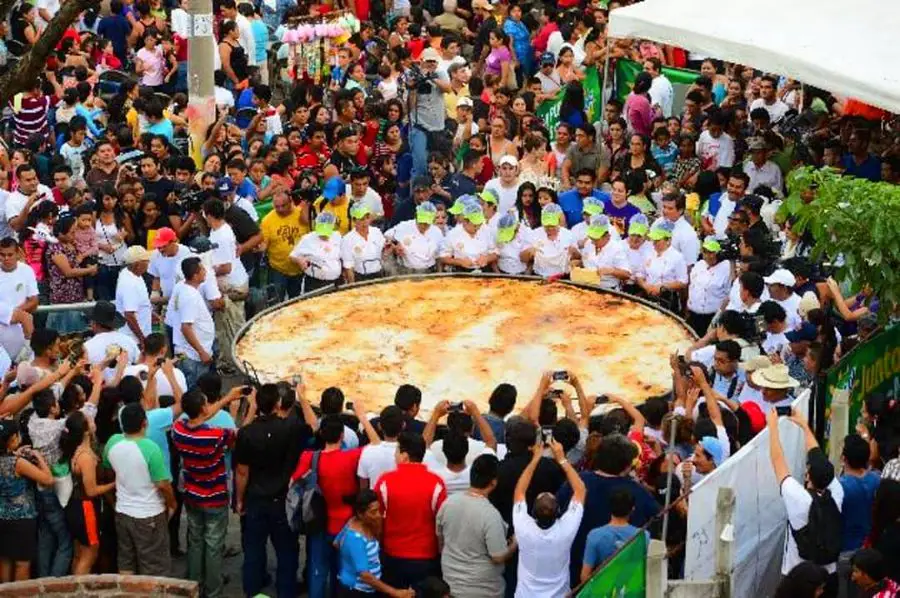
In 2015, Olocuilta was included in the Guinness World Records for creating the world’s largest pupusa.
The largest pupusa is 4.50 m (14 ft 9 in) in diameter and was made by the Alcaldía de Olocuilta (El Salvador) in Olocuilta, El Salvador, on 8 November 2015.” Guinness World Records.
Pupusas Beyond El Salvador
Pupusas have become a well-known food around the world, their global journey beginning in the 1980s when they first gained recognition beyond El Salvador’s borders.
The Salvadoran civil conflict forced many to migrate, especially to the United States. Along with their hopes, they carried the art of making pupusas wherever they went.
Soon, Salvadoran communities in Los Angeles, Washington, D.C., and Houston opened pupuserías that became neighborhood landmarks—places of comfort, identity, and cultural pride.
Today, “pupusa” is a word recognized across continents. Its appeal lies in its simplicity, affordability, and authenticity—a humble dish that bridges nations while honoring its roots.
Every pupusería abroad serves as a cultural ambassador, sharing El Salvador’s spirit through its flavors. Each pupusa sold tells a story of migration, resilience, and representation.
Salvadoran Pupusas: More Than El Salvador’s National Dish
Pupusas are much more than one of the most popular foods in El Salvador. They are part of Salvadoran culture, connecting everyday meals with family traditions, local communities, celebrations, and generations of home cooking.
What makes them special is their simplicity. Corn or rice masa, traditional fillings, curtido, and salsa come together to create an affordable and satisfying meal that Salvadorans enjoy at home and in pupuserías across the country.
They are also a food that brings people together. Families gather around the table, friends meet at their favorite pupusería, and skilled pupuseras continue techniques learned and passed down through generations.
For visitors, eating freshly made pupusas is one of the easiest and most enjoyable ways to experience Salvadoran culture. Whether in Olocuilta, Los Planes de Renderos, or a neighborhood pupusería, each stop offers something different.
So, if you travel to El Salvador, make room for more than one plate. Try different fillings, compare corn and rice pupusas, pile on the curtido and salsa, and discover your favorite combination.