 National Palace of El Salvador
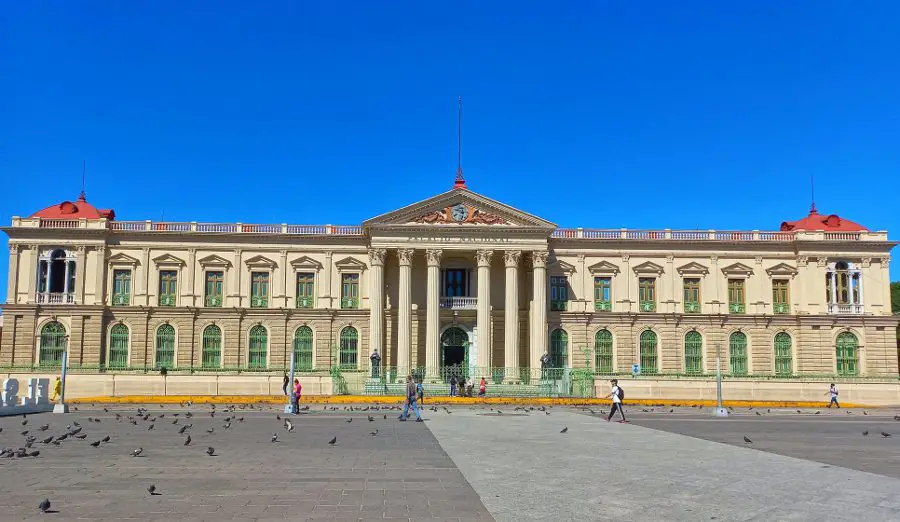
The National Palace of El Salvador stands in the heart of San Salvador, where its elegant architecture and historic halls tell the story of a country shaped by political and social change.
Known locally as the Palacio Nacional, this building ranks among the most significant historical landmarks in El Salvador. For decades, government officials made decisions within its walls that influenced the country’s direction.
Today, visitors can walk through its colorful rooms, enjoy its unique architecture, and learn more about Salvadoran history.

Getting to Know the National Palace of El Salvador
The National Palace is more than just its impressive front. Inside, you’ll find historic rooms that show El Salvador’s political history, artistic style, and architectural goals.
What Is the National Palace of El Salvador?
The National Palace is a historic building that used to house all three branches of the Salvadoran government: executive, legislative, and judicial. Now, it is a museum and a place for cultural events.
Unlike the country’s active government offices, the palace offers visitors an opportunity to learn about earlier political institutions. Its historic furniture, decorative elements, and artwork help put Salvadoran history into perspective.
Where Is the National Palace Located?
The palace occupies a prominent location in the historic center of San Salvador, the capital of El Salvador. It faces Gerardo Barrios Plaza and stands near the Metropolitan Cathedral and National Library.
Its central location makes it easy to include in a walking tour of downtown. Several important historical buildings, public squares, restaurants, and cultural attractions sit within a short distance of one another.
History of the National Palace of El Salvador
The palace’s history dates back to the nineteenth century when Salvadoran leaders aimed to establish a central location for government operations. However, the building visitors see today is not the country’s original palace.
Origins and the First National Palace
The idea of constructing a national palace emerged during the administration of President Gerardo Barrios. Construction took place between 1866 and 1870, during the presidency of Francisco Dueñas.
Salvadoran artisans Ildefonso Marín and José Dolores Melara led the first construction. In 1889, a fire destroyed the building, so the country lost its main government palace.
Construction of the Current National Palace
In 1903, President Pedro José Escalón held a design competition, which was won by Salvadoran engineer José Emilio Alcaine. Construction started in 1905.
Coffee helped pay for the National Palace. Under Salvadoran law, one colón from every quintal of coffee the country exported went toward construction. That’s how the building earned its nickname, Palacio del Café.
Builders used metal supports made in Germany to help the palace withstand earthquakes. When it officially opened on March 1, 1911, it marked a milestone in Salvadoran engineering and construction.
The Palace as the Seat of Government and a National Monument
For much of the twentieth century, the palace hosted legislative sessions, court hearings, presidential events, and diplomatic ceremonies. The rooms were used in different ways based on which government institutions were there.
The Blue Hall was named a national monument in 1974. Later, on July 10, 1980, Legislative Decree No. 316 gave the same recognition to the whole building, officially marking its historical importance.
Architecture and Design of the National Palace
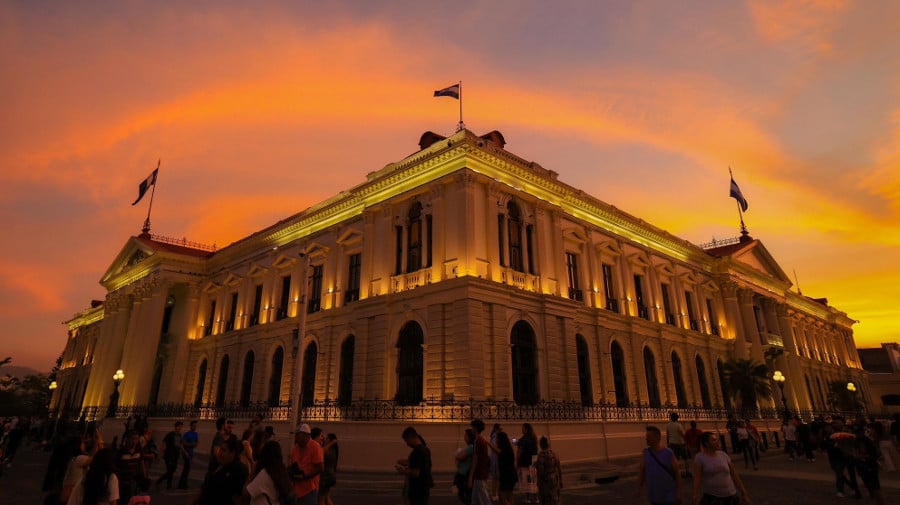
If you love architecture, there is a lot to see here. The palace has a symmetrical exterior, decorated ceilings, and colorful interiors, all showing the artistic styles that were popular when it was built.
Neoclassical architecture shapes most of the building’s look, but its decorations also take ideas from other European styles like Renaissance, Baroque, Gothic, and Art Nouveau.
This combination, known as eclecticism, gives the palace considerable architectural variety. Rather than following a single design tradition, its creators borrowed elements that reflected the tastes and ambitions of the period.
Exterior Design and Main Facade
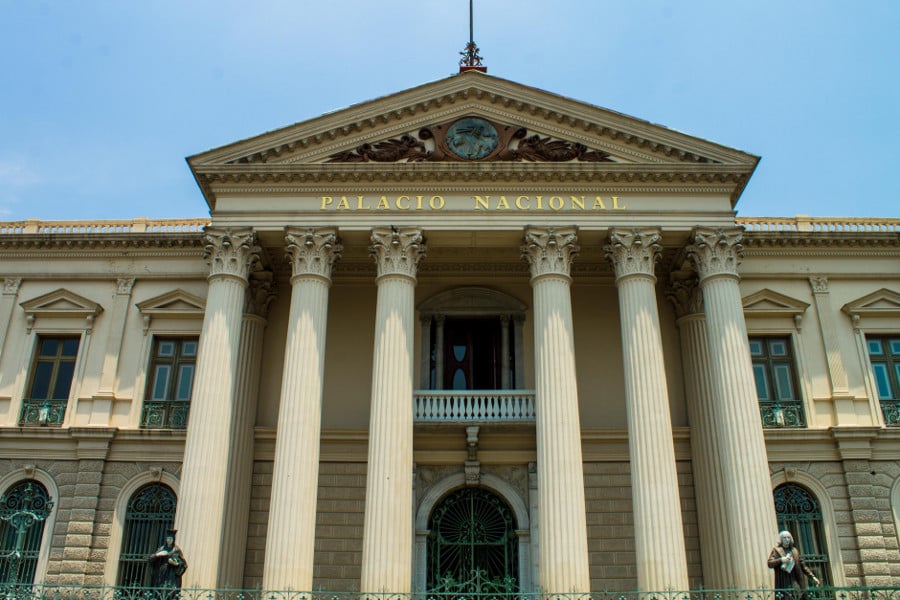
The Palace’s main facade has large columns, decorative sculptures, and a balanced, symmetrical design. This style gives the building a sense of formality and authority, much like other government buildings from the late nineteenth and early twentieth centuries.
Take a moment to look beyond the entrance. The relationship between the columns, windows, balconies, and ornamental work becomes easier to appreciate when viewed from across Gerardo Barrios Plaza.
Interior Design and Decorative Details
Inside, the decorative floors, painted walls, detailed ceilings, staircases, and metalwork all show the care put into building the palace. Each room has its own artistic style instead of repeating the same design.
Historic furniture and paintings add to what you’ll see in the rooms. You can spot touches of Art Nouveau in some bronze and iron details, while the floors and murals show other styles from the same era.
The Central Courtyard
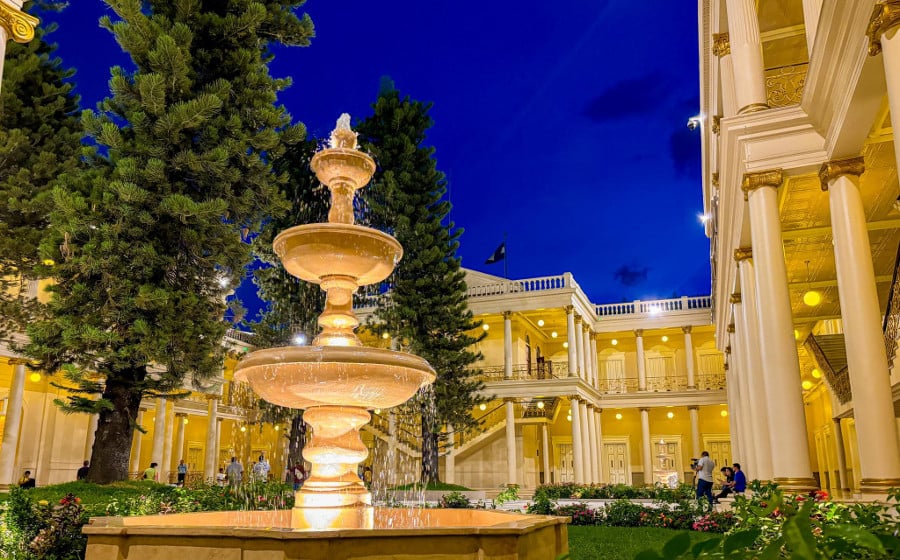
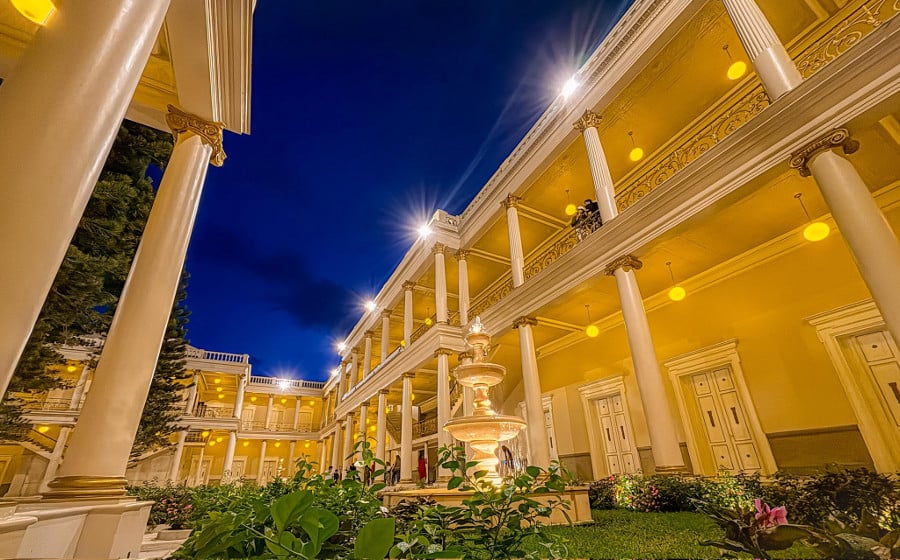
The building measures approximately 74 meters along each side and features a central courtyard arranged in the shape of a Greek cross. Interior corridors connect the surrounding rooms and halls.
This design lets natural light reach the interior spaces and gives a visual break from the richly decorated rooms. The courtyard also helps visitors see how the building is laid out.
The Historic Halls of the National Palace
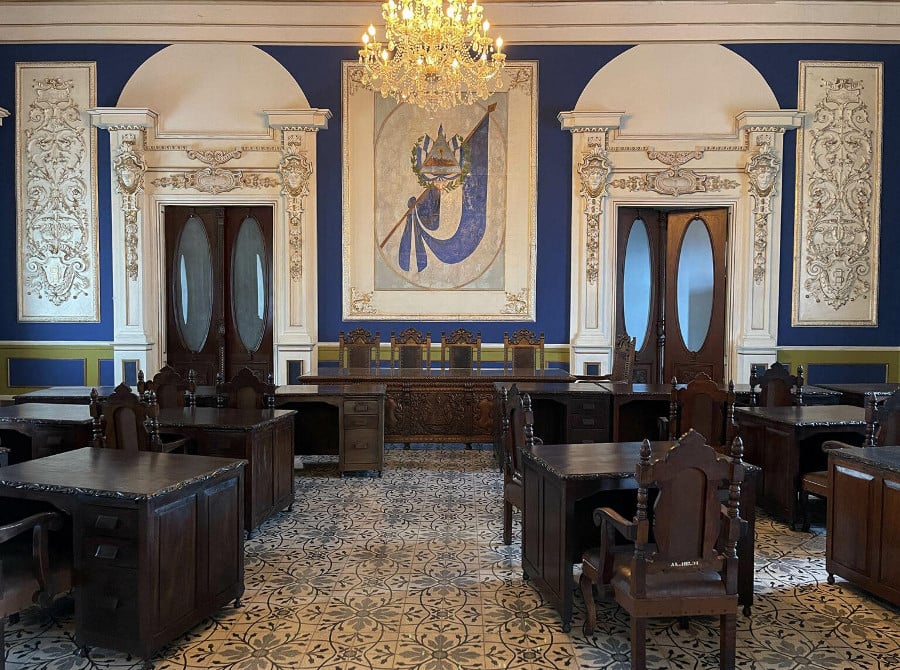
The palace’s most well-known rooms are named after their colors. Each main hall had its own government role, giving visitors a glimpse into how political institutions once worked.
The Blue Hall (Salón Azul) and the Pink Hall (Salón Rosado)
The Blue Hall was once home to the Legislative Assembly. Its old seating layout and special press section help us understand what parliamentary life and legislative traditions were like in the past.
Meanwhile, the Pink Hall accommodated the Supreme Court of Justice from 1911 to 1974. Among its historical features is a painted representation of El Salvador’s first national coat of arms.
The Red Hall (Salón Rojo) and the Yellow Hall (Salón Amarillo)
Presidents used the Red Hall for formal ceremonies, diplomatic receptions, and other official engagements. Decorative medallions representing the country’s 14 departments and portraits of former presidents reinforce its national character.
The Yellow Hall served as the presidential office until 1930. Together, these two rooms illustrate the contrast between the ceremonial responsibilities of the presidency and the everyday business of governing.
The Jaguar Hall (Salón Jaguar) and Other Spaces
The Jaguar Hall stands out from the palace’s mostly European-inspired interiors. Its walls feature mythological images from Indigenous culture. It adds another layer to the building’s artistic heritage.
The main halls get much of the attention, but take a look at the smaller rooms, too. Each has decorative details that show how much the design varies from room to room.
Historical and Cultural Significance of the National Palace
Few Salvadoran buildings bring together so many aspects of national history under one roof. The palace reflects the development of government institutions, the influence of coffee exports, and changing architectural preferences.
The Palace and El Salvador’s Political History
For generations, lawmakers, judges, presidents, diplomats, and government employees passed through these corridors. Their presence made the building an important setting for political developments throughout much of the twentieth century.
But to truly appreciate the palace, it’s important to look beyond its architecture. Learning about the institutions that used the building helps explain the country’s history.
The Palace as a Symbol of National Identity
The National Palace links today’s Salvadorans with past generations through its architecture, art, and historic spaces.
For Salvadorans who live abroad, visiting the palace is also a chance to reconnect with their roots. It shows that national identity is about more than just food, festivals, or familiar places.
Things to See and Do at the National Palace
If you’re looking for interesting things to do in El Salvador beyond its beaches and volcanoes, consider spending part of your trip exploring the country’s architectural and political heritage.
Taking a Historical Tour
An organized tour helps visitors understand the individual rooms, the building’s construction, and the historical events linked to its former occupants.
Ask about the coffee-funded construction, the different architectural styles, and the former government offices. These details turn an attractive building into something considerably more interesting than a collection of decorated rooms.
Admire the Architecture and Discover Historical Artifacts
Take a moment to notice the ceilings, floor patterns, decorative ironwork, and wall paintings. These smaller details can tell you as much about the period’s artistic tastes as the building’s main features.
You can also learn more about the country’s past by looking at the historical furniture, presidential portraits, and cultural exhibitions. Since exhibitions change from time to time, you might find something new on your next visit.

Attractions Near the National Palace
Several of the best things to do in San Salvador are within walking distance of the palace. You can easily spend several hours discovering the surrounding streets, historic buildings, and public spaces.
Metropolitan Cathedral, Gerardo Barrios Plaza, and the National Library
The Metropolitan Cathedral is home to the tomb of Saint Óscar Arnulfo Romero, which makes it a significant place for both religion and history. Just outside, Gerardo Barrios Plaza is a great place to take in the nearby architecture.
The National Library of El Salvador, known as BINAES, stands out with its modern architecture. Its new design and learning spaces are right next to buildings from much older periods in Salvadoran history.
National Theater, Liberty Plaza, and El Rosario Church
The National Theater, which opened in 1917, highlights a different aspect of the city’s architectural history. Its stylish interiors and cultural events add to the historical atmosphere you’ll find at the nearby palace.
From the National Palace, keep walking through San Salvador’s Historic District toward Liberty Plaza and El Rosario Church. After seeing the palace’s classical details, step inside the church to see how its bright stained glass lights up the interior.
Discovering Salvadoran History at the National Palace
The National Palace offers a chance to understand El Salvador through its architecture, political institutions, economic history, and cultural heritage. Even its construction tells a story about the country’s relationship with coffee.
Whether you’re rediscovering your Salvadoran roots or exploring El Salvador’s diverse tourism attractions for the first time, make room for its historical landmarks. They reveal stories that beaches and mountain trails cannot.
The next time you cross Gerardo Barrios Plaza, take a closer look at the palace. Behind its stately facade lies more than a century of Salvadoran history.