
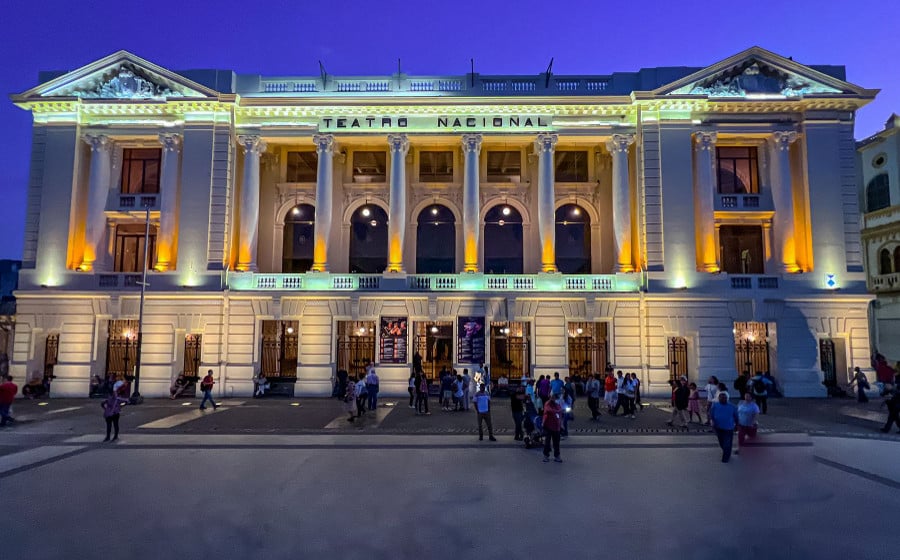
 National Theater of San Salvador.
The National Theater of San Salvador is located in the center of the city’s historic district. For over a hundred years, its beautiful halls have hosted countless cultural events.
Locally called the Teatro Nacional, this building gives us a look into a time when El Salvador wanted to change its capital by building grand public spaces and cultural centers.
The National Theater is one of El Salvador’s most important historic landmarks. It’s not simply a building to admire from the sidewalk; its real character comes to life once you step inside.
History of the National Theater of San Salvador
The story of the National Theater dates back to the 19th century, when San Salvador began developing spaces dedicated to artistic performances, social gatherings, and cultural entertainment.
The capital’s original National Theater opened in 1867. Opera companies, musicians, poets, and other performers entertained audiences there until a devastating fire destroyed the building in 1910.
Rather than abandoning the project, authorities organized an international architectural competition. French architect Daniel Beylard submitted the winning design, while engineer and architect Alberto Ferracuti oversaw the construction.
In 1911, President Manuel Enrique Araujo laid the cornerstone of the new theater. The occasion coincided with celebrations marking the centenary of the 1811 independence uprising.
The Inauguration of the National Theater in 1917
After nearly six years of construction, President Carlos Meléndez inaugurated the National Theater in 1917. The building soon became a prominent setting for artistic and social events.
Its history, however, hasn’t always revolved around performances. Over the following decades, parts of the building housed government offices, Radio Nacional, and other public services. It also operated as a cinema.
Deterioration eventually prompted a major restoration in the 1970s. The renovated theater reopened in November 1978.
Decades later, the earthquakes of January and February 2001 caused considerable damage, leading to another extensive restoration that culminated in its reopening in 2008.
Recognition as a National Monument
On February 16, 1979, El Salvador’s Legislative Assembly declared the National Theater a National Monument.
This designation is especially important in a city where earthquakes, urban growth, and neglect have destroyed many historic buildings. Keeping the theater intact helps San Salvador stay connected to its past.
Today, the Ministry of Culture administers the property, balancing the responsibility of protecting its historical features with the demands of operating an active performing arts venue.
Architecture and Design of the National Theater
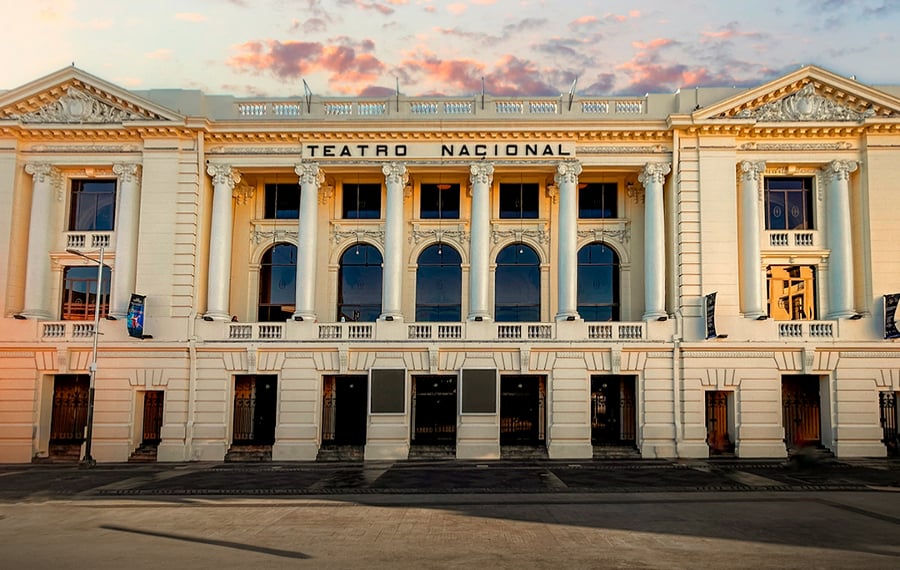
Daniel Beylard drew inspiration from European architectural traditions when designing the National Theater. Although many describe the building as French Renaissance, its architecture more accurately reflects an eclectic Neo-Renaissance style.
The way the theater was built was unusual for its time. Builders used the Hennebique reinforced concrete system, a new method that helped the building survive several earthquakes over the years.
The Exterior and Historic Facade
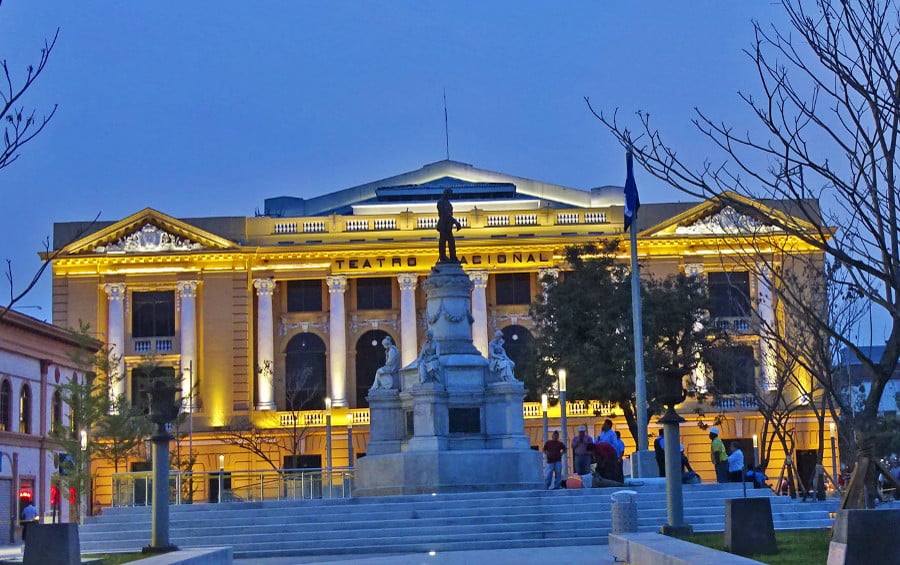
The National Theater faces Plaza Morazán, and its symmetrical facade stands out from the nearby commercial buildings. Its tall windows, ornamental columns, decorative moldings, and arched openings make the exterior unique.
Take a few minutes to appreciate the building from across the plaza. From there, you can better observe its proportions, architectural details, and relationship with the surrounding historic center.
There’s an interesting contrast between the theater’s formal European appearance and the everyday activity outside. It’s a reminder that San Salvador’s architectural heritage remains part of a living, working city.
Interior Design and Decorative Details
Inside, the building shows a different character. Decorative balconies, elegant staircases, ornamental ceilings, copper artwork, and carefully crafted details give the space a feel that stands apart from the busy streets outside.
One of the most remarkable features is the ceiling mural El Mestizaje Cultural, created by renowned Salvadoran painter Carlos Cañas during the restoration undertaken in the 1970s.
The mural introduces a distinctly Salvadoran artistic identity into a building heavily influenced by European design. An impressive crystal chandelier hangs beneath it, bringing together two very different decorative traditions.
It’s one of those places where looking up rewards you as much as looking straight ahead. The ceiling alone deserves a few unhurried minutes of your attention.
Inside the National Theater of San Salvador
The theater has several performance rooms and exhibition spaces. Each one has its own purpose, so the theater can host both large productions and smaller, more intimate shows.
The Grand Hall (Gran Sala)
The Gran Sala stands at the heart of the theater. Its classic horseshoe-shaped auditorium holds about 650 seats spread over three levels, and decorative balconies look out onto the main stage.
Among its most distinctive features is the presidential box, an elaborately decorated seating area that reflects the ceremonial importance theaters once held within political and social life.
The stage and auditorium accommodate theatrical productions, musical concerts, ballet, and other performances. The hall’s acoustics attracted considerable attention even during the theater’s inauguration in 1917.
Watching a performance here offers something that photographs can’t capture: the relationship between the architecture, the performers, the sound, and the audience sharing the same space.
The Small Hall and Chamber Hall
The Pequeña Sala and Sala de Cámara offer more intimate settings than the Grand Hall. Their smaller dimensions make them suitable for productions that benefit from closer interaction with audiences.
These rooms provide alternative spaces for theatrical presentations, musical performances, and artistic projects that don’t necessarily require an elaborate stage or the seating capacity of the main auditorium.
Both spaces were created during the theater’s major renovation in the 1970s. This was part of a larger effort to meet modern artistic needs while keeping the historic building.
The Café Theater
The Café Teatro offers a less formal performance environment. Unlike the Grand Hall, where the architecture commands considerable attention, this smaller venue allows the artistic presentation itself to take center stage.
Depending on the programming, audiences may encounter musical presentations, theatrical performances, poetry readings, or other cultural activities that work particularly well in a more relaxed setting.
The space also illustrates how a historic institution can adapt to different forms of artistic expression without losing the character that makes the building special.
The Foyer and Exhibition Spaces
The foyer offers much more than a place to wait before a performance. Its architectural details and open interior provide an opportunity to appreciate the building beyond its auditoriums.
The theater also uses its foyer and vestibule as exhibition spaces, introducing visitors to visual arts and cultural projects alongside its regular performing arts programming.
You don’t necessarily need to attend a major production to appreciate these areas. Depending on public access and scheduled activities, they can form an interesting part of a daytime visit.
The Cultural Importance of the National Theater
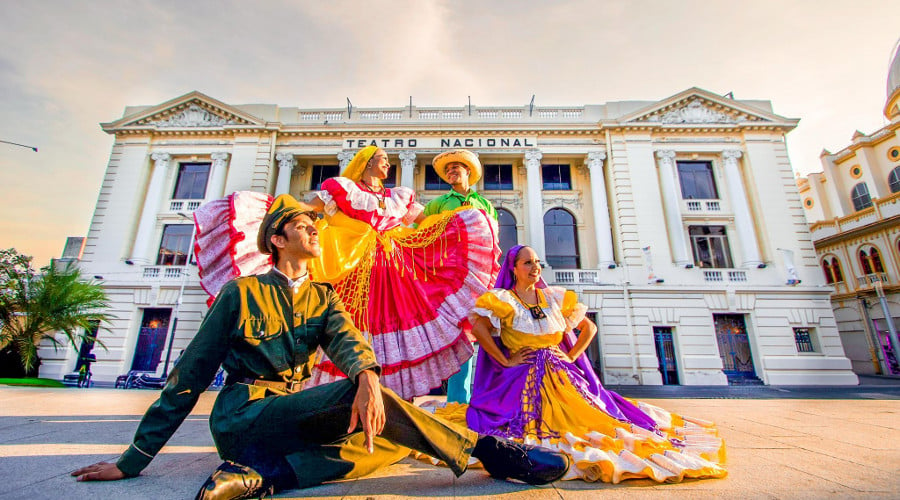
El Salvador’s cultural identity is more than just its traditional food, religious celebrations, and colorful festivals. The performing arts community is also a key part of the country’s creative heritage.
Over the years, the National Theater has hosted operas, plays, orchestral concerts, ballet, and many other performances by both Salvadoran and international artists.
The theater supports both well-known cultural organizations and independent groups. Its different spaces let artists put on shows for all kinds of audiences, budgets, and creative styles.
Things to Do at the National Theater of San Salvador
One of the best ways to discover the theater is through a guided tour. Depending on availability, these visits introduce its history, architectural features, and different performance spaces.
Seeing a live performance is a unique experience. Before you plan your visit, look at the Ministry of Culture’s official website to find out about plays, concerts, dance shows, and other events.
If you enjoy architecture, take a close look at the ceiling mural, the balconies, the copper decorations, and the staircases. These features show how artists from different times have contributed to the theater.
You can also visit cultural exhibitions when the theater opens these areas to the public. Temporary displays give you a new reason to come back, even if you have already toured the building.
Opening hours, ticket prices, tour times, and show schedules may change. Be sure to check these details ahead of time, especially if you are coming on a national holiday or with a group.
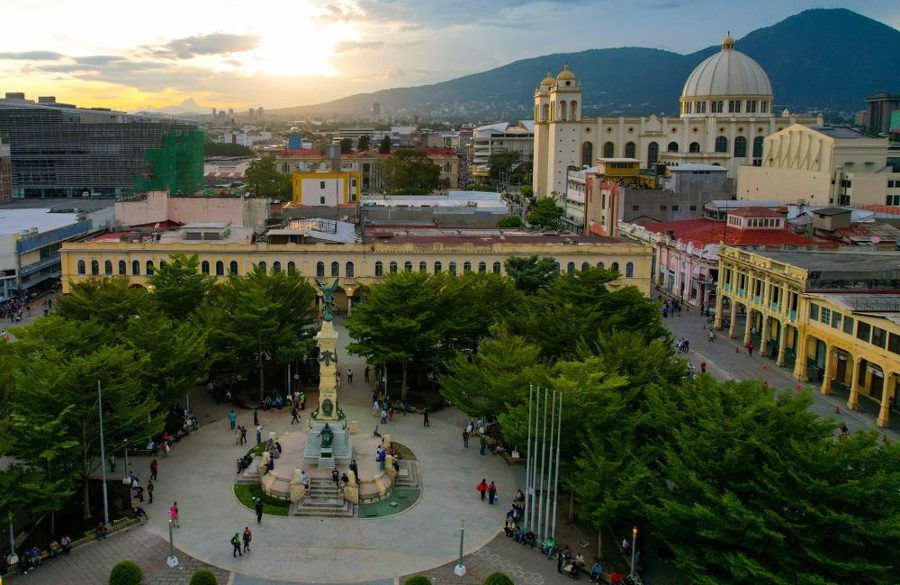
Attractions Near the National Theater of San Salvador
The theater’s central location makes it easy to combine a visit with several other historic and cultural attractions. Most lie within a short walk, so there’s little need for additional transportation.
Plaza Morazán sits directly in front of the theater. Its monument honors Francisco Morazán, the Central American political and military figure associated with efforts to unite the region.
The National Palace offers another impressive example of early 20th-century architecture. Its historic rooms and decorative features provide insight into the country’s political history and former government institutions.
Close by, the Metropolitan Cathedral of San Salvador is especially important for its religious and historical significance. Its crypt holds the tomb of Saint Óscar Arnulfo Romero, one of El Salvador’s most influential people.
The National Library of El Salvador (BINAES) stands out from the older buildings nearby. Its modern design and learning spaces show a new chapter in the city’s growth.
Just a few streets away, El Rosario Church looks very different from most religious buildings. Its unique concrete shape, bright stained glass, and clever use of natural light make it especially interesting.
Finally, Plaza Libertad has played a key role in the city’s history. Its main monument, the buildings around it, and the daily life there make it a great place to visit while you’re exploring downtown San Salvador.
Instead of hurrying from place to place, take your time to enjoy what makes each spot unique. In just a small area, you’ll find centuries of religious, political, artistic, and architectural history.

Discover the National Theater of San Salvador
The National Theater shows how El Salvador’s artistic goals, European styles, history, and local creativity have all helped shape one of the capital’s most famous buildings.
Whether you’re interested in architecture, performing arts, or Salvadoran history, spending time inside the theater adds another dimension to your understanding of the country and its cultural identity.
As you explore the many cultural attractions and tourism destinations in El Salvador, make room for its historic theaters. They tell stories that beaches, volcanoes, and mountain towns simply can’t.
And if you have the opportunity to attend a performance, take it. There’s something fitting about experiencing this historic building the way it was originally intended — with the stage lights on.

