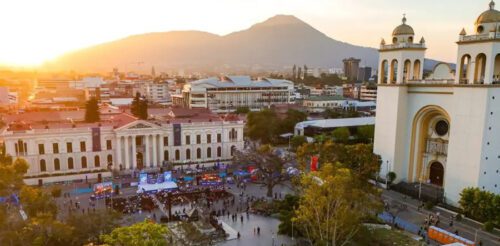
El Salvador National Palace.
Political Parties in El Salvador have shaped the country’s democracy, influenced government policies, and reflected changing public priorities. From traditional political movements to newer organizations, they’ve played an important role in Salvadoran history.
For many years, two main parties (ARENA – FMLN) led national politics. But as voters’ preferences changed and new leaders appeared, the country’s elections have shifted, and old political divisions have been challenged.
Learning about these parties helps explain how the Salvadoran government and political system work.
Understanding El Salvador’s Political Party System
El Salvador has a multiparty political system. Different organizations compete in elections and represent voters. Political parties choose candidates for the presidency, Legislative Assembly, and municipal governments.
The Constitution recognizes political parties as key to democratic representation. Parties must meet legal requirements before they can take part in elections and present candidates for public office.
The Supreme Electoral Tribunal (TSE) oversees elections and keeps the official list of political parties. It also manages election procedures and helps enforce the country’s election laws.
Although several parties participate in Salvadoran politics, their influence varies considerably. Some have governed the country, while others concentrate on legislative representation, local elections, or building support among specific voters.
The History of Political Parties in El Salvador
El Salvador has experienced military governments, civil conflict, democratic reforms, and big changes in party leadership. These events influenced how political groups formed and competed for support from the public.
For much of the 20th century, military-backed governments and powerful political groups controlled El Salvador’s institutions. Opposition groups had little room to operate, especially during times of political unrest and armed conflict.
The 1992 Peace Accords were a turning point. They ended the country’s twelve-year civil war and allowed former guerrilla groups to take part in elections.
Following the peace agreement, ARENA and the FMLN emerged as the country’s dominant political forces. Their rivalry influenced presidential elections, legislative debates, and national policies for more than two decades.
A European Union election observation report describes how the 2019 presidential election challenged this longstanding two-party dominance and introduced a new political force into Salvadoran national politics.
Major Political Parties in El Salvador
Several political parties have helped shape El Salvador’s government over the years. Looking at their history, political views, and influence in elections helps us understand how the country’s politics have changed.
Nuevas Ideas
Nuevas Ideas started as a political movement linked to Nayib Bukele and later became an official political party. Its growth changed the balance of political power in El Salvador.
The party focuses on public security, modernizing government, building infrastructure, and political change. Supporters often see it as an alternative to the traditional parties that led after the civil war.
Nuevas Ideas won a large majority in the legislature in 2021 and became even stronger in 2024. This success gave the party a lot of influence over laws and national decisions.
Nationalist Republican Alliance (ARENA)
The Nationalist Republican Alliance, or ARENA, was founded in 1981 and quickly became one of El Salvador’s leading conservative parties. It led the country for four straight presidential terms.
ARENA traditionally promoted private enterprise, market-oriented economic policies, and conservative political positions. Its governments influenced economic reforms, public administration, and El Salvador’s political development following the civil war.
Although ARENA lost the presidency in 2009 and later experienced declining electoral support, it remains part of the country’s political landscape and continues participating in national elections.
Farabundo Martí National Liberation Front (FMLN)
The Farabundo Martí National Liberation Front, or FMLN, started as a group of left-wing guerrilla organizations during El Salvador’s civil war. Later, it became a legal political party.
Following the 1992 Peace Accords, the FMLN entered electoral politics and developed into ARENA’s principal rival. Its political platform traditionally emphasized social programs, workers’ rights, and economic inequality.
The FMLN led El Salvador from 2009 to 2019, with Mauricio Funes and Salvador Sánchez Cerén as presidents. After losing later elections, the party lost much of its influence and representation.
Grand Alliance for National Unity (GANA)
The Grand Alliance for National Unity (GANA) was formed in 2010 after splits within ARENA. Since then, it has been known for its center-right stance and practical political partnerships.
GANA gained national prominence when Nayib Bukele ran as its presidential candidate in 2019. His victory ended three decades of presidential governments led by ARENA and the FMLN.
Although Bukele later consolidated his political leadership through Nuevas Ideas, GANA remains part of El Salvador’s registered political party system and its history of electoral alliances.
National Coalition Party (PCN)
The Partido de Concertación Nacional (PCN) began as the National Conciliation Party in 1961. Its roots go back to a time when El Salvador’s politics were dominated by the military.
The PCN has traditionally occupied conservative political positions and maintained influence through legislative representation and alliances. Its role has changed considerably since the country’s transition toward competitive multiparty elections.
Christian Democratic Party (PDC)
The Christian Democratic Party, known as the PDC, has longstanding roots in Salvadoran politics. Its political tradition draws from Christian democracy, social reform, and principles of social responsibility.
The party gained particular prominence under José Napoleón Duarte, who served as president from 1984 to 1989. Today, the PDC maintains a smaller electoral presence than during its historical peak.
VAMOS
VAMOS is a new political party in El Salvador that aims to stand out from traditional parties. Its main messages focus on supporting democracy, transparency, and holding the government accountable.
The party gained legislative visibility through Claudia Ortiz, who has participated in debates involving government oversight, public spending, and democratic representation. VAMOS represents a smaller opposition voice in national politics.
Political Parties and Representation in the Legislative Assembly
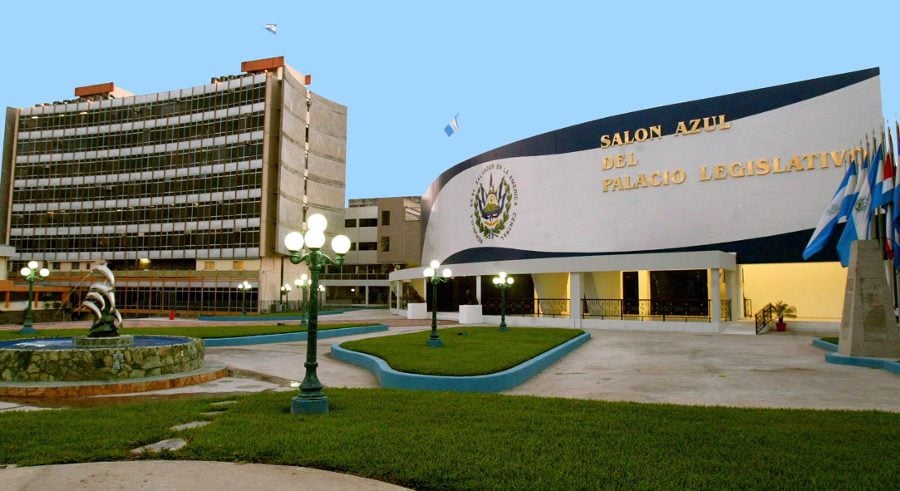
El Salvador’s Legislative Assembly is responsible for making laws, approving public spending, and carrying out constitutional duties. Political parties compete for seats, which gives them influence over national decisions.
The 2024 legislative elections produced a 60-member Assembly, reduced from the previous 84 seats. Nuevas Ideas secured 54 seats, while four other parties obtained the remaining six.
According to the official Legislative Assembly results, ARENA and PCN each received two seats, while the PDC and Vamos secured one seat apiece for the 2024–2027 legislative term.
These results show that Nuevas Ideas had a strong advantage in the election. They also point out how hard it is for smaller parties to compete with a group that has broad support.
How Political Parties Influence Salvadoran Democracy
Political parties are not just about winning elections. They also suggest public policies, run political campaigns, find candidates, and give people with different views a way to share their ideas about government.
They also play a role in debates about public security, economic growth, education, healthcare, and how the government is held accountable. These topics matter to people all over El Salvador, no matter which party they support.
Political competition also raises questions about institutional independence and representation. Supporters of strong legislative majorities emphasize efficient decision-making, while critics argue that concentrated power can weaken democratic checks and balances.
For voters, knowing what each party stands for and how they have acted in the past makes it easier to see their options. It also helps people tell the difference between what parties promise during campaigns and what they actually do after elections.
The Changing Political Landscape in El Salvador
El Salvador’s political landscape has changed dramatically since the Peace Accords. The country moved from a longstanding ARENA–FMLN rivalry toward a system dominated electorally by Nuevas Ideas.
This change shows that voters now have different priorities, are less satisfied with traditional parties, and care more about leadership, security, and how politicians communicate during elections.
However, political parties continue evolving. Their future influence will depend on voter confidence, organizational strength, leadership decisions, and their ability to respond to the country’s social and economic challenges.
The Supreme Electoral Tribunal’s official party registry provides updated information about legally registered organizations, including established parties and smaller political groups seeking a stronger electoral presence.
Why Political Parties Matter to Everyday Life in El Salvador
Political parties make decisions that go well beyond just election campaigns. Their members help decide how the government spends money, what public services are available, where to invest in infrastructure, and which policies affect Salvadoran families and businesses.
For people interested in what daily life is really like in El Salvador, understanding political decisions provides valuable context. Government policies can affect employment opportunities, public transportation, education, and community development.
You don’t have to back any specific political party to see how it fits into society. Keeping up with politics helps people judge public decisions and take part in community conversations.
El Salvador’s political parties have changed considerably over time, and further changes are likely. Their lasting importance lies in how they represent citizens, exercise political power, and shape the country’s future.