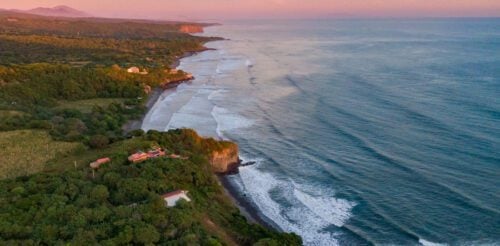
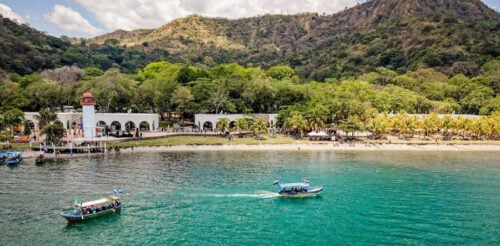
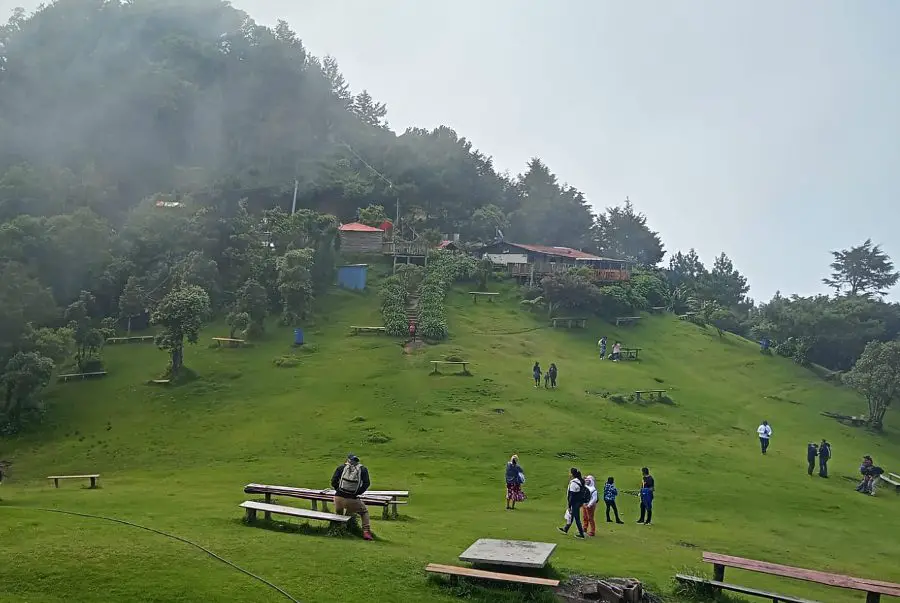
 El Pital camping area.
Camping in El Salvador can mean waking beneath misty pine trees, watching the sun rise over volcanoes, or falling asleep near a river surrounded by forest. And you rarely have to travel far to find it.
Despite its small size, El Salvador packs mountains, volcanoes, tropical forests, rivers, and Pacific views into a remarkably compact territory. Several natural areas also provide opportunities for visitors who want to spend a night outdoors.
Whether you’re looking for a comfortable weekend under the stars or a more adventurous escape into nature, these five destinations offer some of the most memorable camping experiences in El Salvador.
1. Cerro El Pital
High in the mountains of Chalatenango, Cerro El Pital gives campers a completely different experience from El Salvador’s warm tropical lowlands. You’ll find cool weather, pine forests, colorful flowers, and mountain mist covering the landscape.
El Pital is the highest point in El Salvador, reaching approximately 2,730 meters above sea level. Its elevation makes the area especially popular with travelers looking to escape the heat.
You can hike roughly five kilometers through the mountain environment to reach the camping area. Along the route, visitors pass vegetable farms, pine forests, colorful vegetation, and small mountain streams.
The campground sits between two mountain peaks, where wind and mist frequently move through the landscape. Bring warm clothing and adequate camping gear because nighttime temperatures can feel considerably colder than elsewhere in the country.
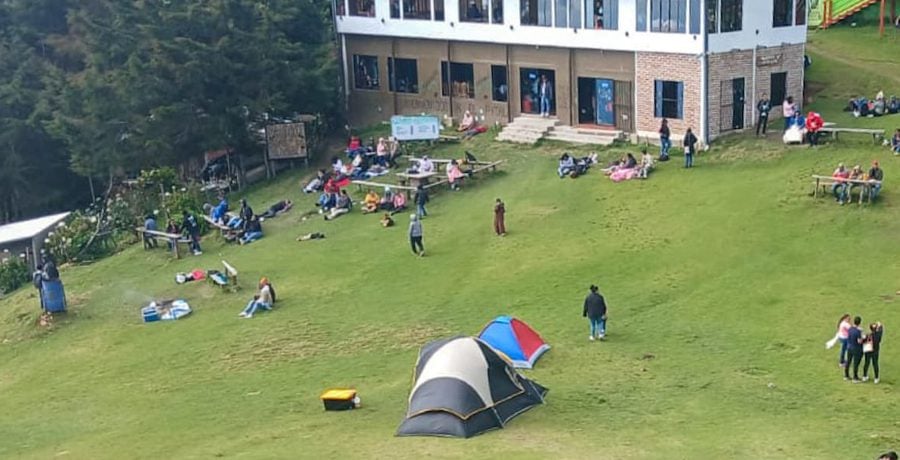
2. Walter Thilo Deininger Adventure Park
Camping doesn’t have to mean traveling deep into northern El Salvador. Parque de Aventuras Surf City Walter Thilo Deininger provides an outdoor escape in the coastal department of La Libertad.
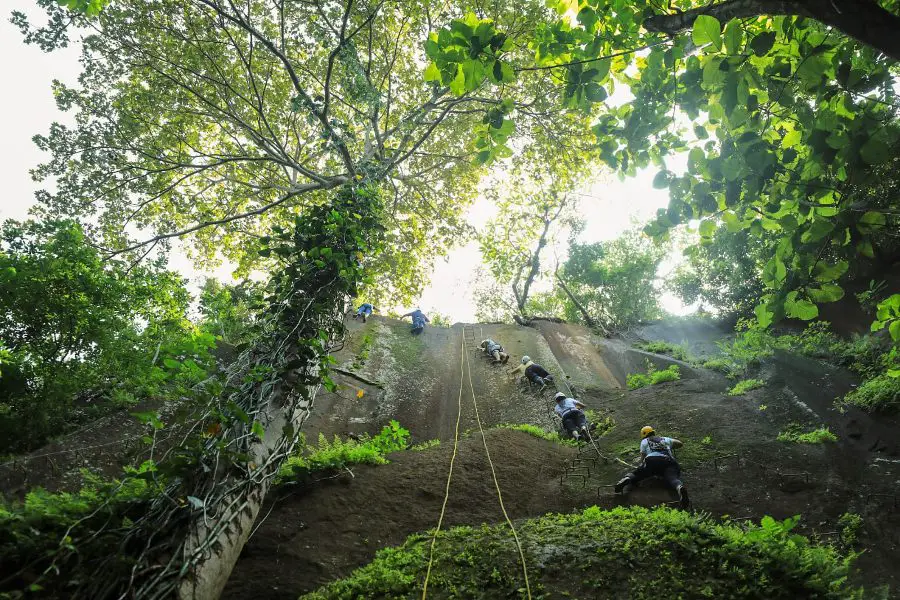
The park protects more than 730 hectares and combines camping and hiking with activities such as mountain biking, rappelling, and ziplining. That variety makes it especially appealing for an active weekend outdoors.
Visitors can explore the Mirador del Pacífico trail for panoramic views or follow routes through the park’s deciduous forest. Another trail follows the Amayo River toward El Salto, a natural swimming hole.
This destination works particularly well for campers who don’t want to spend the entire trip beside their tent. You can hike, explore the forest, tackle adventure activities, and cool off after walking.
3. Cerro Verde and Los Volcanes Complex
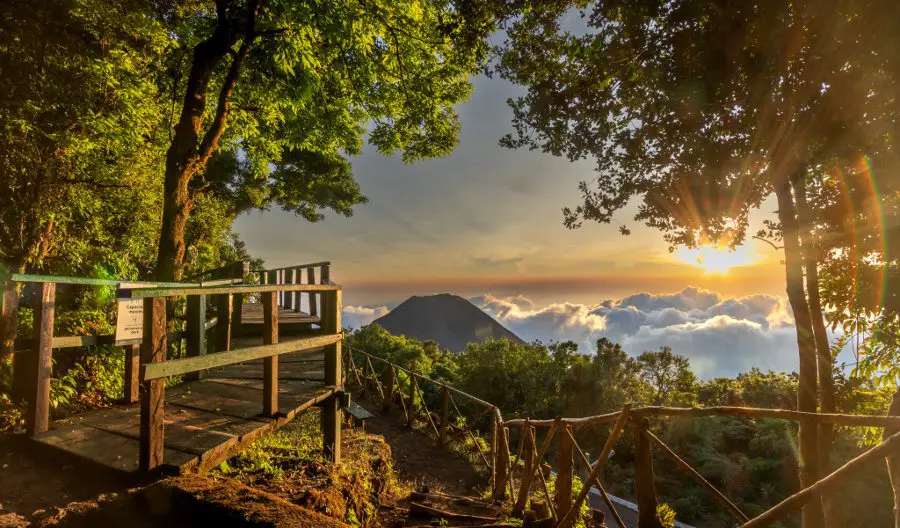
Few camping areas in El Salvador can compete with the scenery surrounding Cerro Verde and the Los Volcanes Complex. This volcanic landscape brings together forests, high elevations, viewpoints, and challenging hikes.
Cerro Verde itself covers more than 37 hectares and features interpretive trails, abundant vegetation, viewpoints, restaurants, restrooms, and other visitor facilities. It’s also an important gateway for exploring nearby volcanoes.
Many outdoor enthusiasts come here because of Izalco and Santa Ana volcanoes. Santa Ana, also called Ilamatepec, rises to 2,381 meters, while the distinctive cone of Izalco reaches 1,980 meters.
Camping options are available around the wider Cerro Verde and Los Volcanes area. Before pitching your tent, confirm exactly where camping is currently permitted and whether the campground requires an advance reservation.
4. Río Sapo Natural Reserve
If rivers and forests are more your thing than volcanoes, head east to Morazán. Around Río Sapo, you can escape the crowds, slow down, and enjoy the natural beauty of northeastern El Salvador.
The river lies around Arambala, an area characterized by pine and oak vegetation. Río Sapo receives water from higher-elevation tributaries associated with attractions such as Las Pilas and La Olomina waterfalls.
Morazán offers several landscapes suited to hiking and camping, with Río Sapo among its best-known natural attractions. Visitors can combine their outdoor trip with waterfalls, rivers, forests, and nearby communities.
5. Conchagua Volcano
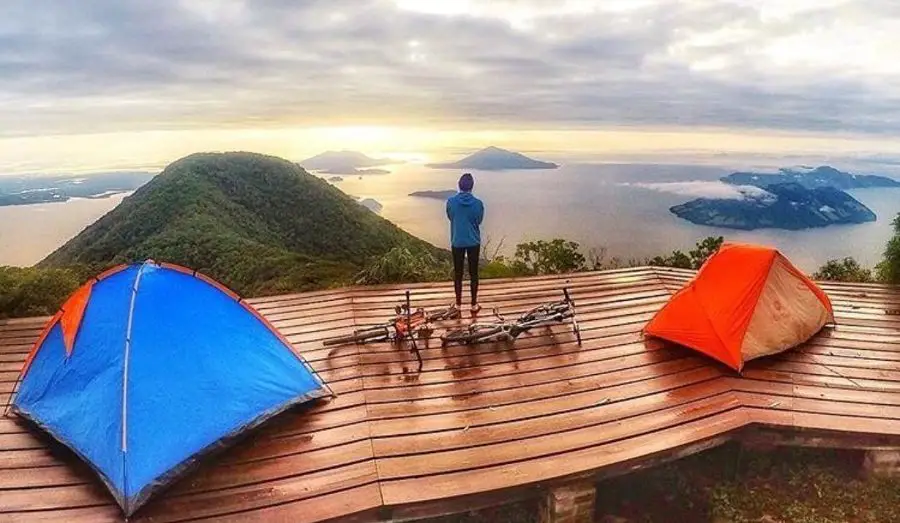
Camping on Conchagua Volcano comes with one enormous reward: the view. From high above La Unión, visitors can look across the Gulf of Fonseca toward islands, neighboring Honduras, and Nicaragua.
Conchagua has two prominent peaks, Ocotal and Banderas. The volcano’s elevated location creates dramatic viewpoints, particularly around sunrise and sunset, when the gulf and surrounding mountains change with the light.
Camping is one of the outdoor experiences promoted around Conchagua Volcano. Visitors can hike toward the summit or use local tourist transportation to reach higher sections of the volcano.
For photographers, this may be one of the most rewarding camping trips in El Salvador. Wake early, leave the tent, and you could watch sunrise unfold across one of Central America’s most beautiful gulfs.
Camping in El Salvador: What to Know Before You Go
Camping conditions can change from one destination to another. For example, El Pital can get cold and misty, while Conchagua and lower areas are much warmer.
Río Sapo offers something completely different, with rivers, forests, and plenty of nature around you.
Before you leave, check the latest opening hours, entrance fees, camping rules, weather, and reservation requirements. Some protected areas limit where you can pitch a tent, build a fire, park, or explore without a guide.
Also, make sure to pay extra attention during the rainy season. Heavy rain can make trails slippery, raise river levels, affect mountain roads, reduce visibility, and turn a comfortable campsite into a muddy one. Check the forecast before heading somewhere remote.
Camping in El Salvador: Discover El Salvador From Your Tent
Camping offers a different way to experience El Salvador Tourism. Instead of rushing through a destination in a few hours, you get to watch the landscape change as daylight disappears and another day begins.
You can bundle up beneath the pines at El Pital, explore the forests of Walter Thilo Deininger, hike around Los Volcanes, discover Río Sapo, or wake to Gulf of Fonseca views from Conchagua.
For such a small country, that’s an impressive variety of outdoor adventures. Pack a tent, choose your landscape, and give yourself enough time to enjoy El Salvador beyond its cities and beaches.