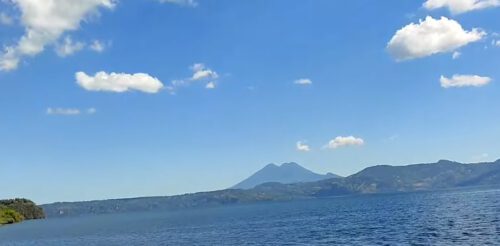
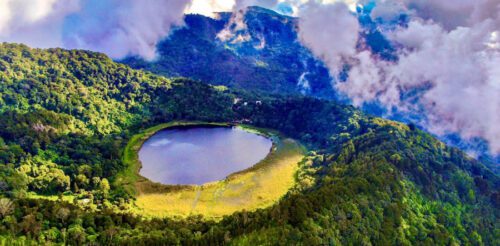
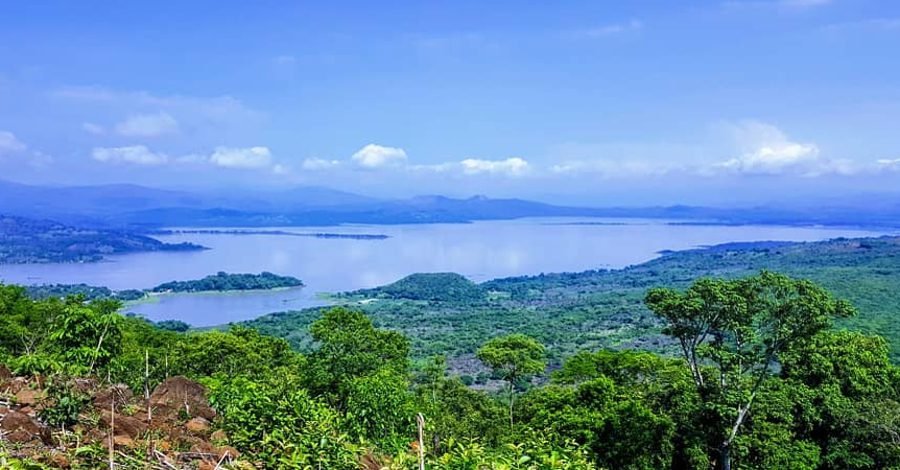
 Lake Guija in El Salvador.
In the far northwest of El Salvador lies a shimmering body of water that bridges two nations—Lake Guija (Lago de Güija). Shared between El Salvador and Guatemala, this vast volcanic lake is one of the region’s most fascinating natural and cultural treasures.
With its tranquil blue waters, small islands, and rich archaeological sites, Lake Guija offers visitors a blend of scenic beauty, recreation, and ancient history.
Far from the crowds, it’s a place where fishermen still glide across the water at dawn, herons perch quietly on the reeds, and the landscape feels untouched by time.
A Lake Shared by Two Nations
Lake Guija stretches across approximately 45 square kilometers, making it one of El Salvador’s largest freshwater lakes.
Roughly two-thirds (32 kilometers) of it lies within Salvadoran territory, in the Santa Ana Department. At the same time, the rest extends into Guatemala’s Jutiapa region.
The lake was formed by volcanic activity thousands of years ago, surrounded by rolling hills and fertile farmland. Several small rivers feed its calm waters and drain into the Desagüe River, which flows south toward the Lempa River, El Salvador’s longest waterway.
Its dual identity—part Salvadoran, part Guatemalan—makes Lake Guija a unique meeting point of cultures, geography, and ecosystems.

The Beauty of Lake Guija
Unlike some of El Salvador’s more developed lakes, Guija remains relatively wild and untouched.
The environment here feels raw and authentic—less commercial, more connected to daily life. You’ll find small rural communities, family-owned restaurants, and open landscapes where nature sets the tempo.
Furthermore, the lake’s warm, gentle waters make you want to jump in for a swim or take a boat out, and the calm air practically invites you to relax and stay a while.
Islands and Archaeological Treasures
Scattered across the lake are several islands, many of which hold traces of ancient civilizations that once thrived in the region. This cultural and historical significance sets Lake Guija apart.
One of the most important islands is Teotipa, located in the Salvadoran section of the lake. Archaeologists have discovered artifacts from the pre-Columbian era, including stone carvings, pottery, and petroglyphs.
Some of them date back thousands of years, offering insight into the daily life, beliefs, and artistry of early Mesoamerican peoples.
The area around the lake is also home to archaeological sites that connect to El Salvador’s indigenous past—evidence that this region served as a vital cultural and trade hub long before the modern borders existed.
For travelers interested in history and anthropology, Lake Guija is a place that tells a story of human presence spanning millennia.
Things to Do at Lake Guija
Lake Güija isn’t just a pretty view—it’s a place built for exploring. You can paddle through its calm waters by boat or kayak, try your luck fishing, or visit Teotipa Island and the smaller islets scattered around the lake.
Birdwatchers and nature lovers can roam its quiet trails. At the same time, anyone curious about local life can connect with nearby communities and experience their traditions firsthand.
Boating and Kayaking:
Exploring Lake Güija by boat is one of the best ways to appreciate its vastness and serene atmosphere. Local fishermen rent out boats or even offer guided rides, bringing you up close to the islands and bird nesting areas.
For those seeking a quieter and more independent experience, kayaking is the ideal choice. It lets you move at your own pace, glide through calm waters, and enjoy the lake in complete solitude.
Fishing:
Fishing is one of the lake’s top pastimes. Locals regularly catch tilapia and guapote (also known as rainbow bass), and visitors can either try fishing for themselves or watch the fishermen work with practiced skill.
If you’re not casting a line, you can still enjoy the experience by tasting the catch. Many nearby spots serve freshly cooked fish, offering an authentic taste of the lake.
Visit Teotipa Island and Other Islets:
Exploring Teotipa Island and Other Islets is a top thing to do at this lake. Arrange a boat trip to visit the islands and learn about their archaeological significance. Some guides can share local legends and explain the meaning of the ancient petroglyphs.
Birdwatching and Nature Walks:
Lake Guija is surrounded by wetlands and forests that attract herons, ducks, and a variety of migratory species. Nature enthusiasts can walk along the lakeshore or hire a local guide to explore the area’s flora and fauna.
Why You Should Visit Lake Guija El Salvador
Lake Guija is more than a scenic stop—it’s a place where the ancient and modern worlds meet. The archaeological discoveries on its islands make it one of the most historically significant natural sites in El Salvador.
Its peaceful environment, mirror-like waters, and untouched surroundings create an atmosphere of calm and authenticity. Unlike busier destinations, you can still experience Lake Guija in its natural state.
Few places allow travelers to see two countries from one viewpoint. Standing on the lake’s edge, you can gaze across into Guatemala—a reminder of how nature connects rather than divides.
Lake Guija is ideal for travelers seeking relaxation, photography, or immersion in local life. It’s a destination where you can disconnect from noise, meet friendly locals, and enjoy simple, genuine moments by the water.
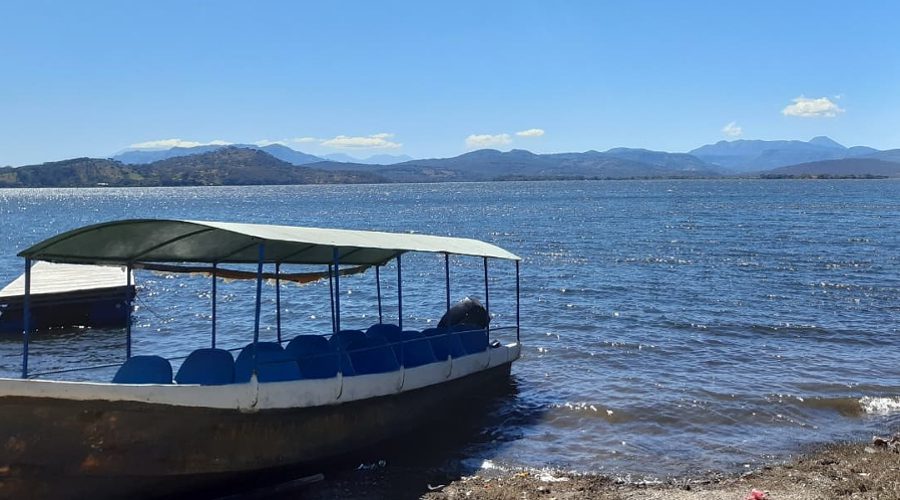
Lake Guija El Salvador
Lake Guija embodies the quiet, enduring beauty of El Salvador’s landscapes—where nature, history, and community come together. It’s a place to learn, to rest, and to connect with the deeper rhythms of the land.
Whether you come for the ancient petroglyphs, the rich fishing traditions, or simply the serenity of the open water, Lake Guija offers an experience that is both timeless and grounding.
Add it to your exploration of Lakes in El Salvador—and discover a side of the country where the past still whispers across the waves.