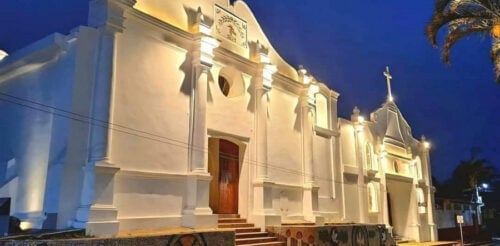
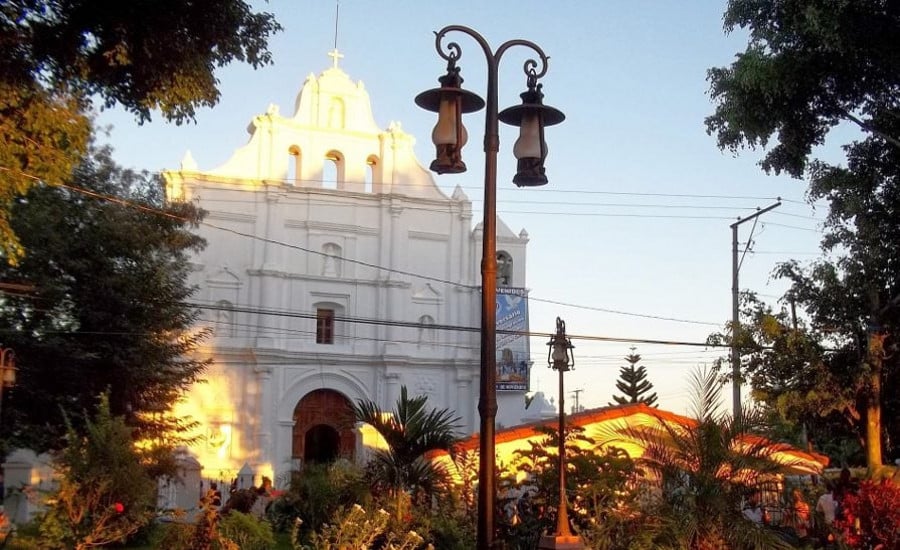
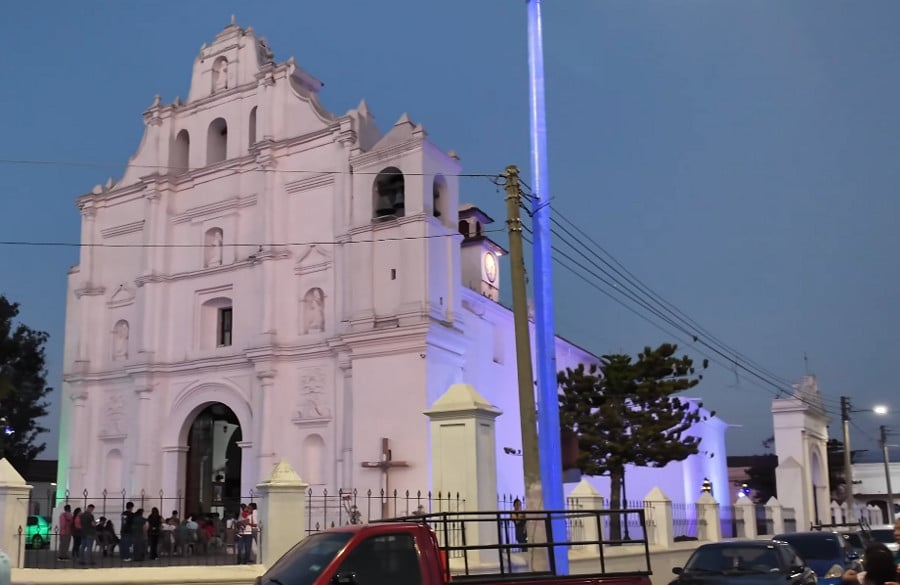
 Chalchuapa Church.
Few places in El Salvador bring ancient history and everyday life together quite like Chalchuapa. Here, centuries-old Maya structures stand near neighborhoods, connecting the country’s past and present.
Located in western El Salvador, Chalchuapa is a historic city and district known for its archaeological treasures, traditional culture, and strong community identity. Its attractions include some of the country’s most important pre-Columbian sites.
Beyond its famous ruins, Chalchuapa offers visitors a chance to explore local markets, religious landmarks, and Salvadoran traditions.
Where Is Chalchuapa, El Salvador?
Chalchuapa is located in the department of Santa Ana, approximately 80 kilometers west of San Salvador. The city sits west of Santa Ana, near El Salvador’s border with Guatemala.
The area lies on a plateau north of the Apaneca-Ilamatepec mountain range, approximately 700 meters above sea level. Its surroundings include agricultural lands, rolling hills, and volcanic landscapes.
Is Chalchuapa a City, District, or Municipality?
Chalchuapa is both a city and a district within the municipality of Santa Ana West. Before El Salvador’s municipal restructuring took effect in May 2024, it operated as an independent municipality.
Despite the administrative change, Chalchuapa retains its historic city designation and local identity. Its residents continue to recognize the community through its traditions, landmarks, neighborhoods, and shared history.
History of Chalchuapa
Chalchuapa has one of the longest histories of human settlement in El Salvador. Archaeological evidence indicates that communities inhabited the area thousands of years before the arrival of Spanish colonizers.
Its location made it easier to connect with other Mesoamerican communities. Over time, different cultures helped shape the area’s architecture, religious traditions, trade, and overall development.
Pre-Columbian Origins and Maya Heritage
Over time, ancient Chalchuapa grew into an important center for religious ceremonies and community life. Archaeological discoveries show how its people connected with the Maya and other cultures in what are now Guatemala, Honduras, and Mexico.
Researchers have identified structures, pottery, sculptures, and ceremonial objects that document different periods of occupation. These discoveries make Chalchuapa especially valuable for understanding El Salvador’s pre-Columbian history.
Chalchuapa During the Colonial Period
After the Spanish conquest, Chalchuapa became part of the colonial system. Farming and regional trade helped the community grow and shaped its local economy.
Locals relied on cacao, corn, livestock, and other agricultural products to make a living. Churches and colonial buildings also shaped the town, leaving traces of its past that visitors can still see in the historic center today.
How Chalchuapa Became a City
Chalchuapa continued developing throughout the nineteenth century as El Salvador established its national institutions. In 1878, the settlement officially received the title of city.
Its historical importance extended beyond administrative boundaries. Agriculture, commerce, and cultural traditions helped shape the city into an established community in western El Salvador.
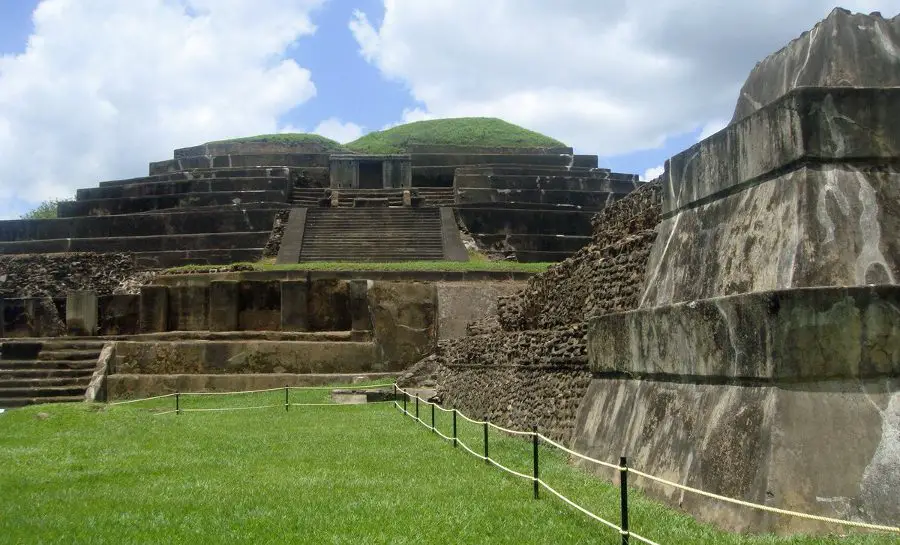
Archaeological Sites and Historical Landmarks in Chalchuapa
Chalchuapa is one of El Salvador’s most important archaeological areas. Its ancient sites reveal how different civilizations lived, developed, and shaped the region throughout Mesoamerican history.
Tazumal Archaeological Site
Tazumal is Chalchuapa’s most famous archaeological site. You can explore its impressive stepped pyramid and nearby structures while learning how ancient Mesoamerican communities built their ceremonial centers and created their architectural traditions.
The site also features a museum displaying archaeological discoveries. Many visitors consider Tazumal an essential stop when exploring El Salvador’s Maya heritage and historical landmarks.
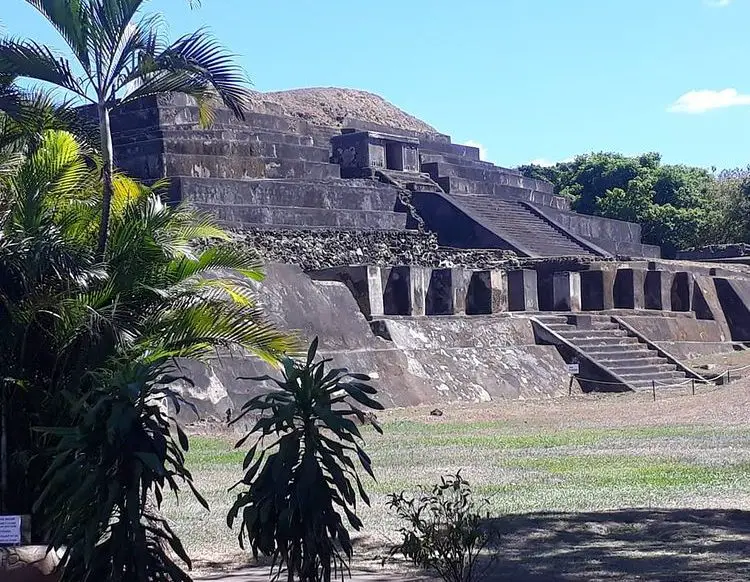
Casa Blanca Archaeological Site
Casa Blanca Archaeological Park preserves another important section of Chalchuapa’s ancient settlement. The park contains archaeological structures and exhibits explaining the area’s pre-Columbian history.
Visitors can also learn about traditional indigo dyeing, an activity connected to El Salvador’s cultural heritage. The park combines archaeological exploration with educational experiences.
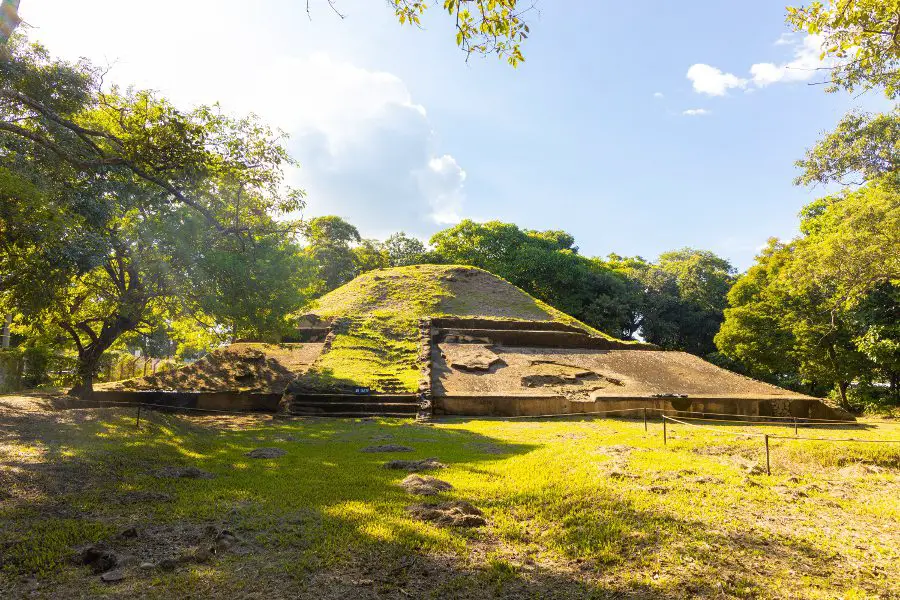
El Trapiche and Laguna Cuzcachapa
El Trapiche forms part of the larger Chalchuapa archaeological zone. Researchers have uncovered evidence of monumental structures and ceremonial activity associated with early Maya development.
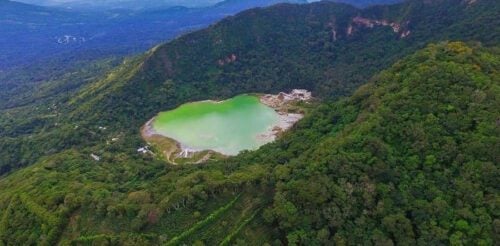
Nearby Laguna Cuzcachapa adds another dimension to the area’s history. The lagoon and surrounding archaeological landscape help illustrate the relationship between ancient communities and their natural environment.
Things to Do in Chalchuapa
Although archaeology attracts many visitors, Chalchuapa offers more than ancient ruins. Exploring the city itself provides opportunities to experience local traditions, everyday commerce, and the atmosphere of a historic Salvadoran community.
Explore the Historic Center
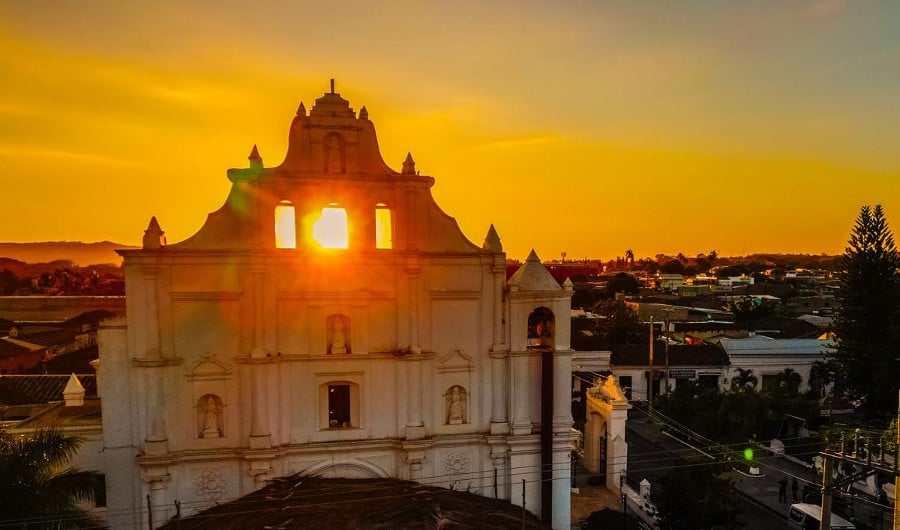
Chalchuapa’s historic center offers a pleasant introduction to the city. You can walk around the central park, observe local activity, and admire buildings that reflect different stages of its development.
The Church of Santiago Apóstol is the city’s most important religious landmark. Its presence reflects the longstanding influence of Catholic traditions on Chalchuapa’s cultural and community life.
Visit Markets and Try Traditional Food
Local markets provide an intimate view of daily life. Residents buy fresh produce, household goods, and traditional foods while upholding the city’s commercial traditions.
Visitors can enjoy familiar Salvadoran dishes, including pupusas, tamales, and other regional favorites. Small eateries and street vendors provide ways to experience local flavors.
Culture and Traditions of Chalchuapa
Chalchuapa’s cultural identity reflects a blend of Indigenous heritage, colonial influences, and contemporary Salvadoran traditions.
Religious celebrations, family gatherings, and community activities continue to be important aspects of local life.
Patron Saint Festivities
Chalchuapa honors its patron saints, Santiago Apóstol and San Roque, with traditional festivities that bring the community together. Locals celebrate with religious events, music, colorful parades, and gatherings that keep the town’s traditions alive.
The festivities traditionally take place in August, creating a lively atmosphere throughout the city. They offer visitors an opportunity to experience local customs and the community’s festive spirit.
How to Get to Chalchuapa
Chalchuapa is accessible by road from San Salvador and Santa Ana. Travelers coming from the capital can use the Pan-American Highway toward western El Salvador.
Santa Ana provides another convenient starting point because of its proximity to Chalchuapa. Visitors can travel by private vehicle or use public transportation serving communities in the region.
Best Time to Visit Chalchuapa El Salvador
You can explore Chalchuapa any time of year, but the weather can affect your outdoor plans. The dry season, from November to April, usually offers the best conditions for sightseeing and exploring the area.
The rainy season brings greener landscapes but also afternoon showers. Visitors interested in cultural experiences may prefer traveling during local festivities, when the city celebrates its traditions.
Why Chalchuapa Matters to El Salvador’s Heritage
Chalchuapa connects El Salvador’s ancient civilizations with the communities that call the area home today.
Its archaeological treasures, including Tazumal, rank among the best Mayan sites in El Salvador and offer a fascinating look into the country’s rich history.
But Chalchuapa has more to offer than ancient ruins. Its local traditions and everyday life give visitors a chance to experience Salvadoran culture.
Whether you’re exploring Tazumal, strolling through the historic center, or enjoying local traditions, Chalchuapa deserves a spot on your El Salvador Tourism itinerary. It’s a great place to discover the history, culture, and heritage of western El Salvador.