 Casa Blanca Archaeological Site.
At the Casa Blanca Archaeological Site in western El Salvador, a walk past Maya pyramids leads to a cut in the ground where you can still see white ash from the Ilopango Volcano eruption.
Casa Blanca sits at the eastern entrance to Chalchuapa, in the department of Santa Ana. The park brings together an outdoor trail, a small museum, and a workshop devoted to añil, or indigo.
If you’re deciding which ancient ruins and archaeological parks to visit in El Salvador, put Casa Blanca alongside Tazumal. Seeing both helps explain how Chalchuapa’s ceremonial center shifted over time.
Casa Blanca and the Early Maya in Chalchuapa
The park covers about six hectares, which is only a small part of a much larger archaeological area that once reached further into what is now Chalchuapa. As the city expanded, much of the original site was lost to development.
Casa Blanca and the neighboring El Trapiche sector formed an important early Maya center toward the end of the Late Preclassic period. El Trapiche lies outside the park, though the museum displays one of its finds.
Archaeologists have also examined pollen found under a small nearby lagoon. This evidence shows that people cleared forests and grew maize before the ceremonial center was built.
At the start of the Classic period, the principal ceremonial center shifted to Tazumal. People later returned to use Casa Blanca, and burials with offerings show that activity continued there into the Postclassic period.
What You’ll See Along the Archaeological Trail
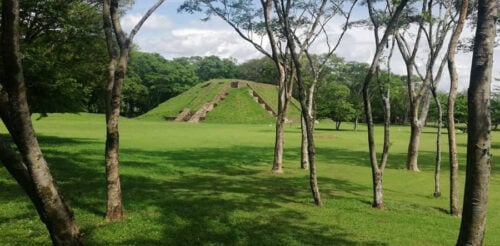
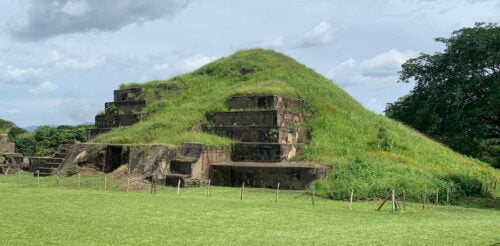
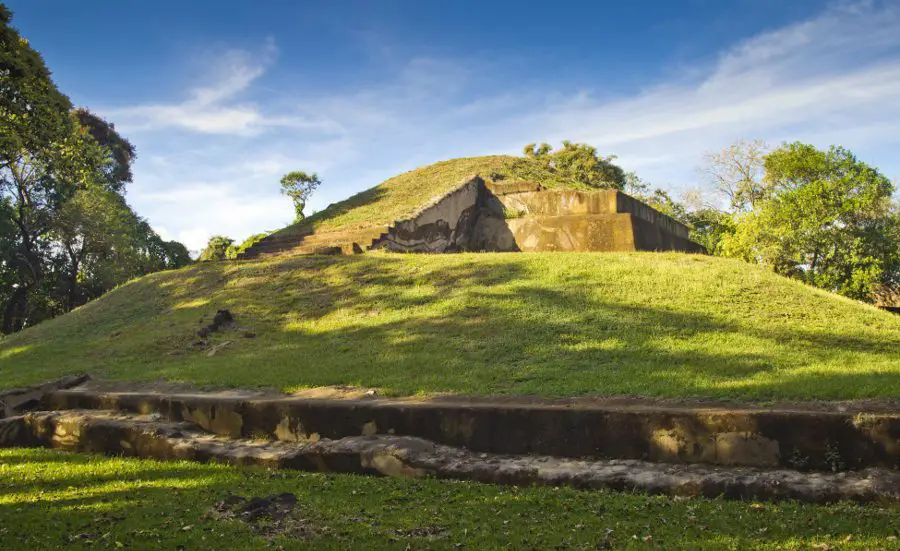
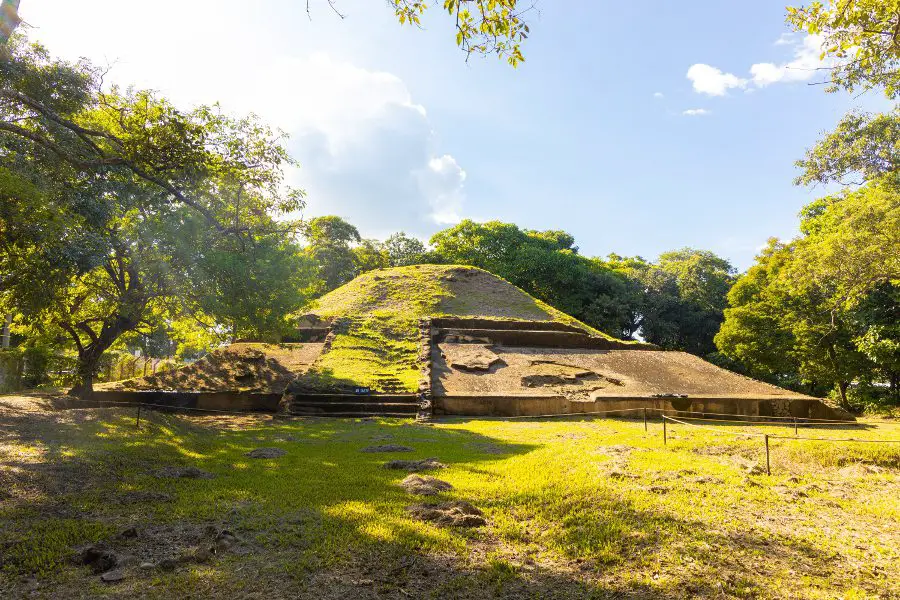
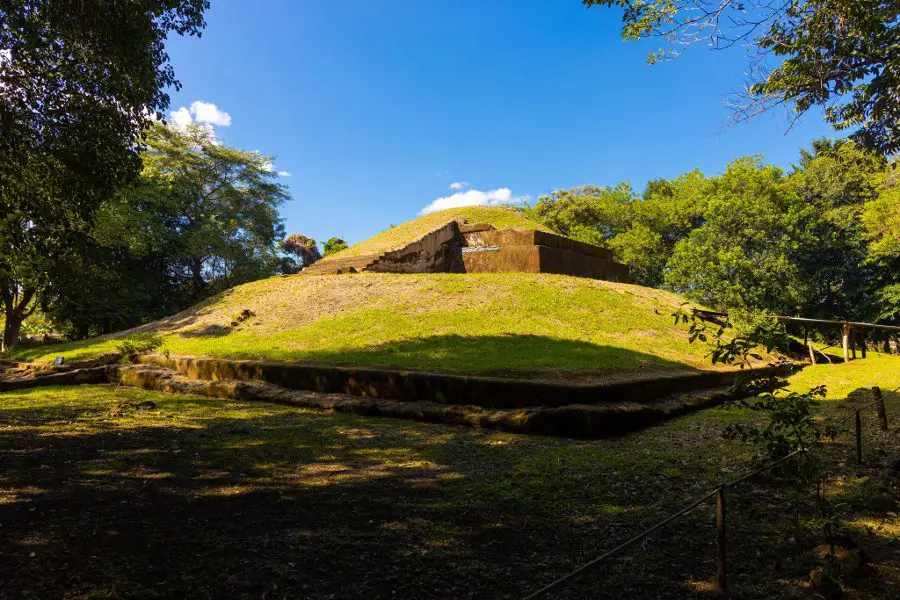
The park has six pre-Hispanic structures, including three pyramids. As you walk the trail, keep an eye out for Structures 1 and 5. Since both pyramids have been partially restored, you can spot their outlines more easily.
When you reach Structure 5, check the base of the stairway. Excavations here revealed a basalt monument and a sculpture from the Late Preclassic period. This spot is easy to miss if you’re not looking for it.
If you can, step back a bit along the path. From a distance, you’ll find it easier to see the pyramid’s slope and notice how much ground it covers under the grass.
You can also use the trail to compare the partially restored pyramids with the lower buildings. The differences in height and shape are easier to notice outdoors than on a park map.
The Archaeological Window and Ilopango’s White Ash
The archaeological window is a covered dig site where you can see the layers of earth up close. Look for the pale band first. That layer is ash from a major eruption of Ilopango.
Ilopango lies well east of Chalchuapa. Seeing a band of its ash here gives you a sense of how far the eruption’s effects reached across what is now El Salvador.
Take a moment to follow the ash band along the exposed wall. The color differences help you see the layers, even if you have never looked into an excavation before.
Inside the Casa Blanca Site Museum
The museum’s tile roof, adobe walls, and courtyard corridors bring to mind the old hacienda houses of El Salvador. Its design comes from a later period than the Maya structures you see outside.
Inside, find the fragment of a carved stone monument from El Trapiche. The piece preserves traces of Maya writing, though researchers believe someone deliberately erased most of the inscription in pre-Hispanic times.
The museum also shows ceramics, including Usulután Izalco pottery. Watch for parallel lines on a light orange background—a detail you might miss if you move quickly between cases.
Compare one of the decorated pieces with the shape of a water jar. That small exercise gives you two ways to look at a vessel, through its design and its everyday use.

Casa Blanca Archaeological Site Conservation Efforts
Casa Blanca is part of the San Andrés Archaeological Site, a UNESCO World Heritage Site, which states that Archaeological investigations have demonstrated that the present town of Chalchuapa has at least 3200 years of continuous human occupation.
The UNESCO designation has helped Salvadoran authorities and local associations with efforts to raise awareness about safeguarding these ancient ruins.
Preserving this historical treasure has been a priority for El Salvador’s government and the local and international archaeological community.
How the Añil Workshop Connects Past and Present
At the workshop, you’ll hear the word añil, which is what locals call indigo. Thanks to support from Japan, the workshop now offers visitors a chance to learn about the dye and see how artisans use it.
Jiquilite is the plant used to make the dye. Since processing the plant and dyeing the cloth are different steps, it’s a good idea to ask which part you’ll get to see if there’s a demonstration during your visit.
If you get to see a demonstration, notice how the artisans fold or tie the cloth before dipping it. The parts that absorb less dye create the patterns you’ll see when the fabric is opened.
A demonstration can be a highlight for anyone looking for hands-on cultural things to do in El Salvador. Check ahead if the workshop is a big reason for your trip, especially for a group.
Planning a Visit to Casa Blanca
When planning your route from Santa Ana, look up Parque Arqueológico Casa Blanca. If you’re using a taxi or arranging a pickup, ask for Casa Blanca at the eastern entrance to Chalchuapa.
Plan to spend about an hour exploring the trail and museum at a relaxed pace. Give yourself extra time if you want to read all the exhibit labels or watch an indigo demonstration.
Bring water and wear comfortable shoes for walking outside. During the rainy season, visit the outdoor areas first if the morning is clear, and save the museum for later.
Check the Ministry of Culture’s Casa Blanca visitor information for opening hours and admission prices. If you’re visiting on a holiday or need step-free access, make sure to confirm these details before you go.
Pairing Casa Blanca With Tazumal and Santa Ana
You can visit both archaeological parks in one outing. Start at Casa Blanca to see the earlier ceremonial area, then head to Tazumal to follow the shift the Ministry of Culture describes.
Leave a gap between the two visits for lunch in Chalchuapa. It gives everyone a break from walking and leaves room to linger at Casa Blanca if the workshop is open.
If you’re staying in Santa Ana, you can make Chalchuapa a morning outing and spend the afternoon back in the city. Browse these places to visit across El Salvador if you’re planning a longer route.
Casa Blanca Is Worth a Visit
The ash layer is the detail I’d make time for. You can stand in front of it and see where an eruption left its mark on the same ground people once built on.
The museum and workshop give the visit a different pace. You can go from looking closely at what remains of a carved inscription to watching a piece of cloth take on color.
If you’re putting together a longer trip, use these ideas for exploring El Salvador’s towns, landscapes, and cultural sites to plan around Chalchuapa. Casa Blanca and Tazumal fit comfortably into the same day.