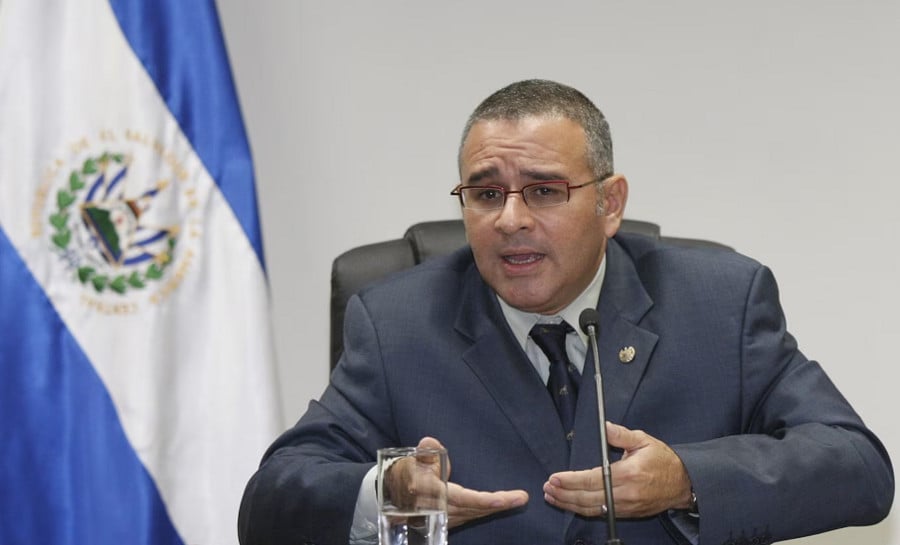
 Former Salvadoran President Mauricio Funes Cartegena.
Ex-President Mauricio Funes went from interviewing political leaders on Salvadoran television to becoming one himself. His 2009 victory ended two decades of conservative rule and brought the former guerrilla movement to the presidency.
What makes Funes stand out among the presidents who have governed El Salvador is how voters first got to know him. They’d already watched him interview political leaders long before they saw his name on the ballot.
His administration expanded public services and backed a gang truce that briefly drove down killings. After leaving office, he moved to Nicaragua, where he died in 2025 without serving his Salvadoran prison sentences.
From Television Journalism to the Presidency
Carlos Mauricio Funes Cartagena was born in San Salvador in 1959. He covered the country’s civil war, worked as a CNN correspondent, and built a national audience through his television interviews.
The Farabundo Martí National Liberation Front, or FMLN, chose Funes as its candidate for the 2009 election. A familiar journalist gave the former guerrilla movement a presidential candidate who hadn’t fought in the war.
Funes defeated Rodrigo Ávila of the conservative Nationalist Republican Alliance, known as ARENA. The result ended the party’s hold on the presidency, which it had maintained through four consecutive terms since 1989.
What Funes Changed During His Presidency, 2009–2014
The election itself was Funes’s biggest political achievement. If you follow how government and party politics work in El Salvador, 2009 marks the first time the former guerrilla movement took the presidency through the ballot box.
His government gave public school students uniforms and supplies, easing some back-to-school costs for families. It also made expanding access to basic health services a priority for communities with limited access to care.
Ciudad Mujer brought several services under one roof. Led by then-first lady Vanda Pignato, the program gave women access to health care, job training, and support for survivors of violence.
The 2012 Gang Truce
In March 2012, MS-13 and Barrio 18 entered a truce that officials in the Funes administration helped facilitate. Authorities transferred imprisoned gang leaders from maximum security to less restrictive facilities.
Killings fell sharply in the weeks after the transfers. The drop gave communities a measure of relief, but the truce unraveled and the number of killings climbed again.
The End of His Term and the Corruption Allegations
Funes handed power to fellow FMLN politician Salvador Sánchez Cerén in 2014. The party held the presidency for another five years before the decline of the FMLN and ARENA reshaped Salvadoran elections.
After Funes left office, prosecutors accused him of diverting about $351 million in public funds during his term. That allegation formed the basis of a separate case known as Saqueo Público.
Exile, Court Cases, and Death in Nicaragua
Funes moved to Nicaragua in 2016 and obtained Nicaraguan citizenship in 2019. He denied the corruption accusations and described the cases against him as political persecution. Salvadoran courts tried him in his absence.
In 2023, a court sentenced Funes to 14 years in prison for his role in the gang truce.
In 2024, another court sentenced him to eight years for money laundering. Prosecutors said he received a small plane in exchange for awarding a bridge contract.
Funes died in Nicaragua on January 21, 2025, at age 65. Nicaraguan authorities said he died after a serious chronic illness. He had spent his final years abroad and never served time in prison.
Mauricio Funes’s Legacy
Mauricio Funes brought a party that had been in opposition for years into the presidency. His government improved access to school supplies and women’s services. Negotiations with gangs also led to one of his most significant convictions.
Salvadoran families saw those changes firsthand. They got help covering school costs, and violence dropped for a while. Both made a difference in what daily life in El Salvador was like.