 Christmas Celebrations in San Salvador.
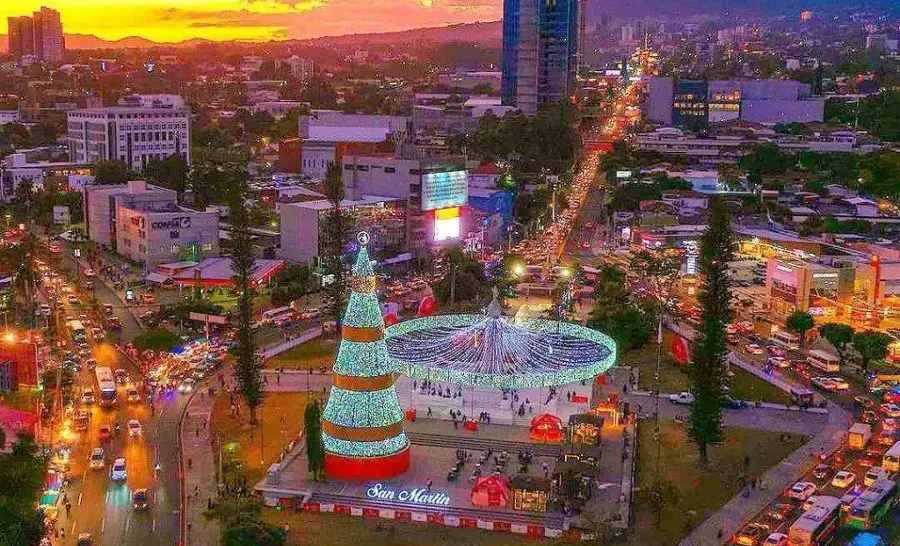
Christmas in El Salvador is one of the most cherished holidays, blending deep religious devotion with lively cultural traditions. Streets glow with lights, families reunite, and the air fills with the sounds of fireworks, music, and the aroma of homemade meals.
Faith plays a central role during the Christmas season. Families attend the Christmas Eve Mass or Misa de Gallo, decorate nativity scenes, and reflect on the birth of Christ, reaffirming values of gratitude, unity, and hope.
Beyond its religious meaning, Salvadoran Christmas is about togetherness and joy. From exchanging gifts to dancing late into the night, the celebration captures the warm spirit of community.
Religious and Cultural Significance
The religious and cultural significance of Christmas in El Salvador runs deep, blending faith, family, and festivity into one of the nation’s most meaningful and unifying celebrations.
In a nutshell, catholic traditions define Salvadoran Christmas. Families attend the Misa de Gallo on Christmas Eve, honoring the birth of Christ through midnight prayer, candlelight, and heartfelt gratitude for divine blessings.
Faith and family are intertwined in Salvadoran culture, and the December celebrations reflect this. Christmas gatherings strengthen bonds, reminding people that unity, love, and forgiveness are more significant than material gifts or large extravaganzas.
In El Salvador, Christmas stands as both a sacred and social celebration—a time when faith guides the heart and togetherness defines the true spirit of the holiday.
Preparations and Decorations
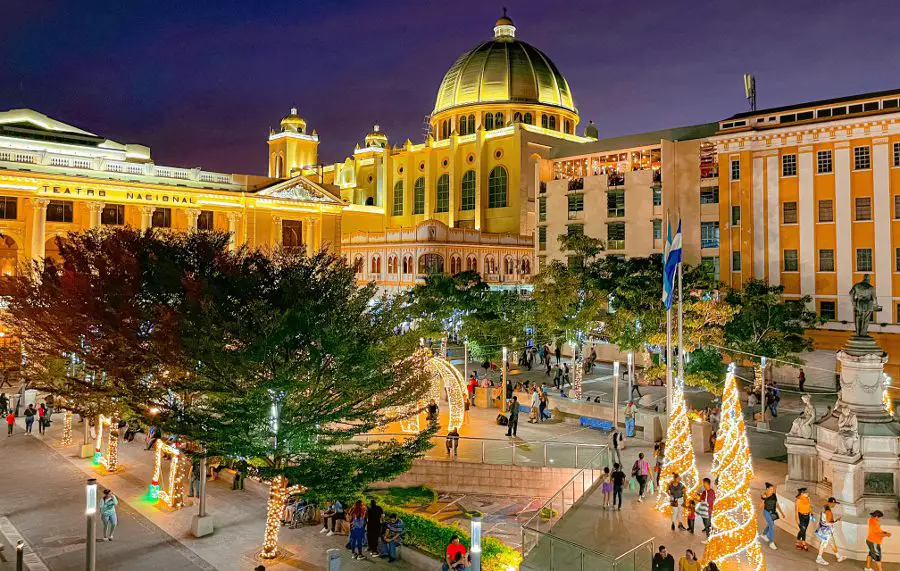
Navidad in El Salvador is a season of anticipation and joy, as families and communities prepare homes and streets with vibrant displays that capture the spirit of the holiday.
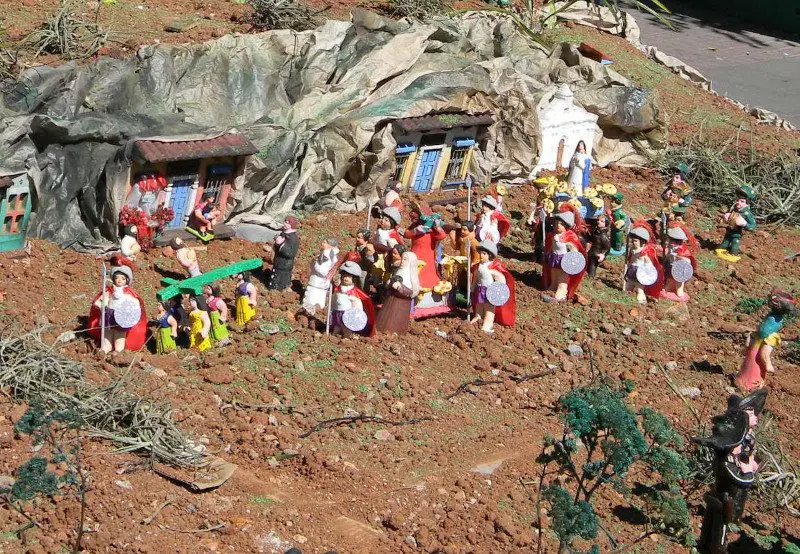
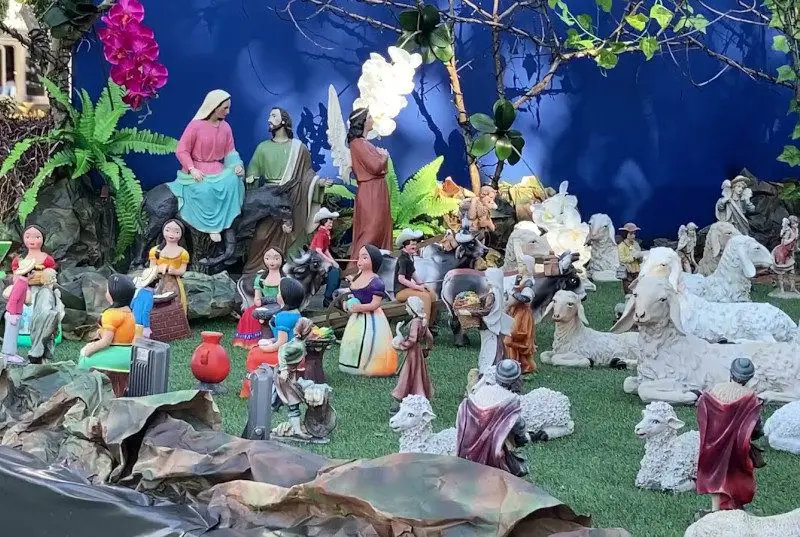
The Nacimiento, or nativity scene, is the heart of Salvadoran Christmas décor. Families craft intricate displays honoring the birth of Christ, often adding lights, miniature villages, and flowing rivers.
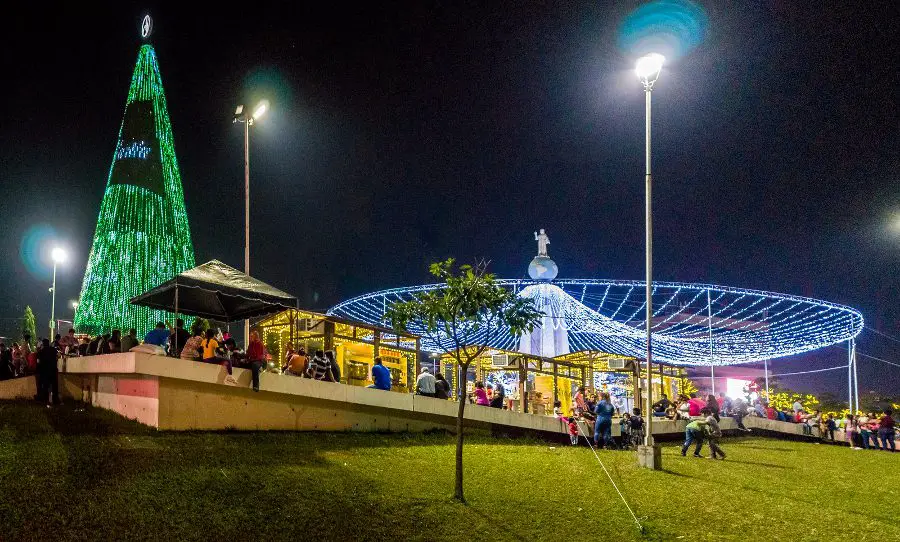
Christmas trees stand proudly beside Nacimientos, surrounded by glowing lights and colorful ornaments.
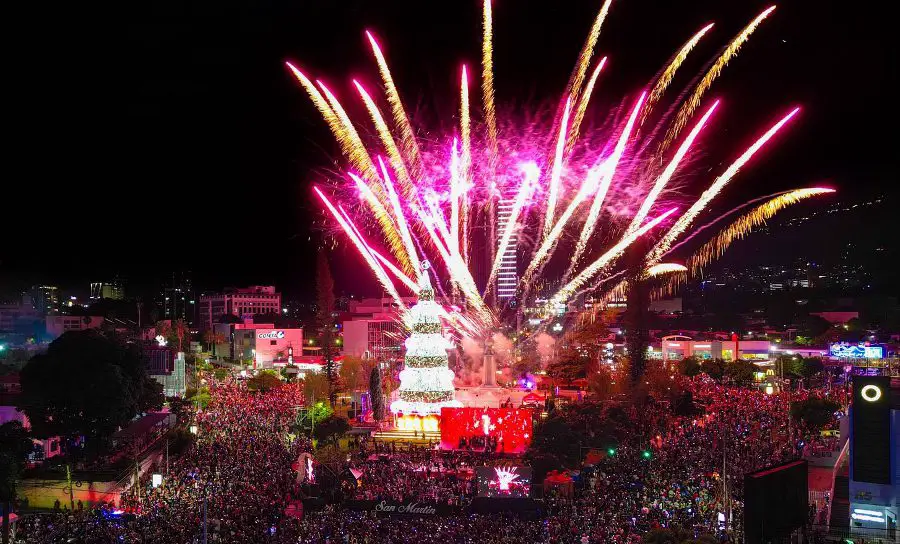
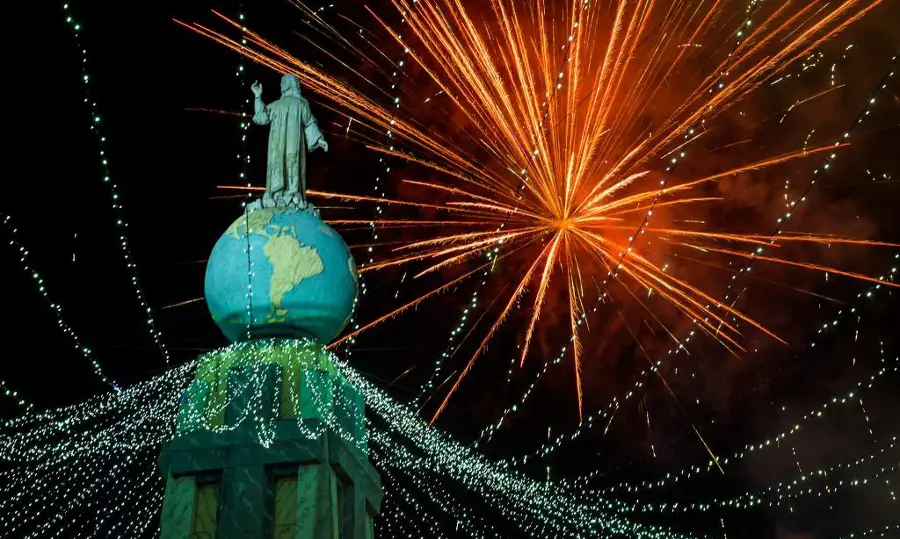
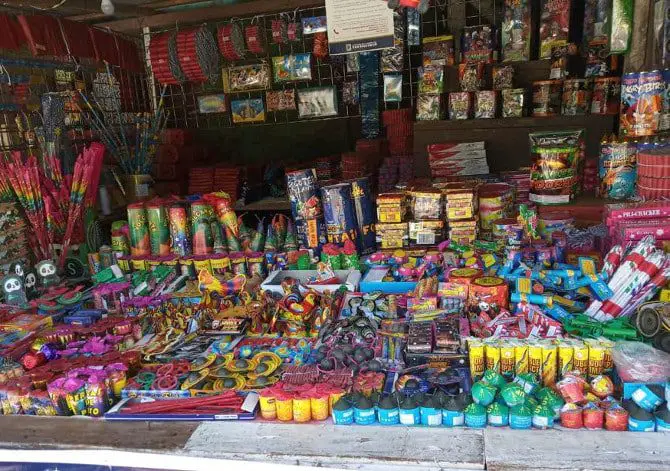
Fireworks illuminate the skies from early December, marking the countdown to Christmas Eve. The crackling sounds echo joy and excitement across cities, towns, and rural communities alike.
Christmas Eve Traditions
In Salvadoran culture, La Noche Buena, the evening of December 24, is the most celebrated time when families gather to celebrate with warmth, faith, and traditions passed down through generations.
The evening begins with anticipation and prayer. Many attend Misa de Gallo, a midnight mass honoring Christ’s birth, before returning home to share the traditional dinner.
The time for the Misa de Gallo mass varies by parish. Although it traditionally commemorates the birth of Jesus at midnight, many churches hold Christmas Eve Masses at different times, such as 7:00 p.m. or 8:00 p.m. This flexibility allows parishioners to attend at their convenience.
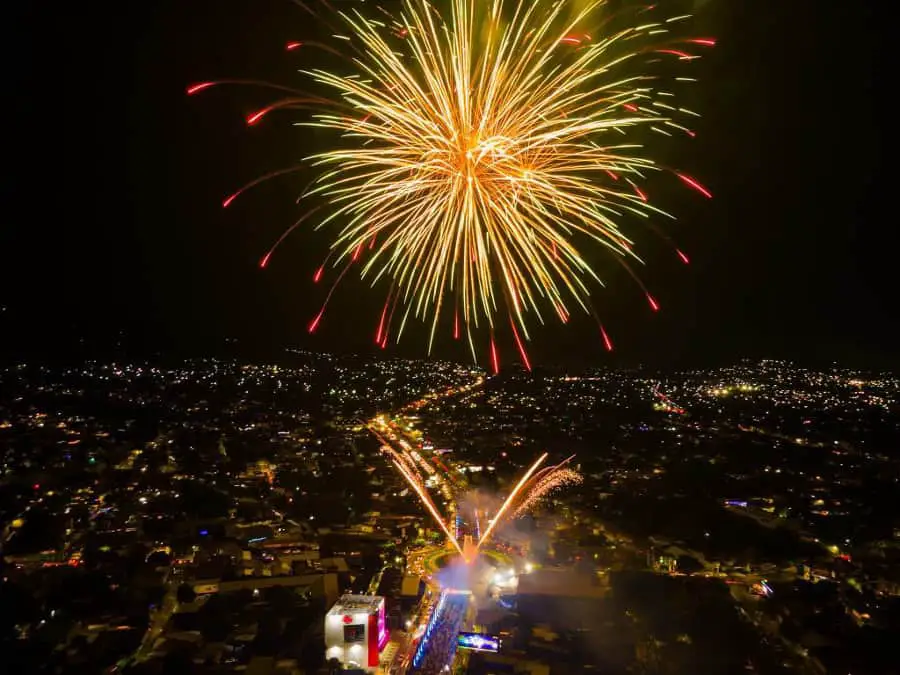
Fireworks explode across the night sky, lighting up entire neighborhoods as laughter, music, and celebration fill the air well past midnight.
As Christmas Day dawns, gatherings continue with visits to relatives and friends, where people share food, stories, and have a good time.
How is Christmas celebrated in El Salvador?
Christmas in El Salvador is celebrated with deep-rooted customs and joyful traditions that unite families and communities in faith, food, music, and shared celebration.
Festivities begin with homes filled with laughter and the smell of traditional dishes. During December, families gather to create Los Nacimientos, elaborate nativity scenes that honor the birth of Christ.
On Christmas Eve, Salvadorans celebrate El Estreno, wearing new clothes to mark the renewal and joy of the season, symbolizing hope and blessings for the year ahead.
As night falls, families share dinner, exchange gifts at midnight, and fill the skies with fireworks while music and dancing carry celebrations into the early morning.
Family gathering during the Christmas holidays
Getting together with family or friends is one of the best Salvadoran traditions during the Christmas holidays. Salvadorans travel long distances to be with loved ones during these celebrations.
Evidence of people traveling long distances for the December holidays is the increased activity at El Salvador’s International Airport throughout the month of December. Salvadorans living abroad come home during the holiday season to reconnect with family and friends.
Families do different things during these Christmas gatherings. Some families attend religious activities together, while others stay at home, play traditional music, dance, socialize, and converse with each other.
By the way, Christmas family gatherings offer an excellent opportunity for many to reconnect with relatives they haven’t seen in a while.
Traditional and unique foods for Christmas
Cooking and sharing traditional foods is one of the most cherished parts of Christmas in El Salvador, filling homes with delicious aromas and a sense of togetherness.
Families spend days preparing classic dishes like tamales, pan con pollo, and quesadillas, cooking large batches to share with friends, relatives, and unexpected holiday visitors.
These foods, prepared in large quantities, are there for anyone visiting during the holidays. Showing up unannounced at friends’ or relatives’ homes is customary in Salvadoran culture.
In Salvadoran culture, hospitality is key—neighbors often exchange plates of homemade food as gifts, a heartfelt gesture of friendship and goodwill during the festive season.
Families often prepare specific or unique recipes in smaller quantities to share with immediate relatives and close friends. They sit down together for dinner on the 24th to enjoy these meals. Examples of such recipes include Lomo Relleno, Lasagna, and Roasted Chicken.
When it comes to specific foods for Christmas dinner, each family decides what they want to prepare for their holiday meal. The preparation of these traditional Salvadoran dishes is a tradition that enhances the holiday experience in El Salvador.
The fireworks during Christmas celebrations
Fireworks are a defining feature of Christmas in El Salvador, lighting up the skies and filling December nights with noise, color, and unrestrained festive energy.
Throughout the month, Salvadorans set off fireworks at all hours, turning neighborhoods into dazzling displays of celebration that echo across towns and cities alike.
The climax arrives at midnight on December 24, when families flood the streets, igniting fireworks that fill the air with light, smoke, and the scent of burnt powder.
Despite the joy, few regulations exist, and every year sees alarming numbers of injuries—especially among children—causing ongoing debate over safety and tradition.
Even with all the controversies, setting off fireworks is a Christmas tradition enjoyed by Salvadorans of any age all over the country. For many Salvadorans, Christmas wouldn’t be complete without the thunderous spectacle lighting up the night sky.
Los Nacimientos or nativity scenes
Salvadoran families take their nativity scenes, or Los Nacimientos, very seriously. Some spend days carefully arranging their displays to impress others.
These nativity scenes vary from home to home, ranging from simple setups featuring images of baby Jesus and the Virgin Mary to elaborate displays with fountains, light shows, and more.
The Salvadoran nativity scene is a cherished Christmas tradition that adds to the holiday’s charm. Additionally, municipalities and churches create their own Nativity scenes.
Other Christmas traditions in El Salvador
El Salvador has many other Christmas traditions that make this holiday even more special. Not everyone in the country follows them; however, they are worth mentioning.
Some of these traditions are El Estreno on Christmas Eve, dancing to La Bala Song, Eating Recalentados for days(Leftover food), going to the Beach on December 25th, and dancing all night long on the 24th.
El Estreno on Christmas Eve
El Estreno is just wearing something new for Christmas eve; it does not matter what it is, shoes, pants, shirts, skirts, dresses, etc. Many Salvadorans will make sure to wear something new (Estrenar) on Christmas eve.
Dancing to La Bala Song
La Bala is a classic song popular on Christmas eve. It is an upbeat song by the “Los Hermanos Flores” group that Salvadorans, especially the older generation like to dance to at some point during the night. Play the following video to hear this popular song.
Eating Recalentados (Leftover food)
Recalentados is a Spanish word for leftover food. Since families prepare so much food for Christma eve; and get food from family or neighbors, there is plenty of excess food to eat for days.
Going to the Beach on December 25th
Salvadorans celebrate Christmas on the 24th at midnight. Therefore, taking a trip to the beach on the 25th is a popular tradition for Salvadorans. The most popular beaches in El Salvador get crowded on December 25th.
Dancing all night long.
Salvadorans love to dance, and most of them take this opportunity to show their dancing moves to family and friends. It is typical for Salvadoran households to play classical dancing Christmas songs throughout the night. The following song by Los Hermanos Flores is a popular song among Salvadorans.
Community Unit
Christmas in El Salvador fosters a genuine sense of community, where generosity, warmth, and shared celebration unite neighbors and families across towns and villages.
During the holidays, Salvadorans go out of their way to include others, sharing meals, exchanging greetings, and spreading kindness throughout their neighborhoods.
It’s common for families to gift traditional foods like tamales or pan con pollo to neighbors, a gesture that reflects gratitude and the spirit of giving.
At midnight on December 24, people step outside to embrace their neighbors, exchanging hugs and heartfelt wishes of Feliz Navidad beneath the night sky, amidst the smoke of fireworks.
Though this custom is fading in some areas, smaller towns still keep it alive, preserving a beautiful tradition that strengthens community bonds and shared joy.
Christmas in El Salvador
Christmas in El Salvador is one of the most celebrated holidays in the country, and for good reasons. It brings together family, friends, and cherished traditions that have been passed down through generations.
These traditions are what make Christmas in El Salvador truly special, as they are an integral part of Salvadoran culture.
From the Misa de Gallo mass to fireworks, from tamales to midnight hugs, every moment captures the warmth and unity that define Salvadoran life.
This cherished holiday unites generations, reminding Salvadorans everywhere that love and gratitude are the true gifts of the season.
To explore more about national festivities and cultural traditions, visit our El Salvador Holidays and Celebrations page and discover what makes each Salvadoran celebration uniquely special.