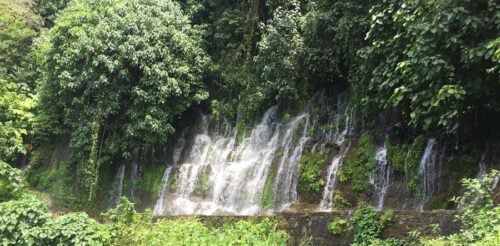
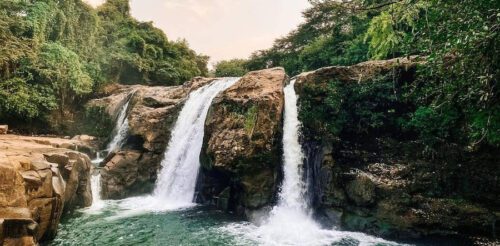
Las Pilas and La Olomina waterfalls are located deep in the mountains of Morazán. Here, the raw power of nature meets tranquility, offering visitors an unforgettable escape from the chaos of modern life.
The waterfalls form part of the Sapo River, one of El Salvador’s cleanest natural water sources, whose purity reflects the untouched beauty of Arambala.
Las Pilas waterfall is the tallest of the two, cascading down nearly 30 meters to create natural pools where families can swim or marvel at the water’s icy rush.
Nearby, La Olomina offers two spectacular drops—one 26 meters high and another just under 10—each surrounded by moss-covered rock walls and birdsong echoing through the forest.
These waterfalls exist thanks to the dream of Cristóbal Argueta, a local visionary who opened Julia’s Natural Park four years ago.
Determined to promote eco-tourism, Argueta and his team hand-built trails and bridges without the use of machinery, preserving every tree and stream along the way.
“Everything was done by hand,” he says proudly. “Each time visitors return, they find new paths and viewpoints. We’ve worked tirelessly to make this place accessible while keeping it wild and pure.”
The park, named after Argueta’s late mother Julia, honors her memory and connects generations of Salvadorans to the land she loved.
Spanning over 140 acres, the park offers numerous opportunities for outdoor enthusiasts.
Visitors can hike, observe native wildlife, or ride a golf cart through forest trails for $5 per group. For those who crave immersion, camping is permitted for an additional $3, with tents available for rent.
The waterfalls’ purity is extraordinary. Laboratory tests have confirmed that the water is 97% pure, and locals claim its minerals help relieve tension and fatigue. Many visitors say the cold water acts as a natural massage, reviving both body and spirit.

The Sapo River, fed by these cascades, is home to rare amphibians, including a transparent toad found nowhere else in El Salvador.
Birdwatchers often spot toucans, armadillos, and tepezcuintles along the shaded trails—proof of the region’s rich biodiversity and ecological balance.
Reaching these waterfalls is not easy, but it is well worth the effort. From San Salvador, travelers follow the Ruta de la Paz to Arambala, then take the road toward Joateca.
About three kilometers past the Sapo River bridge, a cobblestone road marked with the park’s sign leads straight to the entrance.
A four-wheel-drive vehicle is recommended, though visitors can arrange transport through the park’s Facebook page (Cascadas Las Pilas Arambala Morazán).
Today, Julia’s Natural Park welcomes around 900 visitors each month, each one discovering the rare stillness that only unspoiled nature provides.
Whether you come for photography, swimming, or reflection, the experience leaves a lasting mark.
As Argueta says with conviction, “This is a paradise on earth. Here you’ll find the cleanest waters, the purest air, and a peace you can’t find anywhere else. Everyone who visits us wants to return.”
In the end, Las Pilas and La Olomina are more than waterfalls—they are living monuments to El Salvador’s natural beauty. For those willing to journey deep into Morazán, they promise not just a destination, but a revelation.
The Morazán Department
Morazán, once known for its rugged history, is now one of El Salvador’s top ecotourism destinations, attracting travelers seeking unspoiled landscapes, mountain trails, and authentic rural experiences.
Its untouched rivers, dense forests, and waterfalls—such as Las Pilas and La Olomina—make it a haven for hikers, birdwatchers, and campers seeking peace far from the country’s urban centers.
Despite its natural wealth, Morazán remains one of El Salvador’s most underdeveloped regions.
Local communities are now embracing sustainable tourism as a path toward progress, offering guided tours, eco-lodges, and cultural experiences that highlight the region’s resilience, beauty, and potential for responsible development rooted in nature.
More Waterfalls to Explore in El Salvador
If you’re looking to discover more of El Salvador’s natural beauty, El Chorrerón Waterfall in San Fernando, Morazán, and Los Chorros de la Calera Waterfall near Juayúa are excellent additions to your itinerary.
El Chorrerón Waterfall is one of Morazán’s hidden gems, featuring a tall cascade surrounded by lush vegetation and a peaceful atmosphere. It’s an ideal destination for travelers seeking a quieter, less-crowded waterfall experience in eastern El Salvador.
Near the charming town of Juayúa, Los Chorros de la Calera Waterfall is among the country’s most popular natural attractions. Visitors can enjoy a refreshing swim beneath multiple cascades, hike through scenic forest trails, and combine the trip with a visit to Juayúa’s famous food festival and the Ruta de las Flores.