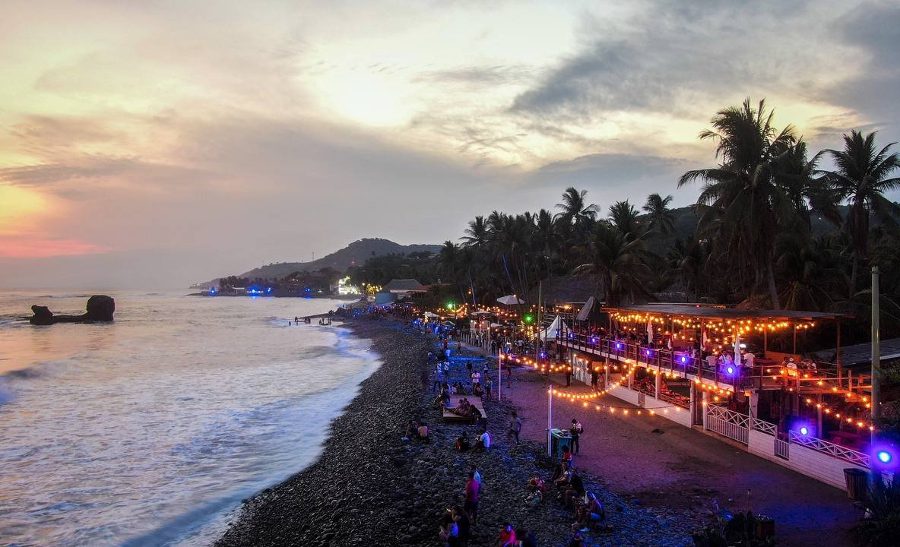
 Playa El Tunco.
El Salvador’s tourism sector is poised for robust expansion. With more travelers choosing the country’s beaches, volcanoes, and colonial towns, the government is responding by significantly increasing investment for 2026.
The Ministry of Tourism has increased its budget by $17 million, bringing the total projected spending to $66.9 million. The move signals confidence in tourism as one of the country’s fastest-growing economic engines.
Tourism Minister Morena Valdez presented the revised figure—$66,999,064—during the Finance Committee’s review of the 2026 National Budget. The new total surpasses the initial $58 million draft after factoring in revenue from affiliated institutions.
Those agencies include the Salvadoran Tourism Corporation (CORSATUR), the Salvadoran Tourism Institute (ISTU), and the Historic Center Planning Authority (APLAN). Their income, previously excluded from the general budget, now significantly contributes to the sector’s financial capacity.
Valdez highlighted that next year’s efforts will center on communities near Surf City 1 and 2. The focus is on infrastructure upgrades, social development, and encouraging private hotel investments to strengthen local tourism economies.
CORSATUR will prioritize projects related to sports such as surfing and golf, while upgrading public tourism infrastructure. A key undertaking is the completion of Phase 2 of El Boquerón National Park, which will include improved facilities for children and administrative areas.
Meanwhile, ISTU will continue developing inclusive and accessible spaces for families, reinforcing El Salvador’s image as a destination where growth meets social inclusion and every visitor can feel welcome.
El Salvador’s Tourism Revolution: From Turmoil to Top Destination
El Salvador’s tourism boom has reshaped its global image, transforming perceptions from one of a nation marked by violence and poverty to one of beaches, volcanoes, and cultural vibrancy, attracting millions of international visitors annually.
This transformation began with strategic initiatives, such as Surf City, and improved infrastructure, which not only boosted visitor numbers but also generated thousands of jobs and business opportunities across coastal and rural communities.
Tourism revenue now fuels key sectors—from hospitality to transportation—strengthening local economies and increasing foreign investment. In 2023 alone, visitors generated over $3.7 billion, a record-breaking contribution to national growth.
Beyond the numbers, tourism has changed mindsets. Salvadorans are increasingly taking pride in showcasing their heritage. At the same time, the world recognizes El Salvador as a safe, welcoming, and dynamic destination—proof that a reputation can evolve through resilience and vision.