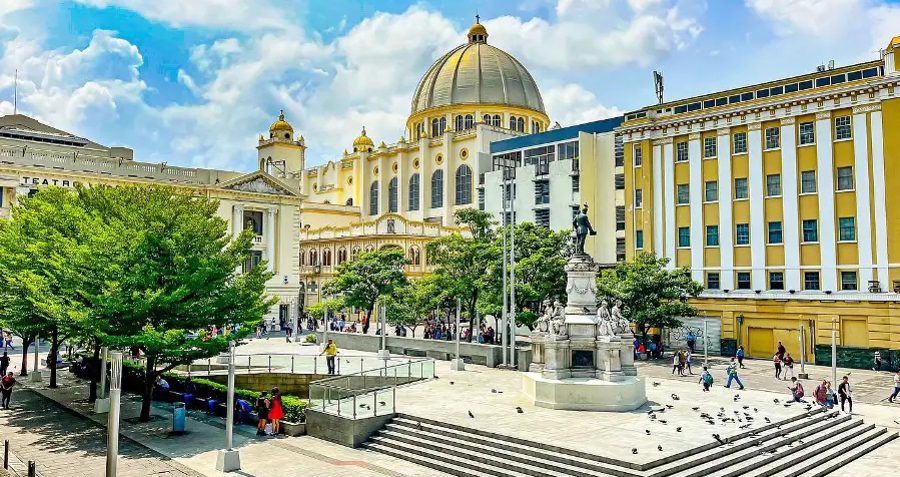
 Historic Downtown San Salvador.
Effective January 1, 2026, Salvadorans living in the United States will be required to pay a 1% federal tax on remittances sent to El Salvador.
The remittance fee applies to all money transfers from the United States to recipients in El Salvador, impacting millions of Salvadorans who routinely send money to their relatives.
The tax law was included in “The One Big Beautiful Bill Act”, a federal tax initiative approved by the United States Congress in 2025. President Donald Trump signed the legislation, making compliance mandatory.
According to an Internal Revenue Service administrative bulletin, remittance companies such as Western Union, MoneyGram, and others must collect the tax from the sender and remit it quarterly to the U.S. Department of the Treasury.
The tax does not reduce the amount received by beneficiaries in the destination country.
Transfers made from U.S. bank accounts using U.S.-issued debit or credit cards, as well as those processed through digital platforms or mobile applications, are exempt.
Most remittances arriving in El Salvador originate in the United States. In 2024, remittances sent from the United States totaled $7.8 billion, accounting for 91.6% of all remittance inflows to El Salvador that year.
That dominance continued in 2025. As of November, remittances from the United States totaled $8.3 billion, accounting for 92.4% of total remittances received.
The figures underscore El Salvador’s heavy reliance on U.S.-based income transfers to sustain household consumption and broader economic activity.
Remittances Are Important to the Country’s GDP
Remittances are a cornerstone of El Salvador’s economy, providing a significant source of foreign currency and household income that directly supports consumption, services, and overall economic stability.
The country receives more remittances than exports. In 2024, remittances from the U.S. totaled $7.8 billion, exceeding export earnings of $5.4 billion.
That gap widened in 2025. As of November, remittances from the United States alone have reached $8.3 billion, $2.6 billion more than total exports during the same period.
Economists say this inflow plays a decisive role in sustaining GDP growth, boosting domestic demand, and cushioning El Salvador against external economic shocks.