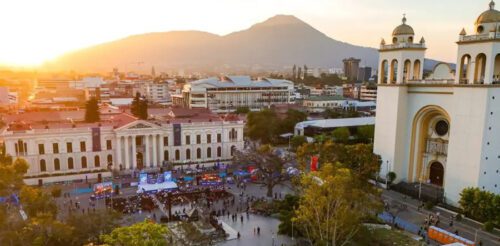
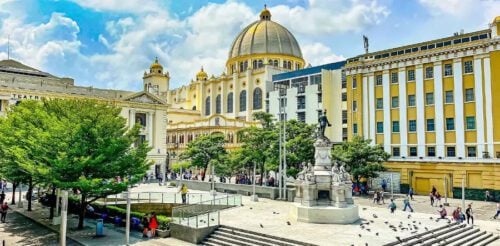
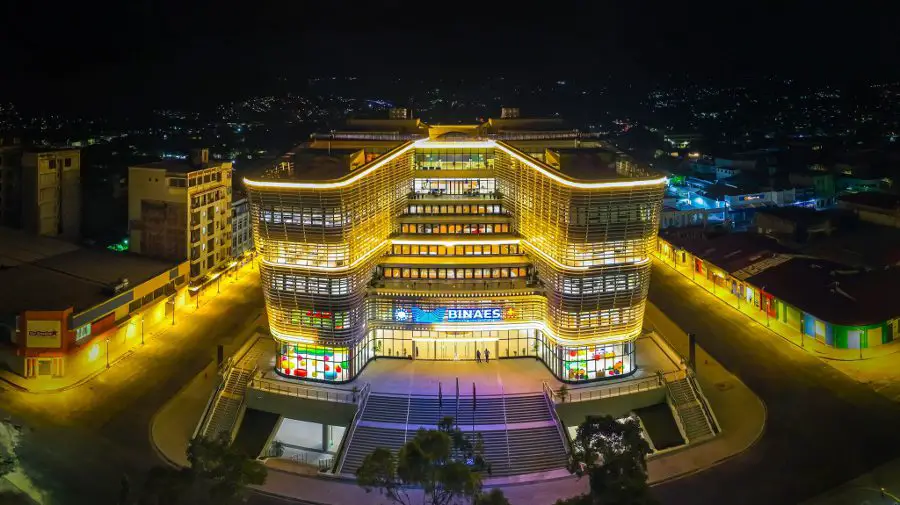
 National Library of El Salvador BINAES.
 El Salvador closed 2025 with a surge in domestic tourism as more than 10.2 million people visited public attractions nationwide, according to official data released by the Ministry of Tourism.
Figures from the Ministry of Tourism (MITUR) show visits during 2025 included parks, cultural landmarks, recreation centers, and protected natural areas.
The Salvadoran Government attributed the increase in tourism to expanded security measures, arguing that safer public spaces encouraged residents to travel domestically and spend more time at national attractions year-round.
Tourism Minister Morena Valdez described the results as historic, citing new and renovated sites that attracted both local and international visitors nationwide.
Official statistics show 4.4 million visits to parks managed by the Salvadoran Tourism Institute (ISTU), 3.3 million to cultural sites, 2.3 million to Salvadoran Tourism Corporation facilities, and 225,000 to protected natural areas.
The most visited attractions included the National Library of El Salvador, known as BINAES, and the La Libertad Port Tourist Complex, each surpassing 2.1 million visitors during the year.
Other heavily frequented destinations were Balboa Natural Park, with more than 1 million visitors; Puerta del Diablo Natural Park, with 529,268; and Sunset Park Recreational Park, with 483,352.
Additional sites contributing to the totals included Cerro Verde Natural Park, Amapulapa, Apulo, Ichanmichen, and Atecozol recreational parks, the National Palace, and El Boquerón National Park, among others.
Valdez said authorities expect similar or higher numbers in 2026, projecting growth of more than 5% in both domestic and international tourism as infrastructure and promotional efforts continue.
El Salvador Tourism
Tourism has become a key driver of economic growth in El Salvador, generating jobs, supporting small businesses, and increasing local spending in communities that previously relied on limited economic activity.
Businesses in the tourism sector, such as hotels, restaurants, tour operators, and transportation services, benefit directly from tourism. At the same time, artisans, farmers, and vendors gain new opportunities that strengthen local supply chains and extend income generation beyond the capital.
As visitor numbers grow both locally and internationally, El Salvador is positioning itself as a competitive regional destination.
The country is leveraging tourism to project stability, attract investment, and build confidence in its broader economic and social transformation.