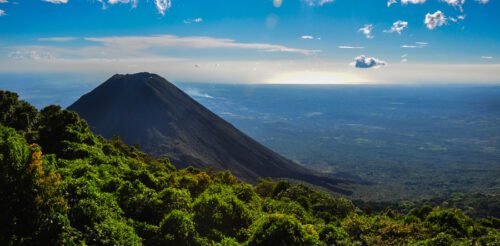
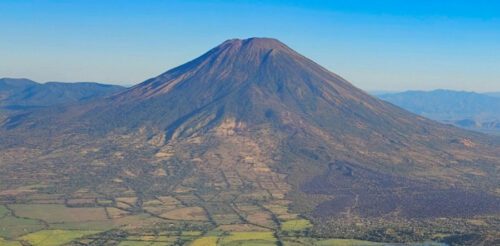
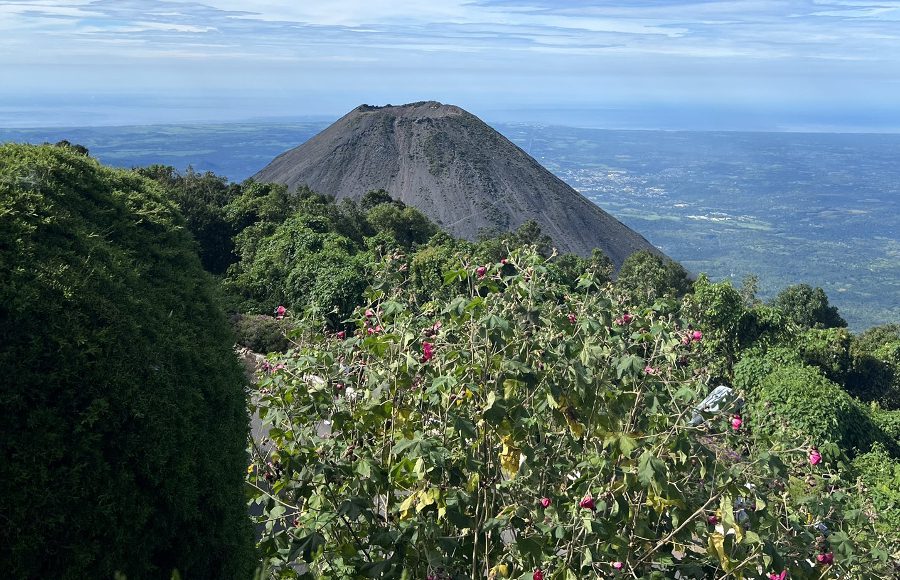
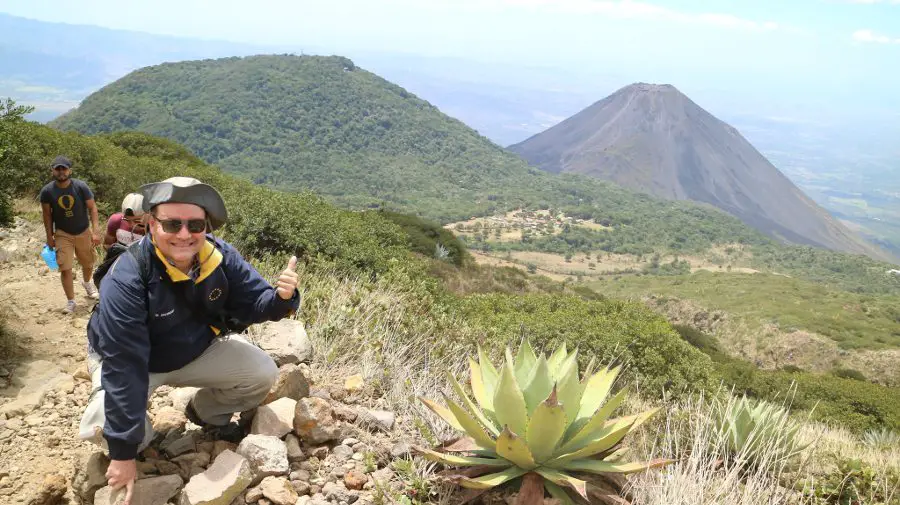
 View from the Cerro Verde Volcano.
When most travelers think about El Salvador’s volcanoes, their minds leap to Santa Ana’s smoking crater or Izalco’s perfect cone. But hidden in plain sight is Cerro Verde Volcano, a sleeping giant that has long since gone extinct, yet continues to command a quiet majesty.
Instead of dramatic eruptions, Cerro Verde offers mist-shrouded forests, diverse wildlife, and some of the most breathtaking views in the country.
A Volcano That Sleeps, But Never Loses Its Power
Cerro Verde is one of three prominent peaks in the Volcano Complex tourist route, also known as Cerro Verde National Park, located in western El Salvador, alongside the impressive Santa Ana (Ilamatepec) and the active Izalco.
While Santa Ana still rumbles and Izalco last erupted in the 20th century, Cerro Verde is a relic of an ancient past.
Its crater has long since eroded, giving way to dense cloud forest that feels worlds apart from the lava-scarred slopes of its siblings.
Its dormancy, however, doesn’t make it less compelling. Cerro Verde is the best point to admire its two dramatic neighbors and to see Lake Coatepeque shimmering in the distance.

A Refuge of Forest and Life
Unlike the barren upper slopes of Santa Ana or Izalco, Cerro Verde is alive with greenery.
The Cerro Verde National Park protects this ecosystem, a cool, misty forest home to orchids, ferns, bromeliads, and towering trees wrapped in moss.
It is a sanctuary for countless bird species, including the resplendent quetzal and emerald toucanet—sightings that thrill both casual hikers and serious birdwatchers.
Butterflies, armadillos, and even small wild cats roam the area, making it one of El Salvador’s richest natural habitats. For many, the appeal of Cerro Verde lies not in the volcano itself, but in the thriving life it now sustains.
SEE ALSO: Discover Cerro Verde National Park on El Salvador’s Volcano Complex Tourist Route
Hiking and Exploring Cerro Verde
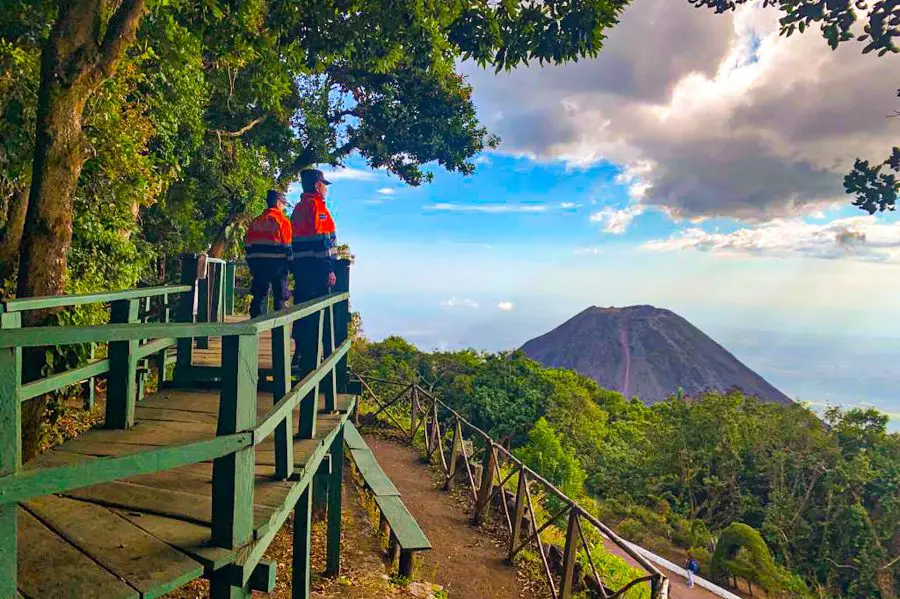
If Santa Ana’s steep climb feels daunting, Cerro Verde provides a gentler alternative. The trails here are well-maintained, shaded, and family-friendly. A popular route is the “Las Flores” trail, where orchids bloom seasonally and the forest hums with birdsong.
From the main viewpoints, travelers can admire Izalco’s perfect cone, once called the “Lighthouse of the Pacific” for its near-constant eruptions in the 18th and 19th centuries.
To the west, Santa Ana Volcano dominates the horizon with its massive crater and turquoise sulfur lake. The contrast between the wild, rugged siblings and Cerro Verde’s green serenity is unforgettable.
More Than a Park: Cultural and Community Value
For Salvadorans, Cerro Verde is more than a destination—it’s part of the country’s identity.
Families from nearby Santa Ana often visit on weekends to picnic under the trees, while local guides share stories and legends tied to the volcanoes.
Tourism helps sustain surrounding communities, which sell crafts, snacks, and guide services at the park entrance.
There’s folklore here, too. Many locals speak of spirits protecting the mountains, a reminder that in El Salvador, volcanoes are not only natural monuments but cultural symbols passed down through generations.
Planning Your Visit
Best time to go: The dry season (November to April) offers clearer skies and unobstructed views, though the rainy season has its own charm with greener landscapes and fewer crowds.
Getting there: Cerro Verde is about 65 kilometers from San Salvador—roughly a two-hour drive. Most travelers reach it by car, though local buses also connect Santa Ana with the park.
Park details: The entrance fee is modest, usually just a few U.S. dollars. Facilities include a visitor center, rest areas, and guided tours that can also lead to hikes to Santa Ana and Izalco.
What to bring: Comfortable walking shoes, a light jacket (the forest can be cool and misty), drinking water, and a camera for the panoramic views.
Why Cerro Verde Volcano Matters
Cerro Verde may lack the dramatic lava fields or smoking craters of its neighbors, but that’s precisely what makes it special.
It is a volcano that has traded fire for forest, destruction for life. From its shaded trails, you can see El Salvador’s volcanic heart laid bare—the old and the new, the sleeping and the restless.
For travelers seeking a gentler hike, an immersion in a cloud forest, or simply the best seat in the house to admire Santa Ana and Izalco, Cerro Verde is indispensable.
To overlook it is to miss one of the most balanced and beautiful sides of El Salvador’s volcanic story.