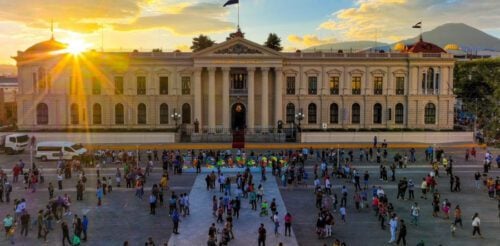
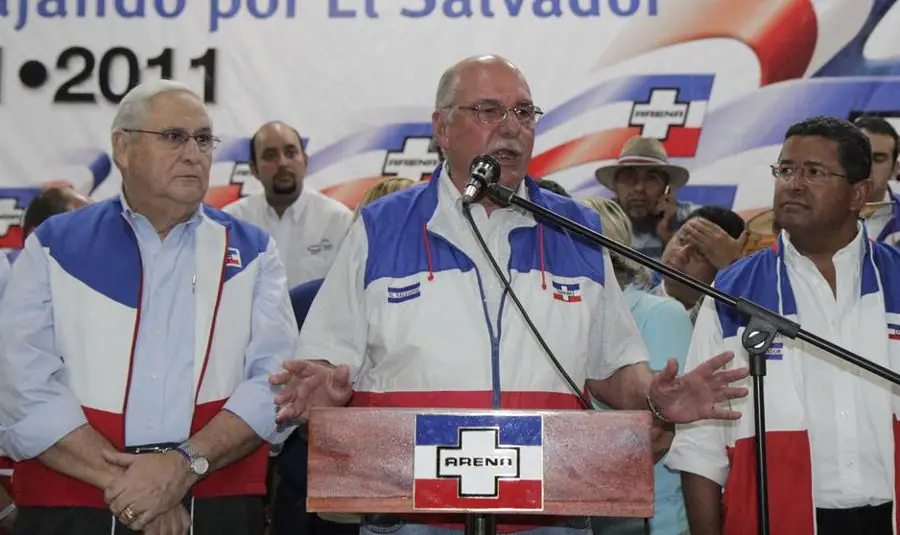
 Salvadoran ex-presidents, Calderon Sol, Alfredo Cristiani, and Paco Flores.
Alfredo Cristiani served as president of El Salvador from 1989 to 1994, leading the country through the final years of its civil war and the beginning of a difficult transition toward peace.
As a member of the conservative Nationalist Republican Alliance (ARENA), Cristiani became one of the most influential figures among the presidents who shaped El Salvador’s political history.
His presidency brought historic peace agreements, economic reforms, and political changes. However, allegations surrounding wartime human rights violations continue to complicate his legacy and generate debate among Salvadorans.
Who Is Alfredo Cristiani?
Alfredo Félix Cristiani Burkard was born on November 22, 1947, in San Salvador. He grew up in a wealthy family with business interests and later studied business administration at Georgetown University.
Before he got involved in politics, Cristiani worked in the private sector and gained experience in business management.
He eventually joined ARENA, a right-wing political party founded by Roberto d’Aubuisson in 1981. Cristiani became party president in 1985 and helped strengthen its electoral position.
Unlike some of ARENA’s more confrontational figures, Cristiani cultivated a moderate public image. His leadership helped the party attract voters seeking economic stability and an end to the war.
Alfredo Cristiani’s Rise to the Presidency
Cristiani won El Salvador’s presidential election on March 19, 1989, receiving approximately 54% of the vote. His victory ended a period of government leadership by the Christian Democratic Party.
He officially took office on June 1, 1989, succeeding President José Napoleón Duarte. The country remained deeply divided after nearly a decade of civil war.
The conflict between government forces and the Farabundo Martí National Liberation Front (FMLN) had devastated communities, displaced families, and weakened the national economy.
Cristiani promised economic recovery and a negotiated settlement. Freedom House’s historical election analysis shows his victory also reflected ARENA’s growing influence in Salvadoran politics.
Alfredo Cristiani and the Salvadoran Civil War
When Cristiani took office, El Salvador had already gone through years of war. Government troops and leftist guerrillas kept fighting, and civilians were still caught in the violence.
His administration initially pursued direct negotiations with the FMLN. However, military offensives, political disagreements, and widespread distrust repeatedly interrupted efforts to reach a settlement.
In November 1989, the FMLN launched a major offensive that reached San Salvador. The fighting demonstrated how difficult achieving a decisive military victory would be.
International pressure also increased after Salvadoran soldiers murdered six Jesuit priests and two women at the Central American University. The killings drew worldwide condemnation and demands for accountability.
Even with these problems, talks went on with help from other countries. The United Nations later took a leading role, helping both sides find a way to end the conflict.
The 1992 Peace Accords: Cristiani’s Greatest Political Achievement
On January 16, 1992, Cristiani signed the Chapultepec Peace Accords with representatives of the FMLN in Mexico City, formally establishing the agreement that ended El Salvador’s civil war.
The agreement introduced major institutional reforms, including restructuring the armed forces, establishing a civilian police organization, and allowing former guerrillas to participate in electoral politics.
The peace process also set up ways to investigate wartime abuses and make democratic institutions stronger. These steps aimed to prevent future conflict and restore public trust.
According to the United Nations’ historical account of the peace process, implementing these reforms required continued negotiations, international monitoring, and cooperation between former enemies.
Cristiani was recognized internationally for his willingness to negotiate. Still, the agreement was the result of work by many political leaders, FMLN members, civil society groups, and international mediators.
Economic Policies During Cristiani’s Presidency
Beyond the peace negotiations, Cristiani promoted market-oriented economic policies. His administration encouraged private investment, reduced certain government controls, and pursued reforms designed to stimulate economic growth.
A key step was privatizing commercial banks that the government had taken over in the previous decade. Supporters said private ownership would make banks more efficient and attract investment.
His administration also pursued trade liberalization and fiscal adjustments. These policies reflected broader economic reforms taking place throughout Latin America during the late 1980s and early 1990s.
The World Bank’s assessment of El Salvador’s post-conflict reconstruction describes the administration’s commitment to economic reform alongside efforts to establish lasting peace.
Nevertheless, economic inequality remained a serious challenge. Critics argued that market reforms benefited established business interests while many working-class Salvadorans continued struggling with poverty and limited opportunities.
Human Rights Controversies and Legal Allegations
Cristiani’s presidency is often linked to the November 1989 massacre at the Central American University, known as the UCA massacre, where six Jesuit priests and two female collaborators were killed.
The killings took place while Cristiani was president. Later investigations raised questions about the role of high-ranking military officials and how his government handled the crime.
In November 2024, a Salvadoran court ordered Cristiani and several other defendants to face trial over their alleged involvement in the killings. The charges included murder and acts of terrorism.
As Reuters reported on the court’s decision, the proceedings represented another attempt to establish accountability for one of the civil war’s most notorious atrocities.
In June 2026, an appeals court allowed the criminal proceedings against Cristiani to continue, rejecting a defense argument concerning previous legal proceedings in Spain.
The continue to shape daily life, government, and society in El Salvador, especially through the institutions formed as the country moved from war to peace.
Understanding Alfredo Cristiani’s presidency means examining both its achievements and unresolved controversies. His political legacy reflects a defining period when Salvadorans began rebuilding their country after years of conflict.