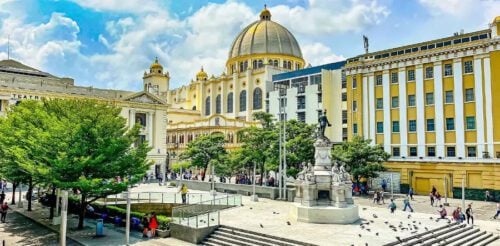
As in past years, parishioners of Izalco and visitors alike will participate in the Procession of the Christs of Izalco. This Salvadoran tradition unfolds each year on Holy Thursday during Easter Week celebrations.
The Procession of the Christs of Izalco is one of the country’s longest-standing Holy Week traditions, built on generations of faith, strong community ties, and cultural roots in the historic town of Izalco, Sonsonate.
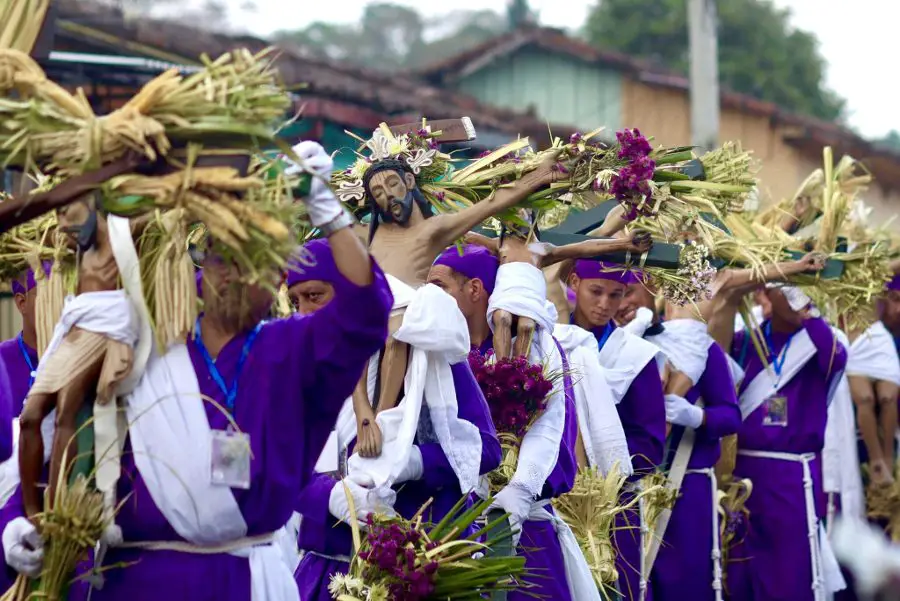
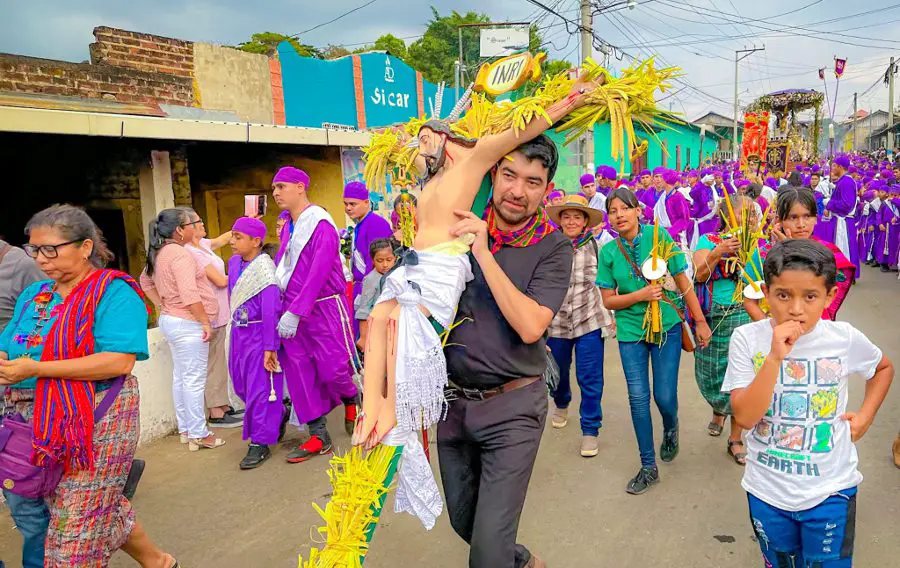
Unlike typical Catholic processions, this event brings together more than a dozen crucified Christ images, each from a traditional brotherhood. These sacred figures are carried through the streets in a solemn, physically demanding procession lasting up to eighteen hours.
During the Procession of the Christs of Izalco, members of the brotherhoods carry 12 crucified Christs throughout the town’s streets for 16 hours. It begins at 2:30 p.m. on Thursday and ends at 6 a.m. on Friday.
What makes this tradition different is its blending of Catholic beliefs with Nahua-Pipil indigenous traditions. It’s basically a blend of pre-Columbian customs and colonial-era religion, coming together in a uniquely Salvadoran way to show devotion.
During the Procession of the Christs of Izalco, members of the Jesus Nazareno brotherhood of that district carry the images; they wear their customary purple tunics, and the indigenous people wear their traditional clothing.
The observance begins before the main procession with the “Vela de los Cristos,” a vigil held on Holy Wednesday. During this ritual, images are laid on woven mats, surrounded by candles, incense, and prayers resembling funeral rites.
During the procession, indigenous individuals seek the protection of Mother Earth and the preservation of sacred sites; they also pay tribute to their ancestors.
It is also a time for remembrance, as in Izalco, some 32,000 indigenous people were massacred in 1932, by order of the dictator Maximiliano Hernandez Martinez, when the indigenous people rejected a reform that dispossessed them of their communal lands.
Cofradías, or traditional religious brotherhoods, play a central role in preserving the ritual. These groups pass responsibilities across generations, ensuring continuity while maintaining strict adherence to customs that predate modern religious structures.
Even though people see it as an old, untouched tradition, the procession hasn’t stayed the same. Outside influences, such as tourism and changing cultural views, have slowly shaped it, so it’s not as unchanged as many believe.
This procession draws attention for its unique blend of Catholic faith and indigenous traditions, making Izalco one of the best places in El Salvador to experience the country’s cultural roots firsthand.
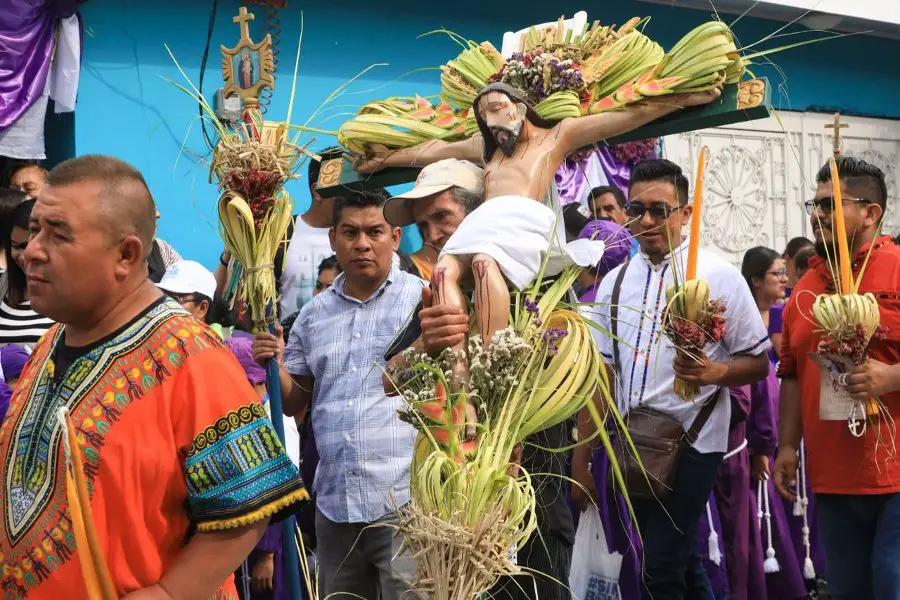
Procession of the Christs of Izalco
In 2023, the Salvadoran Legislative Assembly declared the Procession of the Christs an Intangible Cultural Heritage, aiming to recognize, celebrate, and preserve one of the country’s most meaningful and enduring traditions.
The Procession of the Christs of Izalco stands as a powerful Holy Week tradition, offering one of the clearest expressions of El Salvador’s cultural identity, religious devotion, and deep historical roots.
Ultimately, the Procession of the Christs of Izalco is more than a religious event. It is a living cultural expression that reflects El Salvador’s complex history and the enduring resilience of indigenous identity within a modern national context.