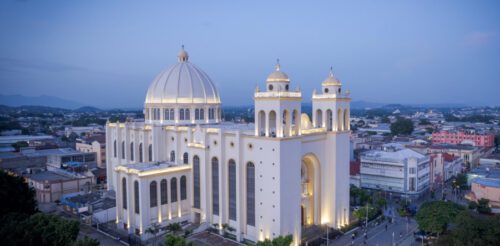
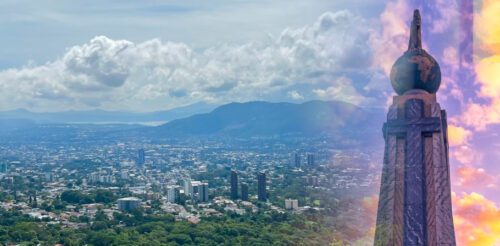
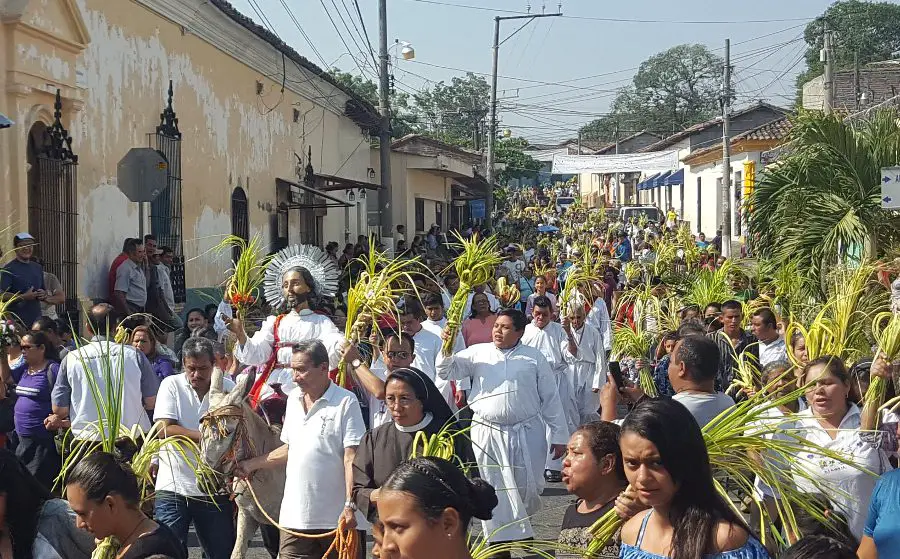
 Palm Sunday in Suchitoto.
 Palm Sunday in El Salvador, also known as “Domingo de Ramos,” marks the beginning of Holy Week and commemorates Jesus’s triumphal entry into Jerusalem.
This day holds deep spiritual meaning for Salvadorans as it blends Catholic faith with cultural identity. Catholic families throughout the country participate in religious rituals passed down for generations.
The day begins with the traditional blessing of palm branches, followed by a procession and the Palm Sunday Mass. During the service, the Passion of Christ is read—often performed in parts by different parishioners.
Towns like Izalco, Juayúa, Suchitoto, and others are ideal to visit during Palm Sunday. Their traditions are vibrant, with processions and community spirit that beautifully kick off the Semana Santa celebrations.
SEE ALSO: Exploring El Salvador Culture: Embracing Vibrant Customs and Traditions with Warm-hearted People
Blessing of the Palms “Bendición de Ramos”
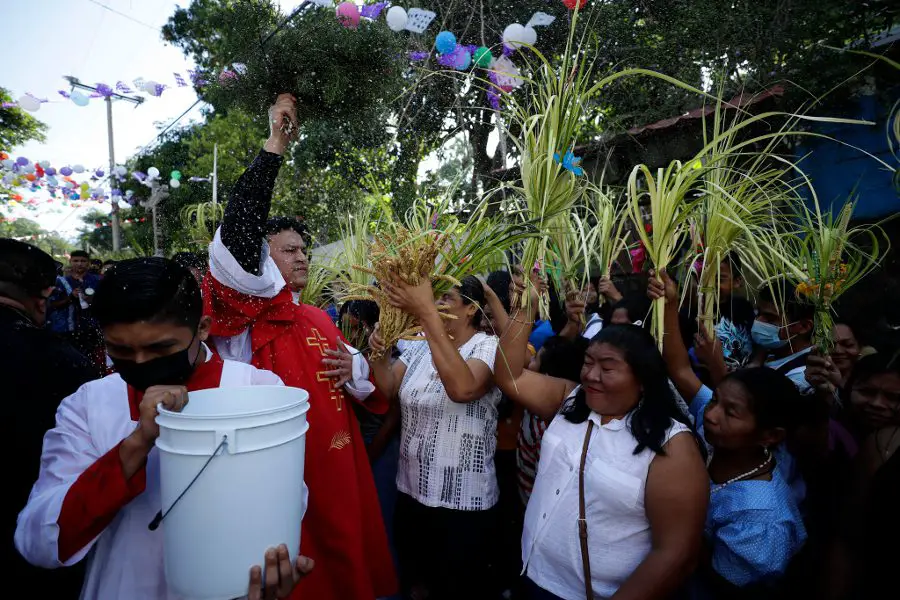
La Bendición de Ramos, or the Blessing of the Palms, is a traditional ritual held on Palm Sunday in El Salvador. The celebration begins outside churches, where the faithful gather carrying palm fronds.
During the ceremony, the priest blesses the palms with holy water while prayers, hymns, and incense accompany the ritual. The blessing recalls Jesus’ triumphant entry into Jerusalem, when crowds welcomed him by waving palm branches.
Salvadorans often weave the palms into intricate shapes—crosses, crowns, and hearts—and carry them with pride. After the blessing, many join processions or attend Mass, holding the palms as sacred symbols of their faith.
Most people take their blessed palms home and place them on altars or doorways for protection. Some believe they bring blessings, ward off storms, and keep away evil spirits throughout the year.
The tradition remains deeply meaningful, connecting Salvadorans to their Catholic faith and cultural heritage while bringing families and communities together in reflection and renewal.
SEE ALSO: El Salvador Tourism: A Journey Through Pristine Beaches, Colorful Towns, and Enchanting Parks
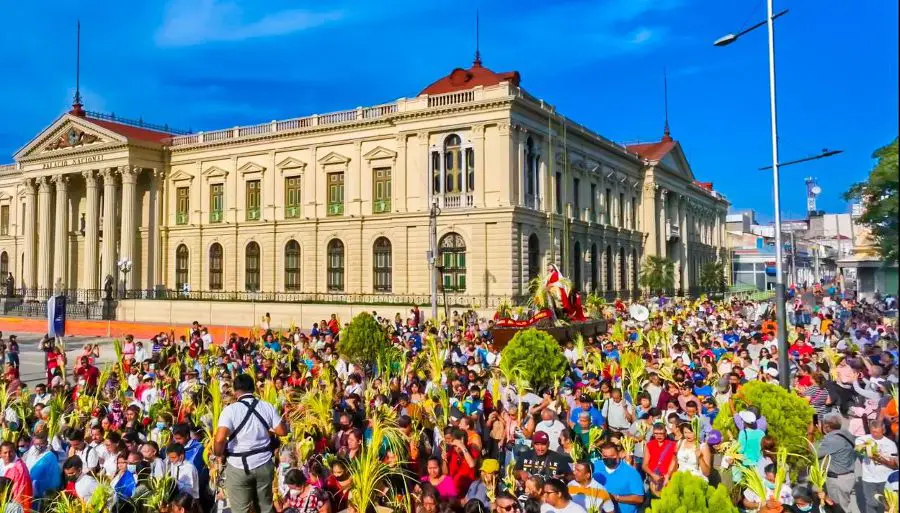
Palm Procession “La Procesión de Ramos”
The Procesión de Ramos in El Salvador reenacts Jesus’ entry into Jerusalem with a statue of Him riding a donkey. Worshippers walk through the streets waving blessed palm branches and singing hymns.
The procession usually begins after the Blessing of the Palms, as participants walk together toward the church in a journey that is both joyful and reverent. Most processions start around 10:00 a.m., though each parish may set its own schedule.
Families, neighbors, and parish groups take part, creating a warm, multigenerational atmosphere. Many carry palm fronds woven into crosses or other shapes as symbols of faith.
Together with the Blessing of the Palms, the procession marks the official beginning of Holy Week. It sets a reflective tone for the days ahead and connects Salvadorans with their traditions, their faith, and their communities.
Five Towns to Visit on Palm Sunday in El Salvador
If you want to experience Palm Sunday in El Salvador in a more intimate and authentic setting where traditional customs are preserved, visit one of the following small towns: Izalco, Suchitoto, Panchimalco, Juayua, or La Palma.
These smaller towns in El Salvador offer a more intimate Palm Sunday experience with close-knit communities, creating a welcoming environment where traditions feel alive and shared among neighbors and visitors.
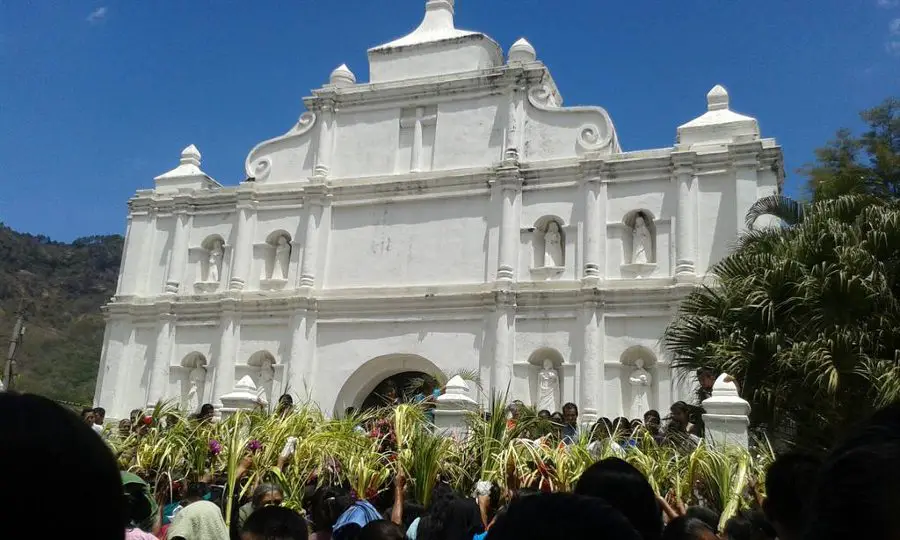
The five towns listed above have centuries-old customs and traditions that have been preserved over time. Unlike larger cities, small towns will allow more intimate opportunities to immerse yourself fully in the Domingo de Ramos traditions.
Furthermore, the churches in smaller towns are historic and beautifully maintained. Scenic surroundings—like mountains, cobbled streets, or colonial architecture—enhance the beauty of the Palm Sunday celebration.