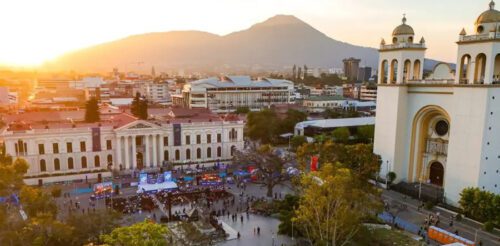
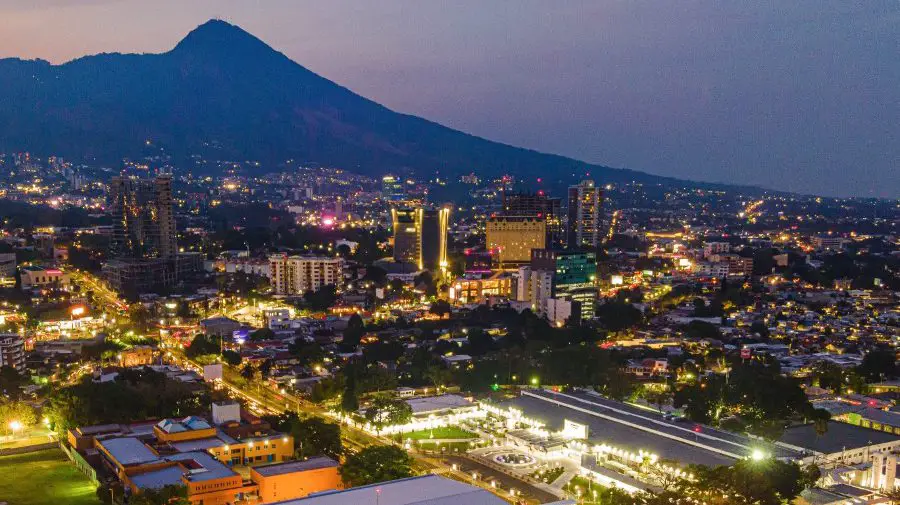
 La Zona Rosa in San Salvador.
El Salvador’s economy expanded 4.8% during the first quarter of 2026 compared with the same period a year earlier, driven largely by strong growth in construction and broad-based gains across most productive sectors.
The country’s gross domestic product totaled $9.26 billion for January to March, up $604.7 million from the first quarter of 2025, according to data released by the Central Reserve Bank (BCR).
The bank said the 4.8% growth rate was more than double the average expansion recorded during the first quarters of the past 17 years, which it calculated at 2.2%, reflecting stronger-than-usual economic performance.
According to the BCR, 17 of the country’s 19 productive activities posted positive annual growth during the quarter, accounting for 80.3% of the economy’s total output and contributing to overall expansion despite declines in two sectors.
Construction experienced the highest growth at 13.5%, followed by mining and quarrying at 11.1%, transportation and storage at 7.6%, and the hotels and restaurants sector at 7.1%, according to the bank’s report.
Other sectors reporting positive results included health services at 5.5%, professional and technical services at 5.4%, recreation at 4.7%, manufacturing at 4.4%, and administrative and business support services at 3.6%.
Commerce and real estate activities each expanded 3.4%, while financial services grew 3.3%. Information and communications increased 2.7%, government services rose 2.5%, electricity advanced 1.6%, personal services gained 1.2%, and water services increased 0.6%.
Only education and agriculture contracted during the period, declining 0.3% and 0.8%, respectively. Together, those sectors accounted for 6.7% of the country’s gross domestic product in monetary terms, according to the BCR.
The central bank said the economy’s performance came despite continued uncertainty affecting the global economy. It attributed the expansion primarily to domestic economic conditions and stronger foreign trade during the first three months of the year.
Among domestic factors, the BCR cited investment promotion policies, strategic infrastructure projects and measures intended to strengthen household disposable income, including the 25th Pay Period Law promoted by the current administration.
Investment, both public and private, played a central role in the quarter’s expansion, with construction emerging as the principal engine of growth. The bank said private investment focused on housing, commercial and logistics developments.
Public investment was directed toward building and modernizing educational facilities, highways and airport infrastructure. The BCR highlighted work on the Pacific International Airport project as one of the government’s major infrastructure initiatives.
In the external sector, exports of goods and services increased by 5% in monetary terms, supported by industrial and traditional products, as well as continued expansion in the services sector, according to the central bank.
Tourism also contributed to economic activity during the quarter. The BCR reported that 1.3 million international visitors entered the country, attributing the increase to improved security, international promotion and major cultural and sporting events.
The bank said those events included performances by Shakira, as well as other concerts and cultural activities that helped attract international visitors and supported businesses in the tourism industry.
The BCR also credited improvements in public services with supporting economic activity. It cited investments in the National Hospital Network and the expansion of DoctorSV, a digital platform aimed at improving healthcare coverage and access.
Household income also increased during the period, supported by the 25th Pay Period Law and family remittances. According to the BCR, remittances rose 7.3% year over year to reach $2.44 billion during the quarter.
The increase in household income helped strengthen private consumption, supporting sectors such as commerce, restaurants, transportation and entertainment, the bank said. It concluded that investment, consumption, tourism and foreign trade collectively drove the country’s first-quarter economic expansion.