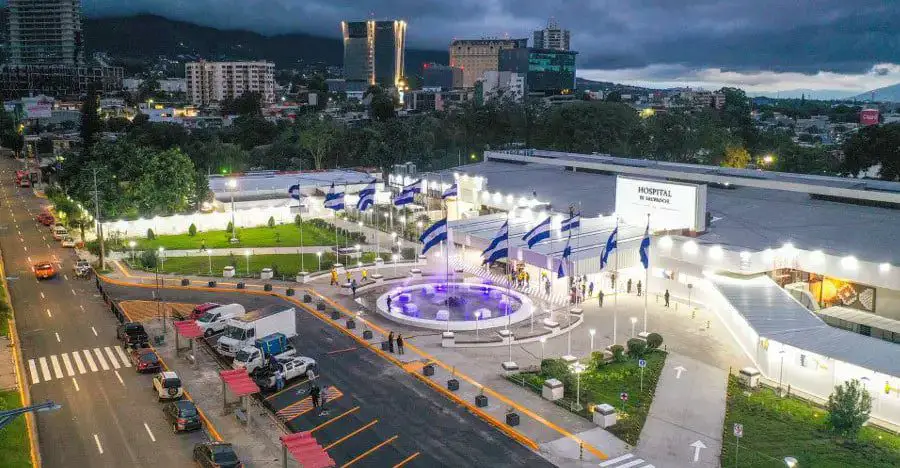
 COVID-19 Hospital El Salvador.
El Salvador healthcare system reflects the country’s social and economic divide. While universal care exists in theory, access and quality vary greatly depending on whether one relies on public or private services.
The public health care system—managed mainly by the Ministry of Health (MINSAL) and the Salvadoran Social Security Institute (ISSS)—offers free or low-cost treatment but often faces shortages, long waits, and limited resources.
On the other hand, private healthcare usually offers faster service and better-quality care through private hospitals and clinics. The downside is the cost. Private care can be expensive, so it’s mostly used by people who can afford to pay out of pocket or have private health insurance.
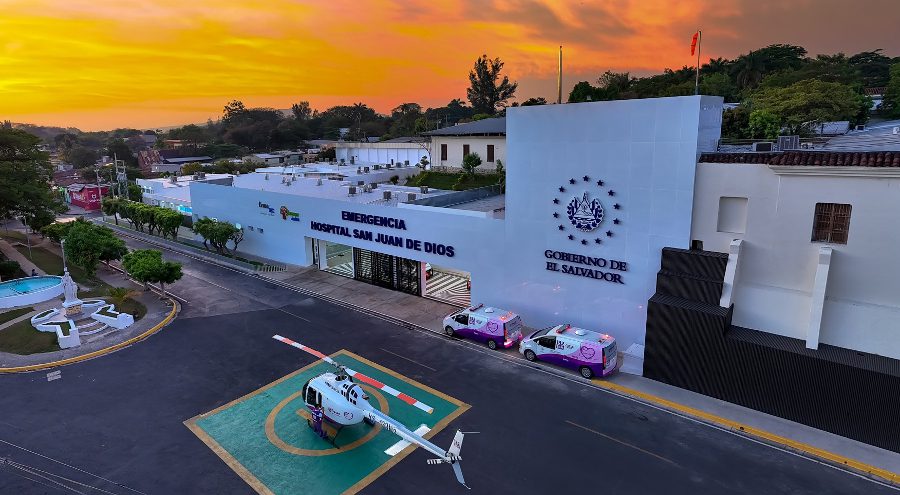
El Salvador Healthcare System
El Salvador operates a dual healthcare structure, divided between a state-funded public network and a private healthcare sector. Both serve millions, but the experience, cost, and quality are different.
The public system, led by the Ministry of Health (MINSAL), is the backbone of national healthcare. It provides free healthcare services to anyone who needs them.
Then there is the Salvadoran Social Security Institute ISSS, which provides coverage for formally employed workers and their dependents.
Its hospitals and healthcare facilities are slightly less crowded than those of MINSAL centers; however, frequent complaints persist about delays, medicine shortages, and bureaucracy.
Lastly, we have the private hospitals and clinics, which offer modern equipment, shorter wait times, and specialized care. Fast service and name-brand medications create an entirely different patient experience—priced accordingly.
For most Salvadorans, access to healthcare often depends on where they live and how much they can afford. People in urban areas usually have more options, while those in rural communities may have to travel long distances to receive medical care.
El Salvador’s Public Healthcare System
The Ministry of Health (MINSAL) manages El Salvador’s public healthcare system and is responsible for directing, coordinating, planning, and executing national public health policies. The system aims to provide healthcare regardless of a person’s ability to pay.
You can find public healthcare facilities across the country, from major hospitals in urban areas to smaller clinics serving rural communities.
Patients receive free services, including general consultations, vaccinations, maternal care, and emergency treatment. For many families, the public system offers the most practical way to receive healthcare.
One of the system’s biggest strengths is its reach. People living in remote communities can still access basic healthcare, even in places where private hospitals and clinics aren’t readily available.
Public healthcare also goes beyond treating patients. MINSAL carries out vaccination campaigns, nutrition programs, disease-prevention efforts, and health education initiatives that reach communities throughout El Salvador.
Still, using the public system can come with challenges. Patients may face long waits at busy hospitals and health centers, sometimes spending several hours before they can see a doctor.
Shortages of medicines, supplies, or medical equipment can also affect care. When certain items aren’t available, patients may need to purchase medications from private pharmacies.
Access to free healthcare services varies by location. Larger urban hospitals offer more specialized services, while smaller rural facilities have fewer doctors, specialists, and medical resources.
El Salvador Public Hospitals
El Salvador’s public healthcare system has 31 hospitals, divided into departmental, regional, and specialty hospitals. These hospitals are located in the most densely populated areas and provide essential care, with higher-level facilities handling specialized treatments.
Departmental Hospitals
Departmental hospitals are generally located in departmental capitals and other highly populated areas. They provide a broad range of essential healthcare services, along with several specialized medical services.
| Department | City | Hospital Name | Phone | |
|---|---|---|---|---|
| 1 | Ahuachapan | Ahuachapan | Hospital Dr. Francisco Menendez | (503)2445-6800 |
| 2 | Sonsonate | Sonsonate | Hospital Dr. Jorge Mazzini Villacorta | (503)2891-6500 |
| 3 | Santa Ana | Metapan | Hospital Dr. Arturo Morales | (503)2891-6000 |
| 4 | Santa Ana | Chalchuapa | Hospital of the city of Chalchuapa | (503)2891-4500 |
| 5 | Chalatenango | Chalatenango | Hospital Dr. Luis Edmundo Vasquez | (503)2393 9010 |
| 6 | Chalatenango | Nueva Concepcion | Hospital of the city of Nueva Concepcion | (503)2991-0500 |
| 7 | La Libertad | Santa Tecla | Hospital San Rafael | (503) 2594-4000 |
| 8 | San Salvador | Zacamil | Hospital Dr. Juan Jose Fernandez | (503)2594-5000 |
| 9 | San Salvador | San Marcos | Hospital Dr. José Antonio Saldaña | (503)2201-2101 |
| 10 | San Salvador | Soyapango | General & Psychiatry Hospital Dr. Jose Molina Martínez | (503)2327-0200 |
| 11 | San Salvador | San Bartolo | Hospital Angélica Vidal de Najarro | (503)2201-3100 |
| 12 | Cuscatlan | Cojutepeque | Hospital “Nuestra Señora de Fatima” | (503)2991-2201 |
| 13 | Cuscatlan | Suchitoto | Hospital of Suchitoto | (503)2347-4700 |
| 14 | San Vicente | San Vicente | Hospital Santa Gertrudis | (503)2393-9500 |
| 15 | La Paz | Zacatecoluca | Hospital Santa Teresa | (503)2347-1200 |
| 16 | Cabañas | Ilobasco | Ilobasco National Hospital | (503)2347-5000 |
| 17 | Cabañas | Sensuntepeque | Hospital “San Jeronimo Emiliani” | (503)2361-0700 |
| 18 | Usulutan | Jiquilisco | Hospital of Jiquilisco | (503)2684-3300 |
| 19 | Usulutan | Usulutan | Hospital San Pedro | (503)2792-0000 |
| 20 | Usulutan | Santiago de Maria | Hospital Dr. Jorge Arturo Mena | (503)2684-0200 |
| 21 | San Miguel | Ciudad Barrios | Hospital Monseñor Oscar Arnulfo Romero y Galdamez | (503)2792-2200 |
| 22 | San Miguel | Nueva Guadalupe | Hospital Nueva Guadalupe | (503)2645-2238 |
| 23 | Morazan | San Francisco Gotera | Hospital Dr. Hector Antonio Hernandez Flores | (503)2645-7100 |
| 24 | La Union | Santa Rosa de Lima | Hospital of Santa Rosa de Lima | (503)2792-4400 |
| 25 | La Union | La Union | Hospital of La Union | (503)2792-5000 |
Regional Hospitals
El Salvador’s public healthcare system has two regional hospitals: one in Santa Ana, serving the western region, and another in San Miguel, serving the eastern region.
These hospitals coordinate the public hospitals within their respective regions. They also provide a higher level of medical care and offer more specialized services than departmental hospitals.
| Department | City | Hospital Name | Phone | Link | |
|---|---|---|---|---|---|
| 26 | Santa Ana | Santa Ana | Hospital San Juan de Dios | (503)2891-5000 | Webpage |
| 27 | San Miguel | San Miguel | Hospital San Juan de Dios | (503)2792-3000 | Webpage |
Specialty Hospitals
National Specialized Hospitals provide advanced medical care for patients with complex health conditions. To receive treatment at one of these hospitals, patients generally need a referral from a departmental or regional hospital.
| Department | City | Hospital Name | Phone | Link | |
|---|---|---|---|---|---|
| 28 | San Salvador | San Salvador | Children’s hospital Benjamín Bloom | (503)2133-3100 | Webpage |
| 29 | San Salvador | San Salvador | Hospital for Women Dr. Maria Isabel Rodriguez | (503)2206-6212 | Webpage |
| 30 | San Salvador | San Salvador | Hospital El Salvador for COVID-19 | (503)2594-2100 | Webpage |
| 31 | San Salvador | San Salvador | Hospital Rosales | (503)2231-9200 | Webpage |
Community Family Health Units (UCSF)
The Unidades Comunitarias de Salud Familiar (UCSF), commonly called unidades de salud, form an important part of El Salvador’s public healthcare network. They provide primary medical care through the Ministry of Health (MINSAL).
You can find these health units throughout the country, from densely populated cities to small towns and rural communities. Their widespread presence helps bring basic healthcare closer to Salvadoran families.
According to 2023 health-sector data, El Salvador has 746 UCSF facilities nationwide.
Patients can visit these facilities for general consultations, vaccinations, maternal and child healthcare, family planning, preventive services, and other basic treatments. Available services can vary depending on the size and capacity of each unit.
Many Salvadorans use their local UCSF as their first point of contact with the public healthcare system. When patients need more specialized treatment, healthcare workers can refer them to hospitals or other facilities.
These units don’t just treat people when they get sick. They focus on prevention through vaccinations, prenatal care, nutrition programs, health education, disease monitoring, and other services that support local communities.
Doctor SV
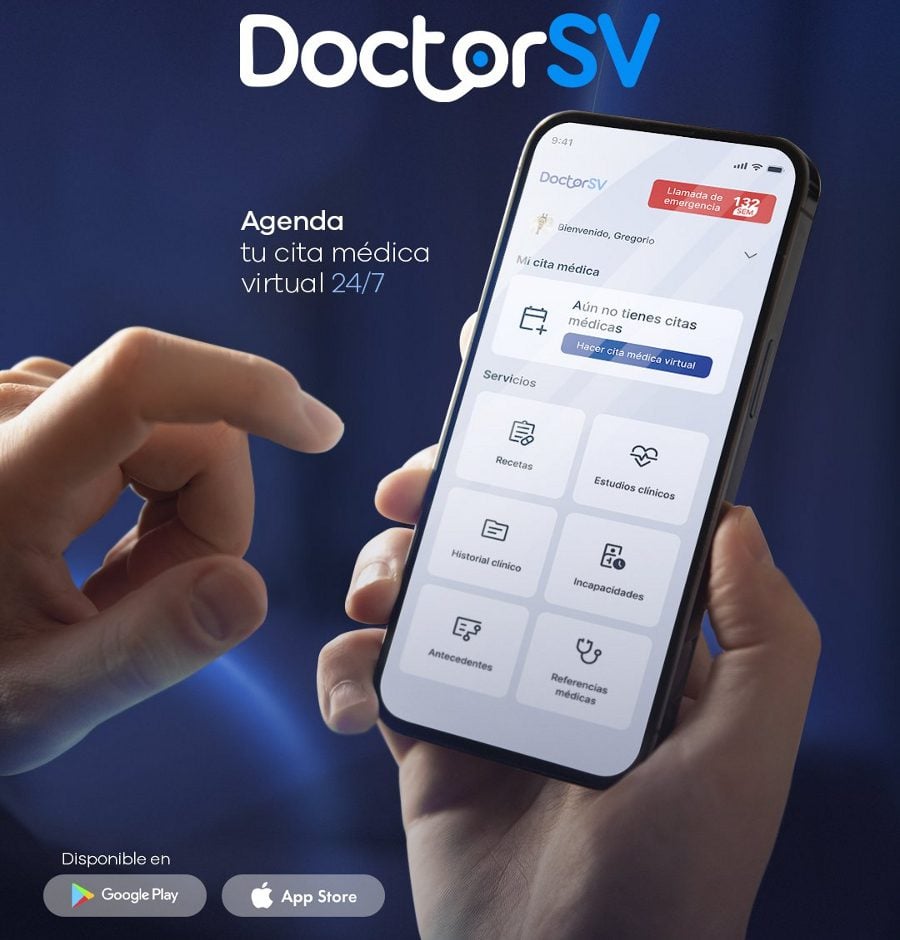
DoctorSV is changing how Salvadorans can see a doctor. Instead of traveling to a clinic and waiting for a consultation, patients can access medical care remotely using a phone or mobile application.
Launched in November 2025, DoctorSV is El Salvador’s national digital healthcare platform. The government created the free service to expand access to medical care, including for people living far from healthcare facilities.
The first step to use this service is to download the application and register. If you need a consultation, you start by providing information about your symptoms through the platform.
An artificial intelligence system helps with the initial screening before connecting patients with medical professionals for remote consultations.
The service offers more than just a video call. Doctors are able to provide electronic prescriptions, and the platform connects patients with participating pharmacies, laboratories, and diagnostic imaging centers when they need additional services.
Patients receive a QR code for prescribed medications or laboratory tests. Test results become part of the digital medical record, making follow-up consultations easier and reducing disconnected paperwork.
DoctorSV is available 24 hours a day and doesn’t cost Salvadorans anything to use. It can save people a trip to a clinic and make getting basic medical care easier, especially when traveling to a healthcare facility isn’t convenient. The platform isn’t limited to everyday illnesses.
Social Security Healthcare System “ISSS”
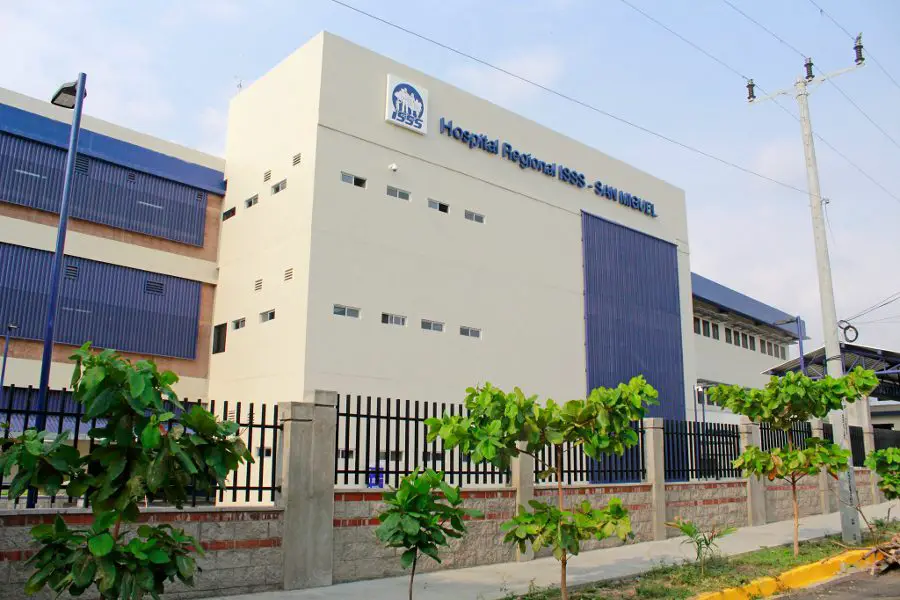
The Salvadoran Social Security Institute (ISSS), commonly known as El Seguro Social, is part of El Salvador’s public healthcare system. However, it operates separately from the healthcare network managed by the Ministry of Health.
Unlike the general public system, ISSS mainly serves people who contribute financially to the program. It works as an employment-based insurance system, with monthly contributions tied to a worker’s salary.
Salaried employees qualify, provided their employer registers them and makes the required payments. Coverage extends to dependents—spouses and minor children —making it one of the most sought-after benefits of formal employment.
Independent and informal workers are also eligible to enroll. Still, they must self-register and assume the full cost of their monthly premium, since no employer contributes on their behalf.
Salvadorans living abroad also have the option of joining through a voluntary program. This allows eligible participants to maintain access to ISSS healthcare services when they return to or spend time in El Salvador.
ISSS provides a wide range of healthcare services, including general and specialist consultations, emergency treatment, surgery, maternity care, dentistry, rehabilitation, diagnostic testing, hospitalization, medications, and other medical services.
You can receive care through the institute’s own network of hospitals, medical units, clinics, and pharmacies. Patients who need specialized treatment may receive referrals within the ISSS healthcare network.
Like the rest of El Salvador’s healthcare system, ISSS has its challenges. Busy facilities can mean long waits, specialist appointments may take time, and the availability of services can vary between locations.
Private Healthcare System in El Salvador
Private healthcare gives Salvadorans another option when they want faster medical attention, modern facilities, or easier access to specialists. However, the higher cost puts private treatment beyond many families’ budgets.
Many families choose private care to avoid long waits and access a wider range of medical services. Expats and Salvadorans returning from abroad also commonly use private hospitals and clinics.
The biggest difference is usually the price. You can see a private doctor relatively quickly, but specialist appointments, medical tests, hospital stays, and surgical procedures can become expensive, particularly without insurance.
If you have international health insurance, some private hospitals may accept your coverage. Still, you should check with both the hospital and insurer beforehand because payment and reimbursement arrangements vary between policies.
For those who can afford it, private healthcare offers an alternative to the public system, particularly when shorter waits, specialized treatment, or greater flexibility in choosing doctors and medical facilities matter.
Health Insurance Options
In El Salvador, insurers offer multiple health plans with different coverage levels. Some focus on high-cost medical events, while others include dental benefits or outpatient care.
Informal workers and anyone seeking additional protection can purchase private health insurance. According to the Salvadoran Association of Insurance Companies (ASES), both individual and family policies are available.
ISSS Insurance
The Social Insurance Healthcare System, known as ISSS (Seguro Social), offers two primary insurance options: one for Salvadorans residing abroad and another for self-employed individuals.
Programa Salvadoreño de Seguro (Salvadoran Insurance Program):
This ISSS program allows Salvadorans abroad to insure themselves and their beneficiaries in El Salvador.
Special Regime for Self-Employed Workers:
Independent or self-employed workers can enroll to receive full ISSS benefits.
El Salvador Healthcare System
Healthcare in El Salvador isn’t a one-size-fits-all system. Where you live, the type of care you need, and how much you can afford often shape the options available to you.
The public healthcare system remains the main source for Salvadorans, with hospitals and community health units providing essential services.
Private hospitals and clinics offer another option for people who can afford them or have insurance.
New services such as DoctorSV are also changing how people access medical care. Virtual consultations can make basic healthcare easier to reach, especially when distance, transportation, or busy schedules make clinic visits difficult.
If you’re considering living in El Salvador, understanding these choices can help you prepare. Knowing where to find public care, private hospitals, insurance coverage, and digital services can make navigating healthcare much easier.