 City of Sensuntepeque.
 One of the most symbolic traditions of El Salvador’s Holy Week is the colorful street carpets created across the country for the Good Friday Holy Burial procession.
These intricately decorated carpets remain a powerful expression of faith that many Salvadorans continue to preserve, especially in cities like Sensuntepeque.
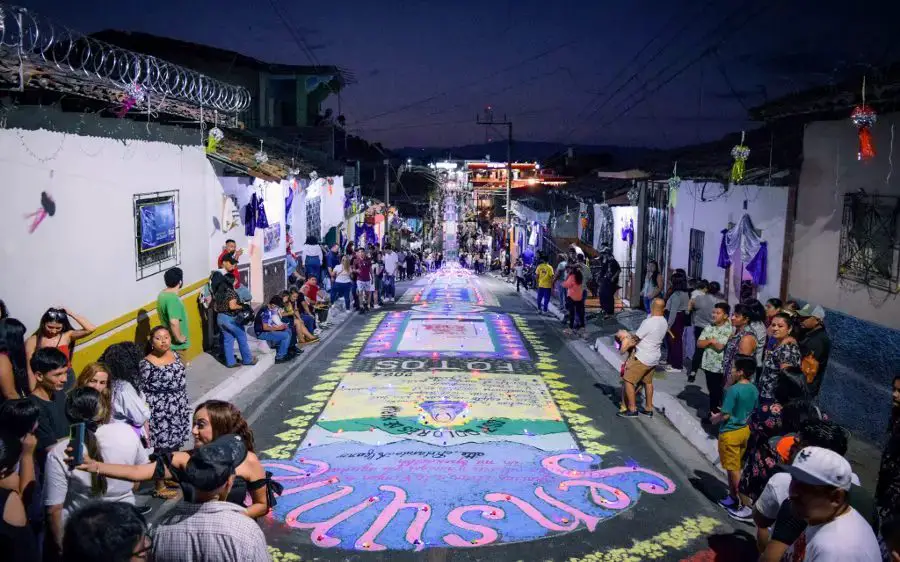
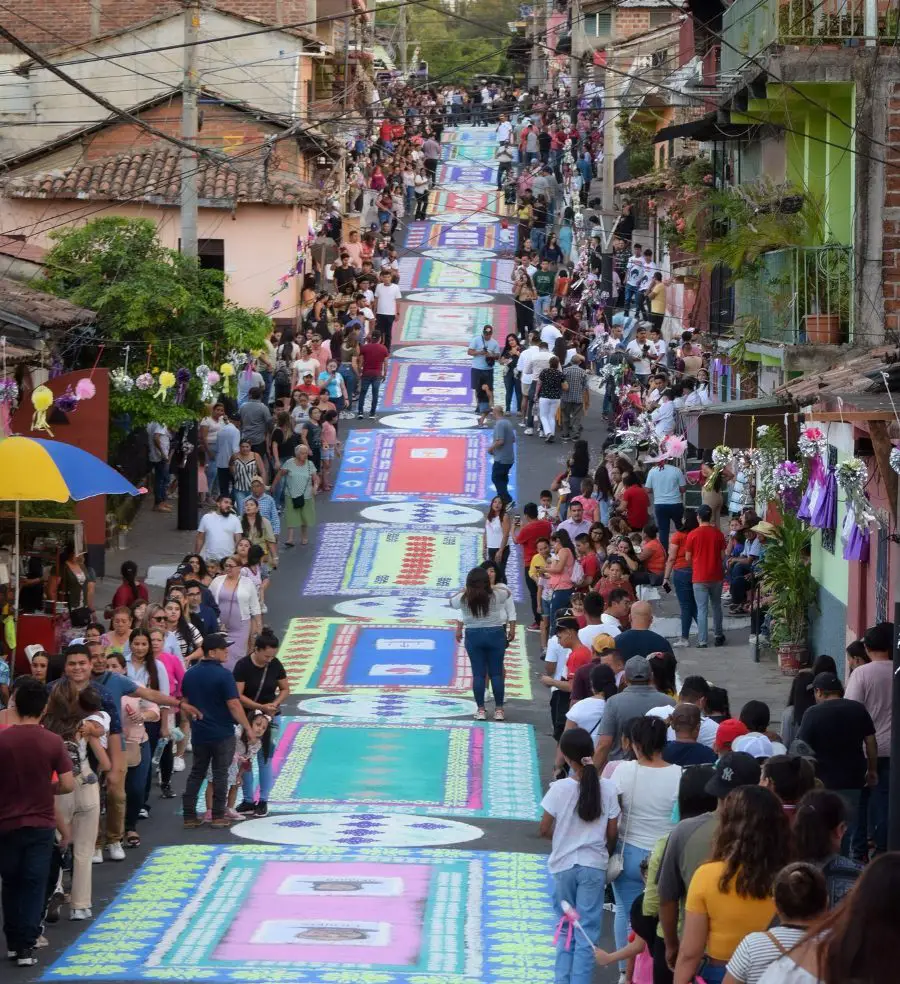
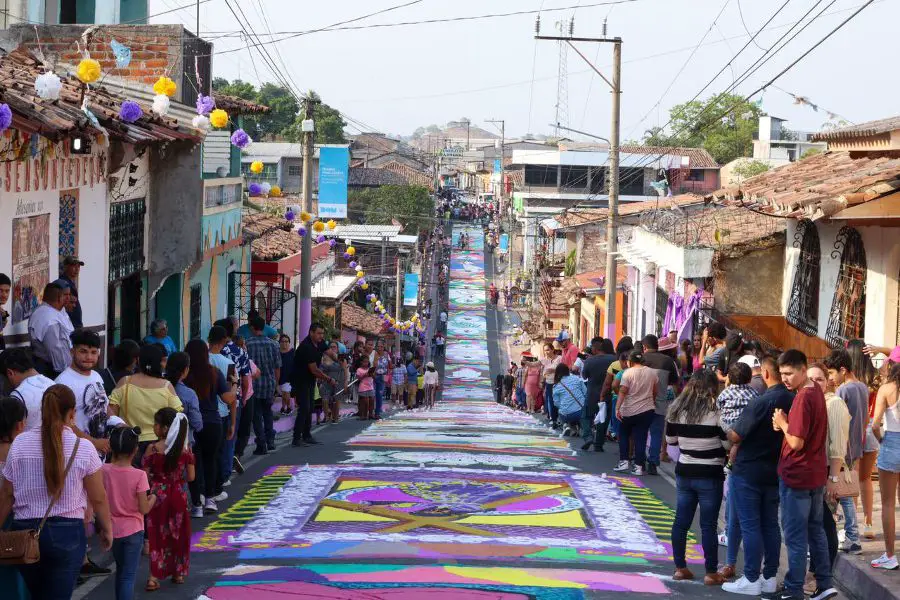
Each year during Holy Week, parishioners in Sensuntepeque, Cabañas, create what is considered one of the largest street carpets in El Salvador—if not the largest.
The vibrant display—crafted from dyed salt and colored sawdust (aserrín)—stretches more than 200 meters and features a new design every year.
Whether you are religious or not, Sensuntepeque’s Good Friday carpet is worth seeing—an impressive showcase of local artistry, tradition, and history.
SEE ALSO: Holy Week in El Salvador: A Vibrant Celebration of Faith and Tradition
Sensuntepeque Good Friday carpet: A Tradition Rooted in Devotion
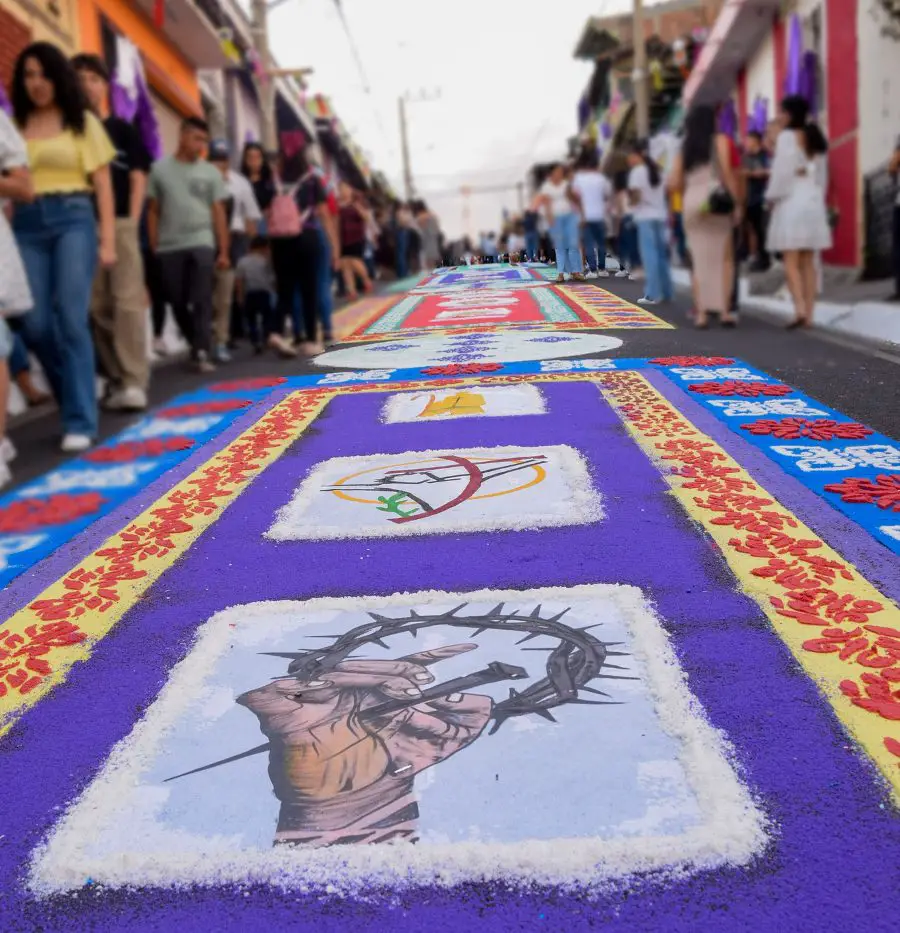
Residents of Sensuntepeque carefully craft carpets using colored sawdust, salt, flower petals, and other natural materials. The designs often portray sacred images of Christ’s Passion, biblical scenes, and religious symbols.
The tradition of making elaborate alfombras during Holy Week dates back to long-standing Spanish and Central American Catholic traditions and represents devotion and sacrifice.
In Sensuntepeque, this tradition has grown into the creation of the largest Holy Week carpet in the country—an achievement the community takes great pride in.
What began decades ago as a local religious practice has evolved into a signature event that honors Christ’s journey while bringing the entire community together.
Parishioners, artisans, youth groups, schools, and families all participate, many working through the night to carefully assemble their portion of the design.
Although the carpet is divided into sections with different themes, it serves a single purpose: to honor the solemn meaning of Good Friday.
SEE ALSO: Exploring El Salvador Culture: Embracing Vibrant Customs and Traditions with Warm-hearted People
The Making of a Sacred Carpet
For more than 40 years, residents of Sensuntepeque have created this time-honored carpet. The tradition is widely admired for its detailed decorations, vibrant colors, and striking images.
Preparations for the massive street carpet begin months in advance. Organizers hold events to raise funds, gather materials, and develop the design.
For instance, about 900 pounds of salt must be purchased and dyed in various colors to form part of the carpet—a slow and labor-intensive process.
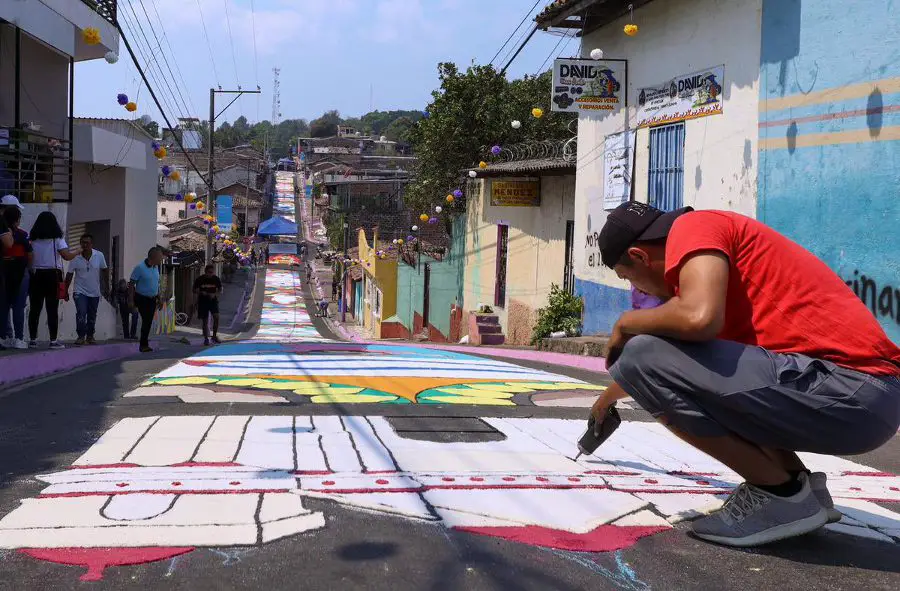
Work on the carpet itself begins days before Good Friday, as dyed sawdust is carefully sifted and sorted into bright colors.
The design is planned in advance and often sketched on the street with chalk before teams fill it in by hand. Local authorities close the street on Holy Thursday so volunteers can begin assembling the carpet.
Building the carpet requires patience and precision. A sudden gust of wind or a single misstep can ruin hours of work, forcing volunteers to start again.
When the Good Friday procession finally passes—solemn and reverent—the carpet is slowly walked over by priests and worshippers, completing the tradition.
Why the Sensuntepeque Good Friday Carpet Is a Must-See
Aside from its religious meaning, Sensuntepeque Good Friday Carpet has become a significant cultural draw, attracting visitors from all over El Salvador and other countries.
Tourists can’t get enough of the colorful artwork and the warm, welcoming vibe from the local communities and city officials.
During Good Friday, you’ll see photographers, travel bloggers, and culture lovers snapping shots of the stunning designs while families and pilgrims soak in the spiritual side.
For many visitors, venturing to Sensuntepeque on Good Friday is a rare and unique chance to experience a truly authentic Salvadoran tradition up close.
SEE ALSO: Los Talcigüines of Texistepeque: A Salvadoran Holy Week Tradition Worth Experiencing
Practical Tips for Travelers
Sesuntepeque is a small district, so before you venture into this city, consider the following suggestions that could enhance your experience:
- Arrive early. The carpet is usually completed early on Good Friday; crowds gather quickly to see it and take photos.
- Respect the space. Visitors are encouraged to take pictures, but stepping on the carpet before the procession is strictly prohibited.
- Support local artisans. Many vendors sell handmade crafts and food — a great way to support the community.
- Stay overnight if possible. Accommodations may be limited, but staying locally will give you a fuller experience of the town’s Holy Week atmosphere.
- Learn the stories. Don’t hesitate to talk to locals — many are proud to share the meaning behind each section of the carpet or how their family has participated for generations.
Sensuntepeque Good Friday Carpet: More Than Just a Carpet
The Sensuntepeque Good Friday carpet remains one of El Salvador’s most remarkable Holy Week traditions. Its size, vibrant colors, and detailed designs reflect the dedication, faith, and creativity of a community committed to preserving its heritage.
What makes this tradition special is not only the finished carpet but also the collective effort behind it. Families, parishioners, students, and artisans work side by side, turning the streets into a temporary work of art.
For many visitors, seeing the massive carpet in person is unforgettable. The colors, religious imagery, and careful craftsmanship create a powerful visual experience that captures both the spiritual meaning of Good Friday and local artistic talent.
Although the carpet lasts only a short time before the procession passes over it, its impact remains.