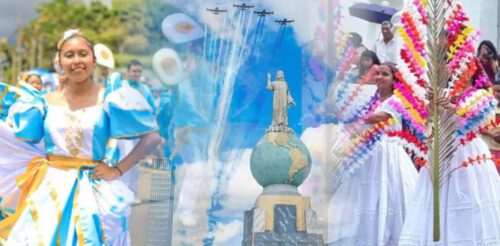
El Salvador Independence Day is celebrated every year on September 15. During this day, the country comes alive with parades, music, and patriotic pride as citizens celebrate their hard-fought independence from Spanish rule.
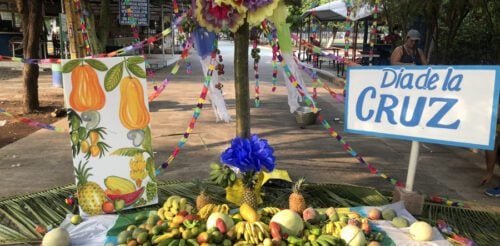
Beyond Independence Day, Salvadorans celebrate their heritage throughout the year. Many traditional festivals in El Salvador bring communities together through religious ceremonies, music, colorful parades, and local customs.
September 15 marks the moment when El Salvador and other Central American nations declared independence from Spain, shaping the nation’s identity and aspirations for self-determination.
On September 15, 1821, authorities and representatives meeting in Guatemala City signed the Act of Independence of Central America, declaring the independence of the Central American provinces of the former Captaincy General of Guatemala from Spain.
The territory encompassed most of present-day Guatemala, El Salvador, Honduras, Nicaragua, and Costa Rica. Although El Salvador celebrates its independence on September 15, the country did not become a sovereign nation until February 18, 1841.
Following the collapse of the Central American federation, El Salvador adopted its own constitution and established itself as an independent republic.
This national holiday is one of the most important in El Salvador, uniting the country in cultural pride by honoring its history while celebrating freedom, resilience, and national unity.
How El Salvador Celebrates Independence Day
El Salvador celebrates Independence Day with patriotic events nationwide. The municipal governments organize the El Salvador Independence Day celebrations.
Throughout the country, towns host parades and festivities. These events vary by community size, local needs, and cultural traditions.
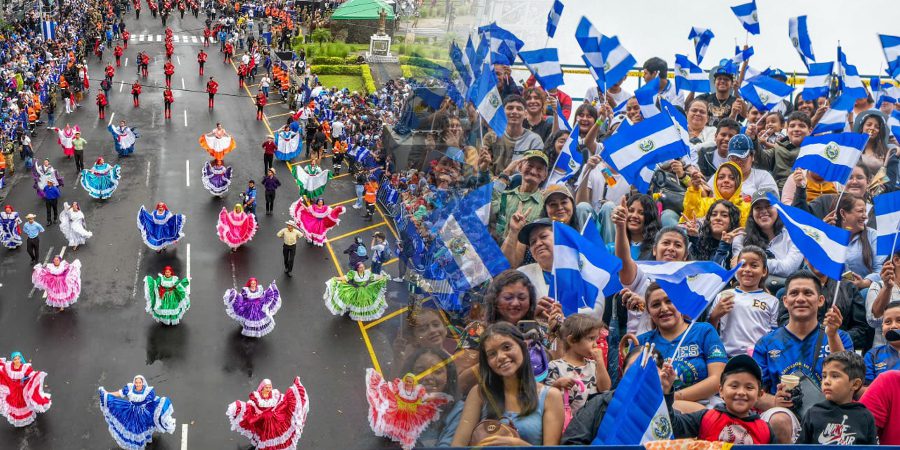
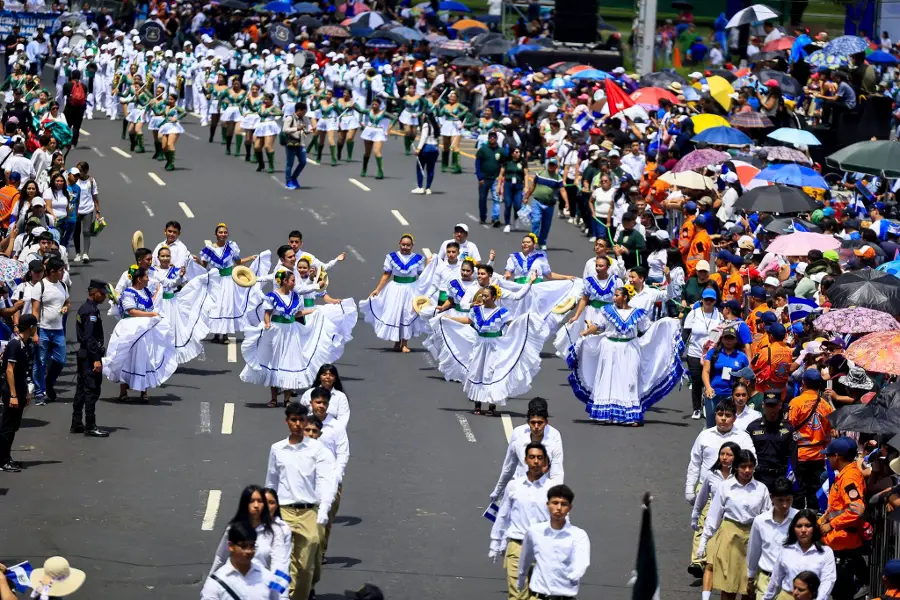
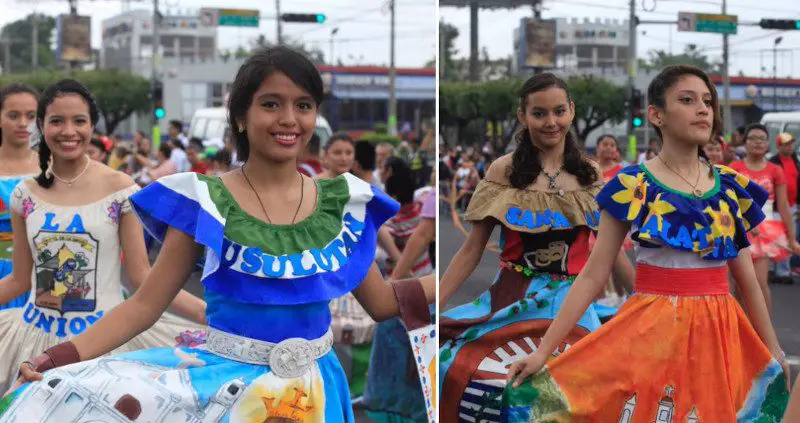
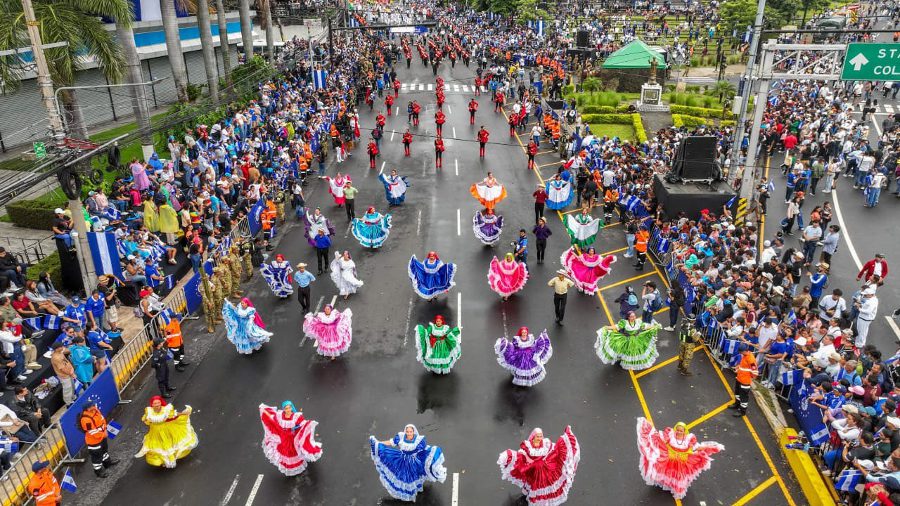
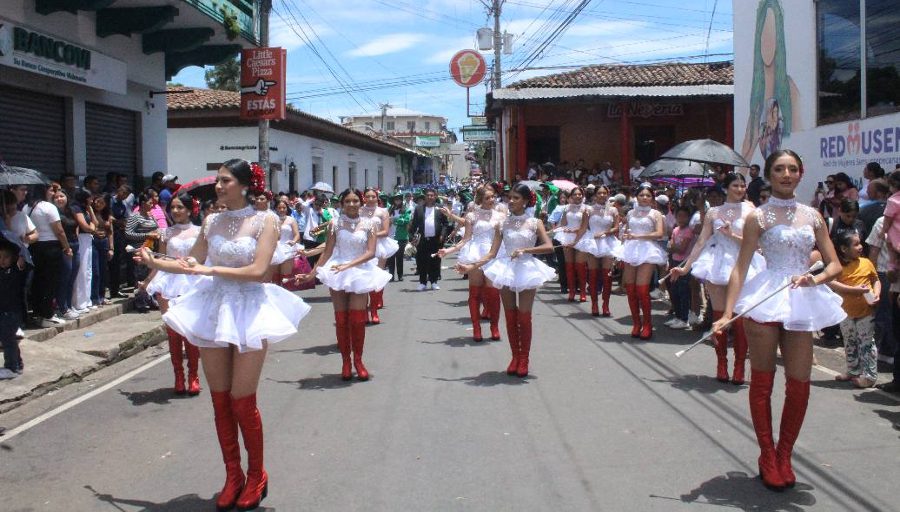
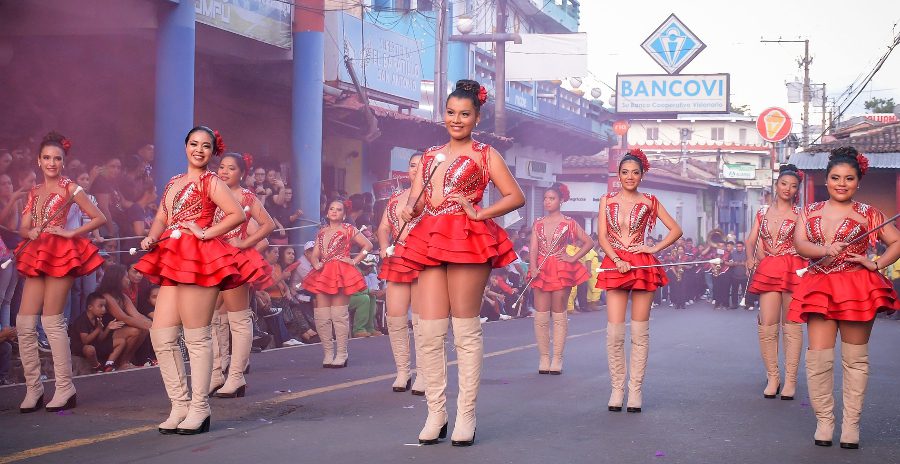
Civic parades are among the most visible traditions celebrated on September 15 in El Salvador. Students march through cities and towns accompanied by school marching bands. Their music, uniforms, drums, and choreographed routines attract large crowds of spectators.
Typical civic parades bring together local schools, with each one marching as a group. They usually start with banners showing the school’s name, followed by cheerleaders, marching bands, and students.
Many parades also feature traditional dances, colonial-style costumes, and flags representing the five Central American countries.
The civic parades often conclude in plazas or stadiums, where civic programs feature dances, reenactments, and speeches from local leaders reflecting on the significance of independence.
Members of the Armed Forces and National Civil Police also participate in official parades and ceremonies.
In major cities like San Salvador, San Miguel, and Santa Ana, festivities feature national bands, military flyovers, paratrooper displays, and nighttime fireworks.
Students play a central role in Independence Day activities. In addition to marching in parades, they participate in traditional dances, musical presentations, patriotic performances, and other activities highlighting Salvadoran history and culture.
Flag ceremonies are also a big part of the Independence Day celebrations. Schools and government institutions proudly honor the Salvadoran flag, while officials, teachers, and students take part in civic events.
While September 15 is the highlight, cultural activities continue all month. Each municipality releases a public schedule of parades, performances, and civic events celebrating national pride.
While parades and civic activities remain central, modern observances have expanded. Government institutions and the presidency play visible roles, with events broadcast nationwide.
In the digital age, social media amplifies the September 15 celebrations, allowing the Salvadoran diaspora in the United States and elsewhere to participate virtually.
For many abroad, posting the Salvadoran flag or streaming a parade online has become a way to stay connected to their homeland.
The Central American Independence Torch
The Central American Independence Torch, known as the Antorcha Centroamericana de la Libertad, is a tradition commemorating the independence from Spain.
The torch begins its journey in Guatemala, where Central America’s declaration of independence was signed on September 15, 1821. From there, runners carry it south through the five Central American nations.
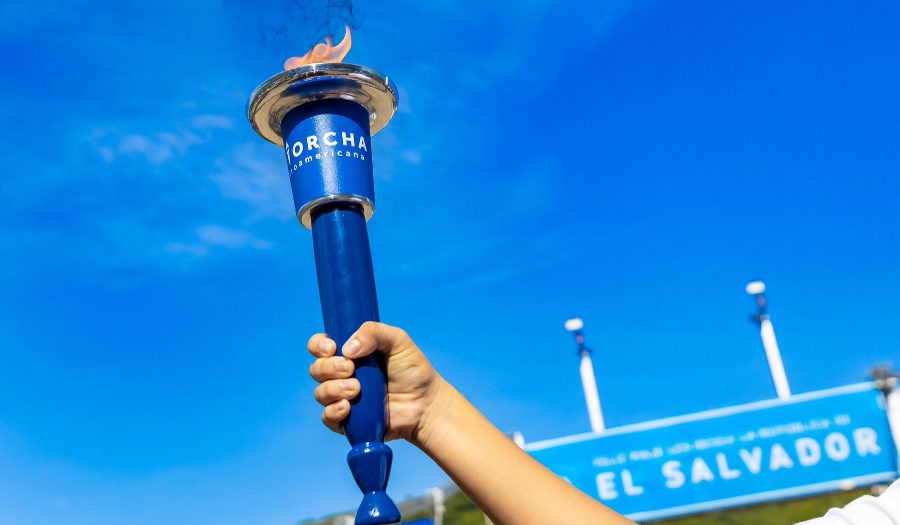
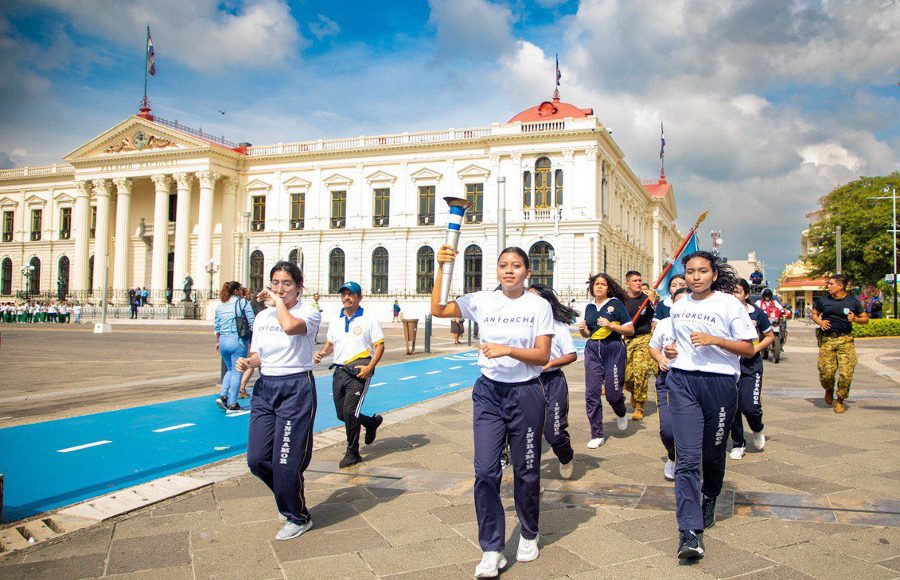
Along the route, students, athletes, public officials, and community groups participate in torch relays and ceremonies. The journey follows Guatemala, El Salvador, Honduras, Nicaragua, and finally Costa Rica, where the torch traditionally concludes its trip.
In El Salvador, the torch arrives from Guatemala and travels through various communities before being handed over to Honduras. Salvadoran students and officials participate in ceremonies that welcome and carry the flame across the country.
The torch symbolizes freedom, independence, and the shared history of the five Central American nations. It also recalls the journey of the news of independence through Central America more than two centuries ago.
September: El Salvador’s Civic Month
September is known as Civic Month (Mes Cívico) in El Salvador, a time dedicated to celebrating the country’s independence, national identity, and history, with patriotic activities taking place throughout the month.
Schools play a major role in the celebrations. Classrooms and hallways are decorated in blue and white. At the same time, students participate in activities about Salvadoran history, national symbols, independence, and civic traditions.
Government institutions and municipalities also organize ceremonies, cultural programs, parades, and community activities. These activities build excitement leading up to September 15, when El Salvador celebrates Independence Day.
Civic events, flag ceremonies, student performances, and other patriotic traditions help make September one of the country’s most festive months.
Visiting El Salvador During Independence Day
Independence Day has also become a cultural attraction for visitors. Tourists are drawn to the spectacle of the parades, the patriotic energy in the streets, and the chance to experience Salvadoran traditions firsthand.
The government uses the holiday to highlight the nation’s culture and hospitality, presenting El Salvador as a country with a rich history and a modern tourist destination.
El Salvador Independence Day traditions
Independence Day reminds Salvadorans of the sacrifices and struggles that forged Salvadoran nationhood. It unites Salvadorans across political, cultural, and generational lines.
It’s a civic holiday where patriotism takes center stage—symbolized by the blue-and-white flag, the national anthem, and public ceremonies that reaffirm the values of unity and liberty.
From rural mountain villages to coastal towns and the bustling capital, the entire country bursts with parades, music, and traditions celebrating liberation from Spanish colonial rule.
Whether in a humble small town plaza or amid San Salvador’s grand parades, Independence Day endures as one of El Salvador’s most beloved and unforgettable traditions.