

Few franchises in gaming history have achieved the longevity, cultural impact, and competitive dominance of Counter-Strike. What began as a simple Half-Life mod in 1999 grew into a global phenomenon, shaping esports, online communities, and the identity of modern first-person shooters.
Today, Counter-Strike 2 (CS2) stands at the apex of this legacy, delivering a technologically advanced experience built on Source 2 while preserving the core mechanics that defined the franchise.
Understanding this journey means exploring not just the gameplay changes, but also the cultural, economic, and competitive shifts along the way – including the rise of the digital skin economy, where millions of players now buy and sell CS2 skins as part of the game’s evolving ecosystem.
This article breaks down the full CS1.6 to CS2 timeline, showing how a humble mod evolved into one of the biggest esports titles on the planet and how CS2 continues pushing the boundaries of what competitive shooters can achieve.
The Beginning – Counter-Strike 1.6 (2003)
Counter-Strike 1.6 wasn’t the first version of CS, but it became the most iconic. For millions of players, 1.6 represented:
- LAN café culture
- Pixel-perfect aim duels
- Legendary maps like Dust2, Inferno, and Mirage
- Early esports tournaments and clan rivalries
The game’s simplistic graphics and physics made skill expression clear and raw. Even today, some veterans argue 1.6 offered the purest competitive experience in the entire franchise. This era laid the foundation for every future Counter-Strike title.
CS: Source – A Transitional Era (2004–2011)
With the introduction of Valve’s Source engine, Counter-Strike: Source brought major graphical improvements. But while it looked better, movement, recoil, and hit registration felt different.
This divided the community into two camps:
- 1.6 purists who preferred the mechanical style
- Source fans who enjoyed the upgraded visuals
Despite its mixed reception, Source played a pivotal role in the CS1.6 to CS2 timeline by introducing modern engine capabilities that would eventually lead to CS:GO and CS2.
CS:GO – The Global Explosion (2012–2023)
In 2012, Valve released Counter-Strike: Global Offensive (CS:GO) – the version that catapulted the franchise into mainstream esports.
CS:GO introduced:
- Skins and the Steam Marketplace
- Massive esports leagues (ESL, Major Championships, BLAST)
- Matchmaking and competitive rankings
- A growing ecosystem of creators and content
This era marked the birth of a full CS2 skins marketplace economy, where players could trade, invest, and buy CS2 skins through Steam and third-party platforms.
CS:GO united both 1.6 and Source players while bringing millions of new fans worldwide. It became one of the most played games in the world and the backbone of the modern esports scene.
The Arrival of CS2 – A New Era Begins (2023)
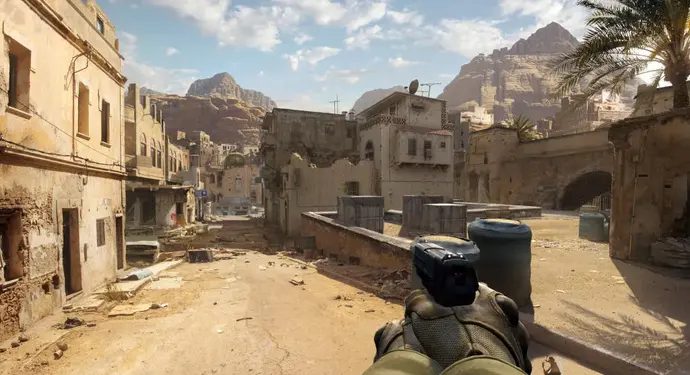
In September 2023, Valve launched Counter-Strike 2, a modern reimagining of CS:GO built entirely on the Source 2 engine.
The evolution of CS2 introduced groundbreaking improvements:
Advanced Lighting and Visuals
Source 2 enabled:
- Physically based rendering
- Realistic shadows and reflections
- More detailed environments
Maps felt more vibrant and immersive while staying true to their original layout.
Reworked Smokes
CS2 redesigned smoke grenades with:
- Volumetric clouds
- Environmental reactions (bullets and utility alter smoke shape)
- Shared rendering for all players
This update transformed mid-round strategies and is considered a milestone in CS2 competitive evolution.
Updated Movement & Gun Mechanics
The game refined:
- Peeking behavior
- Shooting accuracy
- Sub-tick timing
These changes brought more consistency to hit registration and movement.
Enhanced Skins Rendering
Skins look better than ever thanks to upgraded material lighting. Knife finishes, gloves, and rare patterns now appear more vibrant, increasing demand within the CS2 skins marketplace.
CS2 successfully refreshed the franchise while maintaining the core identity that has defined Counter-Strike for more than two decades.
How Counter-Strike Became a Cultural Icon
Beyond gameplay, Counter-Strike shaped global gaming culture through:
LAN Café Culture
From Europe to Asia, CS1.6 became the social hub of early 2000s gaming.
International Esports Growth
CS:GO turned CS into a billion-dollar esports ecosystem watched by millions.
Skill-Based Competition
Counter-Strike remains a true meritocracy: no pay-to-win mechanics, only pure skill.
Community Creativity
From custom maps to meme culture, the community kept the game alive and evolving.
The Skin Economy
Skins became digital collectibles and investments, influencing thousands of trading communities.
Counter-Strike is more than a game – it is a generational phenomenon.
Skin.Land – A Trusted Part of the Modern Counter-Strike Ecosystem
With CS2 bringing higher visual fidelity and increased demand for rare skins, more players than ever are exploring trading platforms. Skin.Land has quickly become a top site for players looking to buy, sell, or manage their inventory with ease.
Here’s why Skin.Land is integral to today’s CS2 economy:
- Instant payouts for players selling skins
- Secure Steam API trading, ensuring safe transfers
- Fair, real-time pricing based on market trends
- A massive catalogue for players looking to buy CS2 skins
- User-friendly interface designed for both beginners and experienced traders
As the evolution of CS2 continues, so does the importance of reliable marketplaces. Skin.Land stands at the center of this new era, supporting collectors, traders, and competitive players alike.