
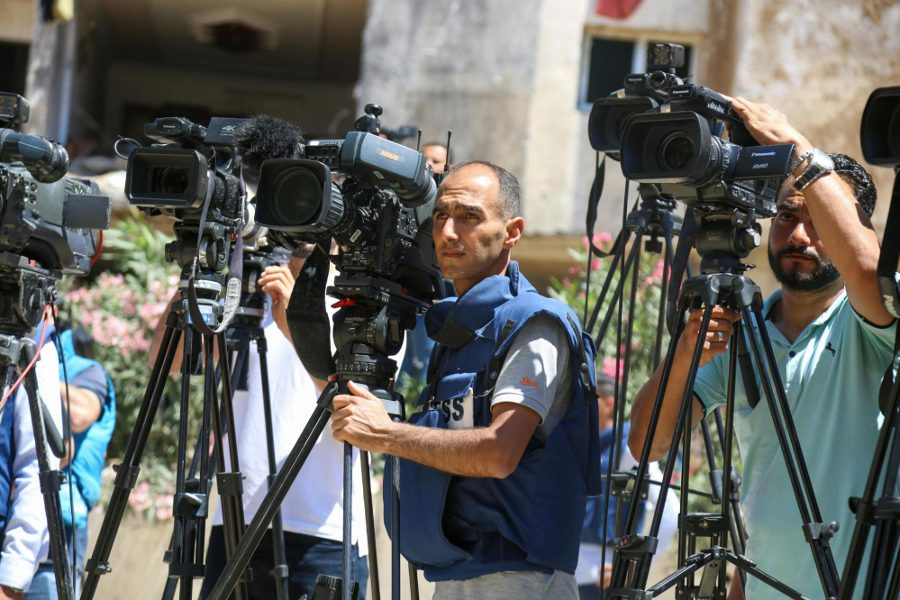
In recent years, El Salvador has shifted from a country with a diverse and energetic media scene to one where independent voices are increasingly silent. Growing government restrictions and a surge in threats against the press have triggered an exodus of journalists, many of whom now see exile as their only option.
This flight of reporters makes it much more difficult to verify what is actually happening inside the country. With fewer journalists able to operate safely, gaps in coverage grow, and the challenge of confirming local events becomes even greater. The question now is what this means for access to verified information, and who ends up most affected when the truth is out of reach.
The pressure to leave: A new reality for Salvadoran journalists
With the risks of staying on the ground rising sharply, Salvadoran journalists now face a daily calculation between personal safety and professional duty. Many independent reporters, especially those at digital outlets, have watched colleagues face threats, legal harassment, or even arrest—prompting a wave of departures not seen in decades.
The fear is not abstract; in recent years, dozens of journalists have chosen exile after authorities tightened laws and increased scrutiny of those critical of the government.
This exodus is shaping every part of the reporting process. Deciding whether to attend a protest, interview a source, or even publish a story means weighing the real possibility of retaliation. For some, the safest choice is to continue their work from outside the country, relying on encrypted channels and remote contacts.
The loss of physical presence makes it even harder for those who remain to get reliable information, while those abroad often feel the strain of distance and disconnection.
The challenge of continuing meaningful journalism in such conditions is not unique to El Salvador. Similar patterns appear worldwide where independent voices are silenced or pushed underground.
Even in less politically fraught areas, such as online review spaces and guides, the act of seeking out honest reporting—like what you’d find at https://arabiccasinos.guide/—can become an act of survival when trust and freedom are at risk. Journalists, no matter where they operate, increasingly share a common dilemma: how to keep telling the truth when it puts their freedom on the line.
What gets lost: The struggle to verify facts on the ground
The flight of independent journalists from El Salvador has left a noticeable void in daily reporting. As more reporters go into exile or stop working altogether, keeping track of what is really happening on the ground becomes a complicated task for those who remain. Stories that once came from direct observation or firsthand interviews now often depend on anonymous accounts, leaks shared over encrypted apps, or social media posts that are difficult to verify.
This shift has real consequences for readers. When reliable sources dry up, news becomes patchier and the line between fact and rumor blurs. People following events in El Salvador, whether at home or abroad, are left questioning which details are accurate and which have been distorted or invented. For communities inside the country, the risk is even greater: abuses, protests, and everyday struggles may go unreported, simply because no one is able to document them safely.
The situation is made worse by the sheer number of attacks against journalists, a trend that has surged in recent years. According to reports, there were 789 documented incidents in just one year—a staggering increase that highlights the dangers of reporting independently. The ongoing pattern of Attacks on Journalists has forced many to hide their identities or stop working altogether, further eroding the ability to confirm stories on the ground.
With fewer journalists able to operate openly, it becomes nearly impossible to check official claims or investigate abuses. The result is a growing sense of uncertainty, as both the public and outside observers struggle to piece together the truth from fragments. The question of who can reliably report what is happening in El Salvador remains more urgent—and more difficult—than ever.
How trust falters: Shifting perceptions inside and outside El Salvador
This climate of uncertainty isn’t just a problem for journalists—it seeps into the way Salvadorans and global audiences experience news about the country. As the number of independent reporters shrinks, fact-checks become rare, and the public has to rely more on government statements or hearsay than on direct, transparent reporting.
People start to wonder whether headlines are based on real events witnessed by credible sources, or whether they’re shaped by those in power. This skepticism grows especially strong as state-run outlets fill the vacuum left by exiled or silenced journalists. It becomes harder for readers and viewers to distinguish between honest reporting and carefully managed narratives.
International observers face similar challenges. With fewer independent accounts, organizations and foreign media often struggle to confirm what’s truly happening on the ground. The significant decline in El Salvador’s press freedom index 2025 captures this shift, signaling that reliable information is rapidly eroding.
In this environment, rumors and misinformation can take root quickly, and competing versions of the truth circulate both locally and abroad. The absence of trusted local voices not only damages confidence in the news but also deepens divides within Salvadoran society and between El Salvador and the wider world.
The risks of silence: What’s at stake as local voices disappear
When trusted voices go quiet, the cost goes far beyond missing headlines or delayed updates. The absence of independent reporting removes a crucial safeguard, making it far easier for abuses of power to happen unnoticed or unchallenged. In El Salvador, this danger has become all too real as new laws, emergency measures, and heightened risks have driven reporters away and discouraged those who remain from pursuing sensitive stories on the ground.
Without journalists present to document daily realities, communities lose a vital forum to express their concerns and hold authorities accountable. It becomes much harder to bring attention to cases of injustice, unlawful detention, or police violence when no one is left to systematically record and investigate these events.
This vacuum is especially concerning given the ongoing institutionalization of human rights violations under emergency rule, which has created an environment where oversight is not just weakened but effectively abandoned.
As the press is silenced, the risks extend to the broader fabric of Salvadoran society. Ordinary people lose the chance to have their stories heard, while advocates for transparency and reform find themselves isolated.
The international community, too, struggles to assess the true situation on the ground, relying more on official statements or scattered reports from exiled journalists. Ultimately, a society with fewer witnesses is one where unchecked abuses can flourish, and the truth becomes harder to find for everyone.
When the flow of information narrows, the consequences are felt not only in the loss of individual freedoms but also in the weakening of democracy itself. With little space for scrutiny or dissent, public debate suffers, and citizens become less able to make informed choices about their leaders or their future.
The silence that follows the disappearance of local journalism does not just obscure reality—it enables impunity, erodes trust, and leaves entire communities vulnerable and unheard.
Reflecting forward: Can Salvadoran stories still find their way?
Despite the shrinking space for independent journalism and the ongoing threats that have pushed dozens of reporters into exile, the determination to share El Salvador’s stories has not disappeared.
Journalists are turning to encrypted messaging, international collaborations, and new networks to keep reporting alive—even if it means working from afar or under a pseudonym. These efforts highlight both the urgency and creativity required to overcome censorship and surveillance.
For many, the question is not whether the truth will be told, but how—and by whom. As documented in Press Freedom Declines, the obstacles are real, but so is the resolve to adapt.
The crisis in local journalism is shaping new strategies for truth-telling, ensuring that, even in the face of doubt and danger, Salvadoran realities have a chance to reach the world.