
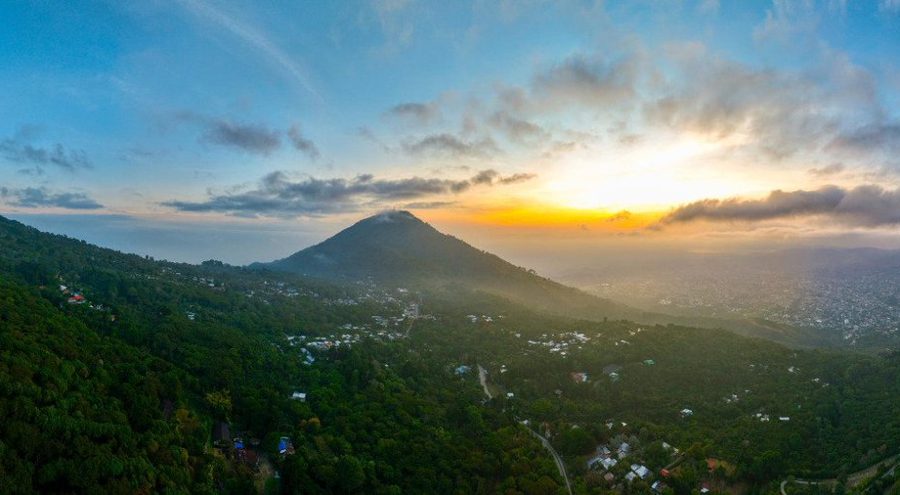
 Scenic View from El Boqueron Natonal Park.
El Salvador is a country that is mostly distilled into headlines about security, politics, and sharp pivots. Yet that shorthand feels thin. The reality is noisier, layered, sometimes contradictory, with lush hills folded into tight valleys.
Moreover, markets are humming with chatter and, at dusk, volcano silhouettes like careful sentinels. The nation’s image keeps wobbling between fear and fascination, and that wobble tells a story of how outsiders see what locals live with daily.
Of course, it is a small territory, yes. But it is expansive in texture. Hence, the eye needs time here and patience here. Therefore, read on to get a better idea of the hidden natural and cultural treasures of El Salvador.
The Untold Beauty and Culture of El Salvador
The following are some of the major aspects of El Salvador that you must be aware of:
1. Volcano Adventures and Safety Insights
The volcano chain reads like a spine along the country, visible from highways and small-town rooftops. These include Santa Ana, Izalco, and San Miguel. Each has its own temperament, its own trail etiquette.
Mornings are best when cloud cover lifts and ridge lines come into focus. Guides matter here, as do local advisories. Paths can shift after rain, and loose pumice can turn ankles if you rush. Hence, carry water, pack layers, and keep a map. This is not theme-park terrain. It is living geology.
It is a quick aside that surprises visitors, the promotional buzz around Surf City sometimes bleeds into the hills, and you might hear someone joke about Bet City when weighing whether the weather will cooperate. The punchline works because the volcanoes do not take bets.
2. Waterfalls and Eco-Tourism Hotspots
Water follows the folds of land with a firm intention. Tamanique cascades off the coastal range, cold enough to wake even seasoned trekkers. Also, there are Chorros de La Calera near Juayúa, emerald pools in tight canyons.
Trails thread through coffee fincas and secondary forest, where birds annotate the day with quick calls. The best visits keep a light footprint.
Local operators who train guides, limit group sizes, and pack out all waste set the tone. This is where tourism can strengthen conservation, where entrance fees and fair wages create incentives to protect riparian corridors and prevent sediment choking streams.
3. Coastal Escapes Beyond Surf City
The Pacific edge is famous for its breaks, sure, but there is more than the headline stretch. Playitas, where mangroves meet tide, low-impact coves with fisherfolk setting hooks at dawn. Afternoons peel into long horizons, every sun track different and strangely personal. Respect the currents.
Know that coastal communities measure visitors by conduct first, cash second. If you are mapping out your trip, avoid extractive patterns dressed up as influencer itineraries. Think community-run lodges.
Think seasonal timing. And yes, skip the gimmicks and the estrategias aviator style hype that tries to turn travel into some algorithmic game. You are not gaming the coast, but entering a living workplace.
4. Indigenous Roots and Archaeological Wonders
Pipil heritage and Nahuatl words are tucked into place names and daily speech. Layers of pre-Columbian history cut into the soil at sites like Joya de Cerén, where everyday objects stand in volcanic ash like paused breath. Not grand monuments alone, but domestic traces.
Grinding stones, stored maize, and structural angles that tell how people lived. Archaeology here is less about spectacle and more about continuity, how the present carries the past quietly. Local crafts extend these threads, weaving plant fibers and carving wood with motifs that echo older stories.
5. Festivals That Illuminate Salvadoran Spirit
Calendars pulse with processions, vibrant plazas, and saints’ days that blend faith, irony, and communal care. Also, expect fireworks to punctuate evenings. Moreover, masks and music pull crowds, children tugging at sleeves for a closer look.
These are not just tourist spectacles. Rather, they are social glue, anchoring neighborhoods through ritual and repetition. However, be mindful of boundaries, photography etiquette, and the importance of contributing rather than consuming.
Also, buy from the stalls that fund the event and listen to the organizers. Apart from that, learn why certain dances matter and how they mark seasons of labor, harvest, and remembrance.
6. Culinary Traditions Are More Than Just Pupusas
Pupusas are the front door, warm and honest. But the kitchen extends far beyond. Sopa de pata, curtido with real bite, and atol shuco that carries a nostalgic weight for many.
Meanwhile, coffee deserves its own chapter, from shade-grown lots to patient baristas who tune grind size like a craft.
Moreover, a street stall can be as revealing as a white-tablecloth dining room if you let it. Pay attention to sourcing, ask about seasonality, and taste slowly.
Practical Tips for Responsible Exploration
The following are some of the essential tips that you must follow if you want to explore more responsibly:
- Make sure to pack light and spend locally.
- Book guides who are trained and insured.
- Choose lodging that invests in water treatment, fair wages, and energy efficiency.
- Respect customs around photography, dress, and sacred spaces.
- Learn a few phrases in Spanish and listen more than you speak.
- Keep noise down near wildlife.
- Pay park fees without bargaining.
- Carry out all trash.
Moreover, avoid itineraries that compress everything into a checklist. Basically, give yourself a margin to be present. This is because responsible travel is not a badge, but the baseline.
Starting Planning for Travel Now!
El Salvador’s draw is not a single spectacle. Rather, it is the composite of ridge walks, market laughter, after-rain petrichor, and a cultural fabric stitched tightly by people who keep moving forward. It is about nature, culture, and resilience.
El Salvador has a blend that works because it is humble and hardworking, not curated for gloss. If you go, bring patience and curiosity. Also, take care with your footprint, and ask better questions. Then leave with stories that honor the place rather than reduce it.
Exploration should be generous. Awareness should be the default. This is because respect should be non-negotiable.