
The land doesn’t settle into one shape. It moves in slow changes. A slope, then another behind it, then lines beginning to form across the surface without fully repeating.
Nothing feels fixed at first. The view shifts as you move, never staying long enough to hold a single pattern.
There’s a stillness, though it isn’t complete. Something changes in the distance, then disappears again.
Where the Rows Begin
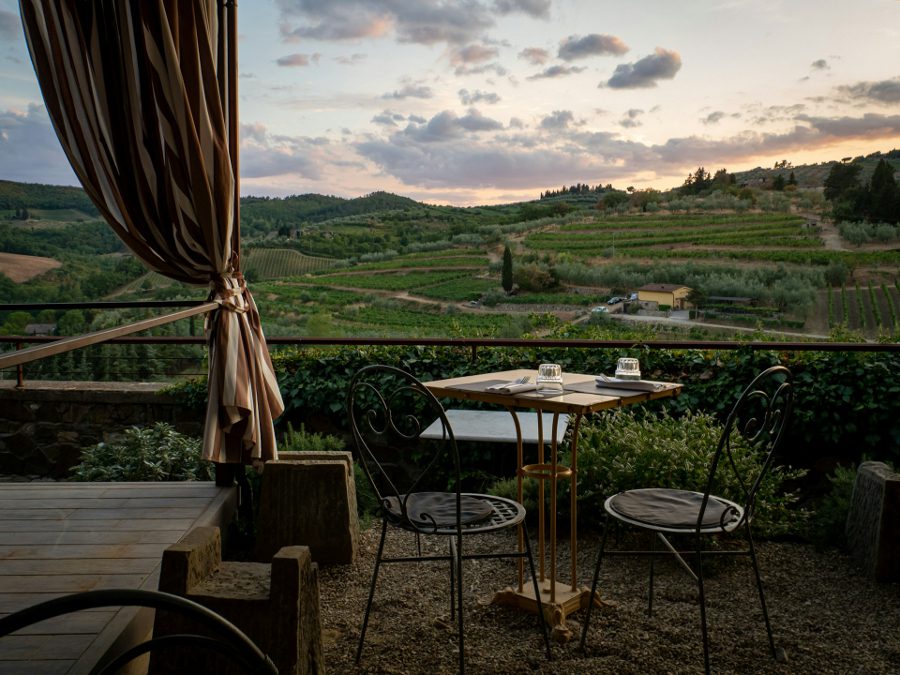
Chianti doesn’t open in a single view. It builds gradually, one hillside leading into another without a clear boundary.
The vineyards follow the land rather than shaping it. Rows curve, then straighten, then shift again depending on the slope.
Green repeats across the surface, though not evenly. Some sections feel deeper, others lighter where the light reaches more directly.
It doesn’t come together all at once.
What the Land Holds
The ground feels arranged, though not rigid. Each line follows a direction, then adjusts slightly as the terrain changes.
You notice smaller details without trying. Leaves shifting, shadows forming between rows, then fading again.
A brief exchange nearby turns toward the train from Florence to Rome, then drifts away before it fully settles.
The landscape continues without reacting.
Between One Line and the Next
Walking through the vineyard changes the view.
The wider pattern disappears. Rows close in slightly, then open again depending on where you move.
There’s no fixed rhythm to walking. One step feels steady, the next less so.
You don’t follow a set path. Movement happens without deciding.
Movement That Carries Through
At some point, the structure begins to loosen.
The rows become less defined. The ground opens between them. The pattern holds for a moment, then fades.
You notice the shift after it has already happened.
The air feels different here. Less contained, though not fully open.
Where the Pattern Fades
The vineyards don’t end at a clear line.
They thin gradually. Rows appear less often. The ground between them becomes more visible.
The colour shifts as well. Greens give way to lighter tones, then something drier.
The sense of order remains briefly, then disappears.
What the Open Holds
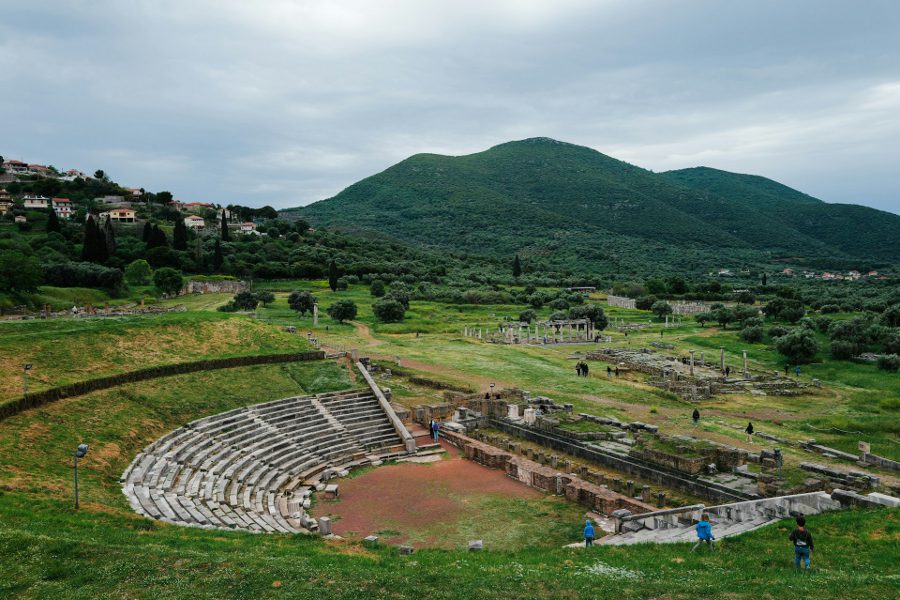
The Roman Campagna doesn’t gather in the same way. It spreads outward.
There are fewer markers here. The land stretches without forming clear divisions.
The horizon becomes more noticeable. A line that stays present, though it shifts depending on where you stand.
On a flickering display, the high speed train from Venice to Florence appears for a moment, then is replaced by another route.
Nothing holds your attention for long.
Between Distance and Direction
Distance behaves differently here.
What seems near stays far. Movement doesn’t bring things closer in a clear way.
You walk without feeling like you’re progressing toward something specific.
The ground remains consistent, though not completely uniform.
The Line That Extends
The land continues without suggesting an endpoint.
Curves repeat, though not exactly. The surface rises slightly, then falls again.
You don’t follow a clear direction.
Nothing asks you to.
What Doesn’t Settle
The difference between vineyard and open land doesn’t stay sharply defined.
One feels shaped, the other more open. Still, they remain connected through the gradual shift between them.
You notice it over time.
It doesn’t resolve into a clear contrast.
The Space Between Landscapes
The transition doesn’t divide into stages.
It carries through in smaller changes. Rows thinning. Ground flattening. Space opening outward.
Nothing interrupts it.
You don’t feel like you’ve arrived somewhere entirely different.
A Landscape That Continues
Looking back, the details don’t return in order.
The structured lines of the vineyard. The openness of the plain. The shifting sense of distance between them.
They don’t form a sequence.
They sit alongside each other without needing to connect directly. There is no clear ending point, only the sense that the landscape continues beyond what you can see.