
The station doesn’t begin at a single point. It builds through movement. A platform, a corridor, a stretch of space that seems to shift depending on how many people pass through it at once. Sound gathers, then breaks apart again. Announcements rise, then dissolve into footsteps, then into something less defined. Nothing holds its shape for long.
Where the Lines Form
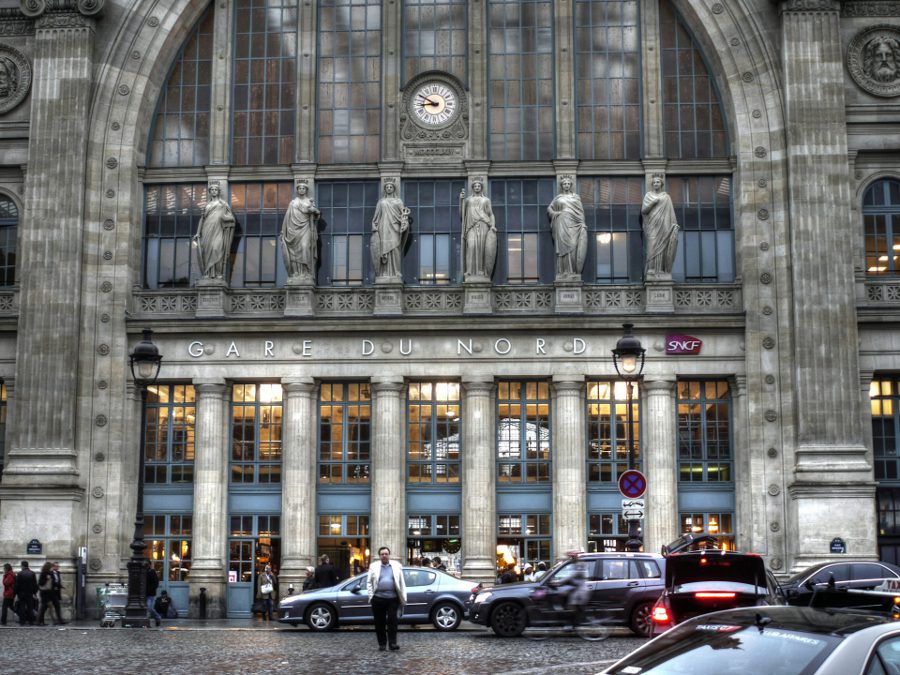
Gare du Nord feels structured at first. Straight lines, long platforms, surfaces that seem to guide movement without forcing it. The architecture doesn’t stay in one view. You notice sections—steel, glass, repetition—though they don’t fully connect at once. Light moves across the space unevenly. It catches on one surface, then leaves it behind. You follow the direction of the platforms, though not entirely.
What the Space Holds
The station carries layers of motion. People pass in different rhythms. Some pause, others continue without slowing. Among the shifting listings overhead, the train from Paris to Amsterdam cycles through briefly, then gives way to another destination. It doesn’t interrupt anything. It stays within the same flow. Nothing settles long enough to define the space.
Between One Platform and the Next
Movement doesn’t follow a clear pattern. Paths cross, separate, then cross again without forming a sequence. You turn, then turn again, though not always with a fixed direction in mind. The space changes slightly with each step. Narrower, then wider, then narrowing again. You don’t track it closely. It continues without needing to. Further along, the trains from Amsterdam to Brussels appear momentarily on a passing screen, then slip out of view.
Movement That Carries Through
At some point, the structure begins to feel less contained. The platforms give way to something more open. The sense of direction softens, though it doesn’t disappear. You don’t notice when the shift begins. Only that it has already happened. The rhythm continues, though in a slightly different form.
Where the Structure Changes
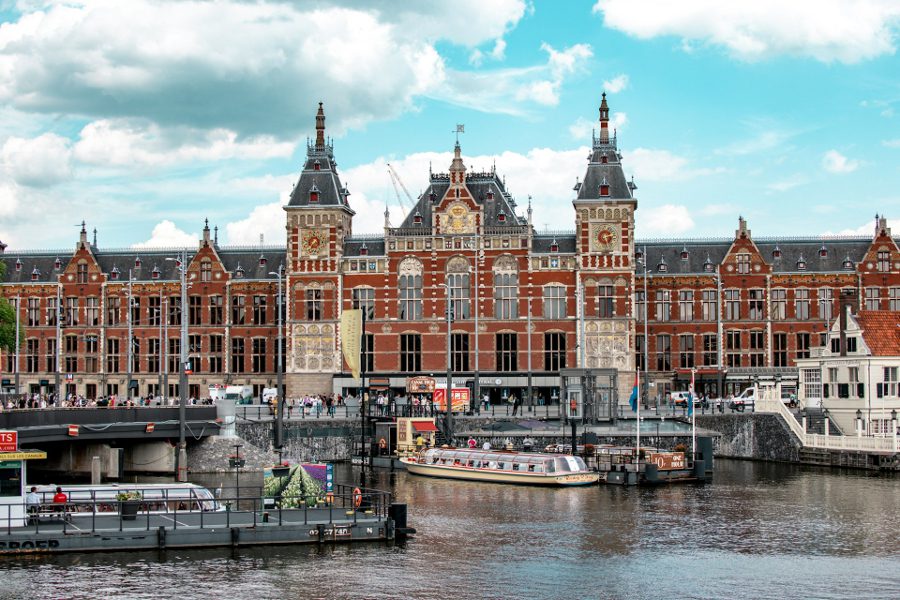
Amsterdam Centraal doesn’t gather in the same way. It rises. The façade appears first in parts. Angles, edges, details that don’t fully resolve until you step back. The spires don’t dominate immediately. They build into view, becoming clearer over time. The materials feel different here. Less industrial, more layered.
What the Details Hold
The surfaces carry more variation. Shapes repeat, though not exactly. Windows, arches, decorative lines—they extend across the structure without forming a single focal point. You notice one element, then another, though neither holds for long. The space continues as it was.
Between Height and Movement
Looking upward changes the sense of scale. The height doesn’t press downward. It opens the space instead. Movement continues below, though it feels separate from what rises above it. You don’t take in both at once.
Where the Space Extends
Beyond the main structure, the station opens outward again. Tracks extend into the distance. The city begins to appear in fragments beyond them. The transition isn’t marked clearly. It happens in smaller changes. You move through it without deciding where one space ends.
What Doesn’t Settle
The difference between the two stations doesn’t stay fixed. One feels more linear. The other more layered. Still, they seem connected through the movement between them. You notice it gradually. It doesn’t form a clear contrast.
The Space Between
The journey between Paris and Amsterdam doesn’t feel like a break. It carries through in shifts. Structure to detail. Straight lines to ornament. Nothing interrupts it. You don’t feel like you’ve arrived somewhere entirely separate.
A Transit That Continues
Looking back, the details don’t return in order. The long platforms. The rising spires. The movement that carried through both. They don’t form a sequence. They sit alongside each other without needing to connect directly. There is no clear ending point, only the sense that the movement continues beyond where you last saw it.