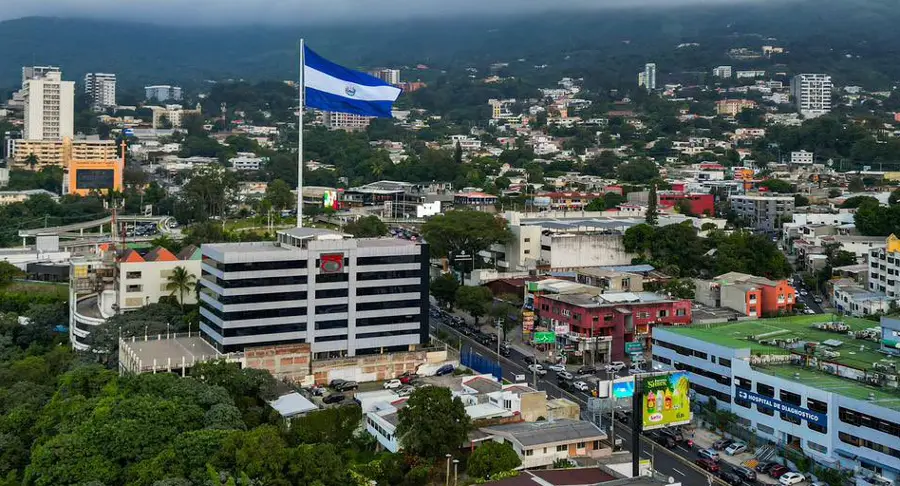
 San Salvador, El Salvador Capital City.
Bank lending to micro, small, and medium-sized enterprises (MSMEs) in El Salvador increased 12.4% year-on-year in September 2026, reaching $3.06 billion, according to figures released by the Salvadoran Banking Association (ABANSA).
The increase represents an additional $338 million in financing compared with September 2025. Productive loans accounted for most of the growth, rising $302.4 million, or 13.5%, over the same period.
ABANSA reported that member banks provided financing through more than 88,000 loans, highlighting the role of smaller businesses in the country’s economic activity.
Business Lending Reaches $9.76 Billion
The expansion in MSME financing came alongside broader growth in business lending, which reached $9.76 billion in September, an increase of 15.1% compared with the previous year.
Business loans represented 51.5% of the total credit portfolio held by ABANSA member banks, making companies the largest recipients of bank financing.
The services sector recorded the strongest growth among the productive sectors highlighted by the association. Outstanding loans reached $1.82 billion, up 30%, representing an increase of more than $421 million.
Commerce followed with $401.8 million in loans, an annual increase of 14.5%. Construction financing reached $226.5 million, growing 19.6% over the same period.
ABANSA attributed the expansion to increased financing for productive activities, which the association says supports employment, purchases of materials, and business supply chains.
Household Lending and Bank Deposits Continue Growing
Lending to Salvadoran households also increased, reaching $9.20 billion in September 2026, up 7.6% from the same month a year earlier.
Housing loans totaled $2.96 billion, representing annual growth of 8.6%, or $235.4 million. Other personal lending reached $6.23 billion, an increase of 7.1%, equivalent to $415.9 million.
The banking association reported that its member institutions held $27.20 billion in assets at the end of September, an increase of 10.2% from a year earlier.
Total outstanding loans reached $18.95 billion, up 11.4%, while bank deposits climbed 12.1% to $21.84 billion.
Demand deposits increased 12.1%, while time deposits rose 12%, indicating growth across both major categories of bank savings.
Digital Banking Transactions Rise as Check Usage Declines
Digital financial services continued expanding, with interbank transfers exceeding 7.8 million transactions and moving approximately $5.97 billion.
ABANSA reported a 45.8% year-on-year increase in interbank transfer activity, reflecting the growing use of electronic banking channels.
Credit card balances reached $1.41 billion, an increase of 10.9%. The number of unique credit card customers exceeded 1.11 million, up 13.8%, according to figures through August 2026.
Meanwhile, traditional check transactions continued declining.
Banks processed 159,585 checks in September, a decrease of 15.5% compared with the previous year. The total value of those transactions reached $1.27 billion, down 0.9%.
Since 2022, the cumulative volume of checks has fallen 41.7%, while the average amount per check has increased 32%, reaching $7,823.
ABANSA said the figures reflect a shift toward digital channels for smaller payments, while checks remain concentrated in higher-value transactions.
The association said its member banks remain committed to supporting economic growth through business financing, household credit, savings products, and financial services.