
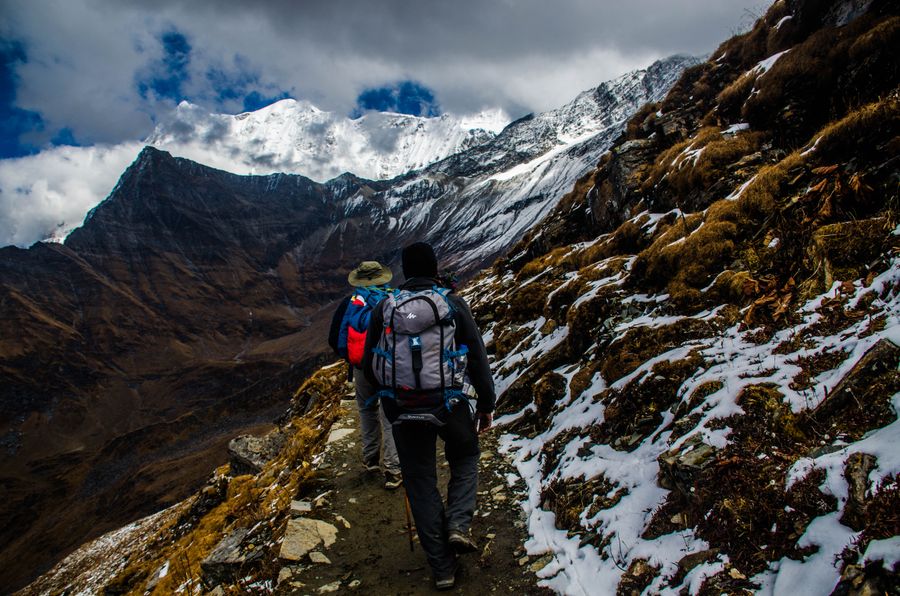
Scroll through enough trekking blogs and the Annapurna Circuit, Annapurna Base Camp Trek, and Manaslu Circuit trek start to blur together — mountains, prayer flags, a bowl of dal bhat, repeat. But anyone who has actually walked these trails will tell you the day-to-day reality is quite different on each one.
The rooms you sleep in, the food that shows up on your plate, how much you lean on a guide, and even the rhythm of your walking day all shift depending on which route you choose. This isn’t really a “which trek is best” conversation. It’s more useful to look at what actually happens on the ground: where you sleep, what you eat, who’s helping you get there, and what the trail itself feels like underfoot.
In short, all three are teahouse-based Himalayan routes, but the level of infrastructure, remoteness, guide requirements, and general trail character are not the same. That’s the gap this article tries to close.
How the Three Trekking Routes Feel on the Ground
Before getting into beds and menus, it helps to understand the basic character of each trail, because that shapes everything else.
Annapurna Circuit — Changing Landscapes and Larger Trail Infrastructure
The Annapurna Circuit trek is the long-haul option of the three. It winds through a string of villages and settlements, and the scenery genuinely transforms as you go — subtropical forest lower down, then dry, wind-scoured valleys that almost look like parts of Tibet once you’re past Manang.
Because so many trekkers have walked this route over the decades, several sections carry more developed infrastructure than you’d expect at this altitude. The high point, both literally and in terms of difficulty, is the Thorong La crossing, which tends to be the day people talk about most once they’re back home.
Annapurna Base Camp — A More Focused Mountain Journey
The Annapurna Base Camp Trek is a tighter, more contained experience. Instead of circling a massif, you’re working your way steadily inward, through rhododendron forest and small hillside villages, toward one specific destination sitting inside a natural amphitheater of peaks. There’s something satisfying about that structure — you know where you’re headed, and the trail builds toward it in a way that feels more like a pilgrimage than an open-ended wander.
Manaslu Circuit — Remote and More Restricted
The Manaslu Circuit trek sits further off the beaten path, and it shows. Villages here carry a stronger Tibetan influence, both culturally and architecturally, and infrastructure in the upper sections is noticeably thinner than what you’d find on the Annapurna side. Larkya La is the major pass here, and because Manaslu falls under restricted-area rules, organized arrangements matter more on this route than on the other two.
Accommodation: What Can Trekkers Actually Expect?
“Teahouse trekking” sounds simple enough until you’re actually standing in a cold room at 4,000 meters wondering if there’s an extra blanket somewhere.
Rooms, Bathrooms, Heating, and Sleeping Conditions
Most nights on all three routes are spent in basic lodge rooms, usually twin-share, with a mattress, a pillow, and blankets that range from adequate to thin depending on the village. Bathrooms are sometimes attached, sometimes shared down the hall, and squat-style toilets are still common the higher you climb.
Hot showers exist in plenty of places, though you’ll often pay a small fee for them, and don’t be surprised if the water runs lukewarm at best once you’re above the tree line. The dining hall is really the heart of every teahouse — it’s where trekkers eat, warm up near a stove if there is one, and swap stories about the day’s walk.
Heating is patchy; some dining rooms have a proper wood or yak-dung stove, others just have you bundling into a down jacket at the table. As a general rule, the higher and more remote you go, the more basic things get.
Accommodation Differences Between the Routes
On the Annapurna Circuit trek, accommodation infrastructure is generally broader along the established sections of the trail, and there’s more noticeable variation from one village to the next — some feel almost like small towns, others are just a handful of lodges.
The Annapurna Base Camp Trek keeps teahouses central to the whole experience, though facilities do simplify considerably as you near the sanctuary itself. The Manaslu Circuit trek is where planning ahead matters most — remote stretches can mean fewer lodge choices on a given night, and standards can swing quite a bit from one teahouse to the next.
Do these treks require camping? Not typically. Standard itineraries on all three routes rely on teahouses and lodges rather than tents, though camping can still come into play for specific logistical situations or customized itineraries.
Food on the Trail: What You Will Actually Eat
Forget any notion of a varied restaurant menu once you’re a few days into the mountains.
Common Trekking Meals
Expect dal bhat, rice served with lentil soup and vegetable curry, fried rice, noodle dishes, various soups, momos, potatoes cooked more ways than you’d think possible, eggs, and a fairly standard set of breakfast options. Tea, coffee, and other hot drinks are always around and honestly become one of the small daily pleasures of trekking in the cold.
Food Experience Across the Three Treks
Choices thin out as elevation climbs on all three routes — this isn’t unique to one trek, it’s just physics and logistics. Everything has to be carried in, so lodges lean on simple, filling ingredients that travel and store well. Dal bhat earns its reputation among trekkers for good reason: it’s familiar, substantial, and almost always available, even in villages where the rest of the menu is short.
How much variety you actually get depends heavily on the specific village and lodge you land in that night, and trekkers on Manaslu or the upper Annapurna Circuit sections especially should keep expectations realistic rather than picturing anything close to restaurant-style variety.
Practically speaking, eat enough during the long walking days even when you’re not particularly hungry, keep drinking water, and don’t count on finding your favorite snack at 4,000 meters.
Guides, Permits, and Trekking Support
Annapurna Circuit Trek Guide Considerations
Even on sections of the Annapurna Circuit trek where the trail is relatively well developed, plenty of trekkers still choose to go with a Nepal trekking guide. Navigation, coordinating accommodation ahead of a busy village, keeping an eye on altitude symptoms, and simply knowing the local terrain all add real value, especially for anyone without prior Himalayan experience.
Annapurna Base Camp Trek Guide Considerations
A local guide can take a lot of the guesswork out of the Annapurna Base Camp Trek, which makes it a popular choice for first-time Himalayan trekkers. Weather and trail conditions can shift quickly in this region, and having someone who reads those changes well is worth more than it might seem from the comfort of a planning spreadsheet at home.
Manaslu Circuit Trek Guide Requirements
The Manaslu Circuit trek carries extra regulatory weight because it passes through a restricted area, and the route is commonly organized with guide support built in rather than treated as optional. Requirements around permits, group arrangements, and restricted-area rules can change between seasons, so it’s worth checking current regulations directly with a trekking agency or the relevant authorities before you commit to dates, rather than relying on older blog posts for pricing or paperwork specifics.
The Trail Experience: Walking, Altitude, and Daily Rhythm
Walking on the Annapurna Circuit
Days here stack up steadily — long-distance walking through terrain that keeps changing under your boots, with altitude building gradually until the Thorong La crossing itself, which asks for proper acclimatization and a pace that doesn’t try to rush the mountain.
Walking to Annapurna Base Camp
The trail alternates between forest paths and stone steps, with a fair amount of up-and-down that catches newer trekkers off guard — you’re not just climbing, you’re descending into valleys and back up again. The overall route is shorter than a full circuit, but that doesn’t make the altitude any less demanding once you’re closer to the sanctuary.
Walking the Manaslu Circuit
This is where the trail feels most remote — suspension bridges strung over river gorges, rocky and uneven ground underfoot, and a gradual, patient build toward Larkya La. Some stretches carry a genuine sense of isolation that you don’t get as often on the more heavily trekked Annapurna routes.
It’s worth saying plainly: the hardest part of a Himalayan trek isn’t always the steepest climb of the day. Altitude, weather, broken sleep, and how well your body is recovering night to night all shape how a given day actually feels, sometimes more than the gradient on the map does.
Local Culture and the Human Side of the Trail
Gurung communities shape much of daily life across the Annapurna region, while villages around Manaslu carry a stronger Tibetan-influenced Buddhist character, visible in monasteries, prayer flags, mani walls, and chortens along the path.
Staying in teahouses rather than passing through in a vehicle puts you in direct, everyday contact with guides, porters, lodge owners, and local families — and that proximity is part of what makes trekking here feel different from most other forms of travel.
Which Trek Fits Your Travel Style?
| Trek | Often suits trekkers looking for… | Main consideration |
| Annapurna Circuit trek | A longer journey with major landscape changes | Longer walking days and a high-pass crossing |
| Annapurna Base Camp Trek | A focused Himalayan journey toward a famous base camp | Steep sections and altitude |
| Manaslu Circuit trek | A quieter, more remote trekking experience | More logistical and regulatory planning |
How you choose between them really comes down to how much time you have, your previous trekking experience, how much infrastructure you want around you, your interest in cultural immersion, your comfort level with remoteness, and how much guide and permit planning you’re willing to take on.
Practical Advice Before You Leave
Build your itinerary around acclimatization rather than trying to rush ahead of schedule. Pack proper layers, since temperatures swing sharply as elevation changes through the day. Carry some cash for remote villages, and bring your own personal essentials, because mountain shops stock very little.
Confirm current permits and trail conditions before departure, and talk to your guide about accommodation arrangements ahead of time rather than assuming every village will have space. A trekking company such as Adventure Great Himalaya is one example travelers sometimes consult when working out route planning and local arrangements. And stay flexible — mountain weather doesn’t really care about your schedule.
Choosing the Trail Based on the Experience You Want
None of these three treks is objectively “better” than the others — they’re just built around different priorities. What matters more is matching the trail to how you actually want to spend your days: your comfort with basic accommodation, your expectations around food, how much guide support you want, your walking style, your tolerance for altitude and remoteness, and how much time and cultural curiosity you’re bringing with you. Once you’re honest about those, the choice between Annapurna Circuit, Annapurna Base Camp, and Manaslu tends to make itself.
Frequently Asked Questions
Is the Annapurna Circuit harder than Annapurna Base Camp?
It depends on what you’re measuring. The Annapurna Circuit trek covers far more distance and includes the Thorong La crossing, which makes for a longer, more sustained physical effort. Annapurna Base Camp is shorter overall but still involves steep, repetitive terrain and real altitude exposure near the sanctuary, so “harder” depends on whether you’re weighing total distance or day-to-day intensity.
Is a guide required for the Annapurna Circuit trek?
Rules around guide requirements can change, so it’s best to verify current regulations before your departure date rather than relying on older sources.
What food is available during the Manaslu Circuit trek?
Expect dal bhat, noodles, rice, soups, momos, potatoes, eggs, tea, and other basic teahouse meals, with actual availability varying quite a bit from village to village.
Are there hotels or teahouses on the Annapurna Base Camp Trek?
Accommodation runs on a teahouse and lodge system throughout, and facilities generally become simpler the higher you climb toward the base camp itself.
Which trek has more remote trail sections: Annapurna or Manaslu?
Manaslu generally has thinner infrastructure and fewer settlements along its upper sections compared with the more established parts of the Annapurna routes, though both include stretches that feel genuinely remote.